
Gedenkstätte Berliner Mauer Photos
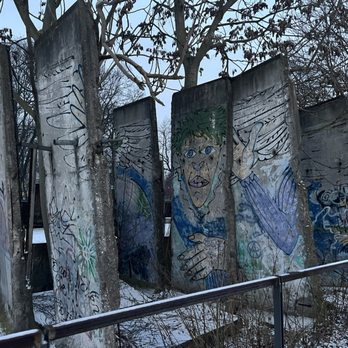


Recommended Reviews - Gedenkstätte Berliner Mauer
Start your review...


Reviews With Photos


A must place to visit when in Berlin. I came at the end of November and there weren't many visitors. I suspect that it's busier in the summer months. I was able to find street parking fairly easily. I only spent about 30 minutes here (had some other places I wanted to visit) but could have easily spent more time here. For me, visiting the Berlin was was a must see!


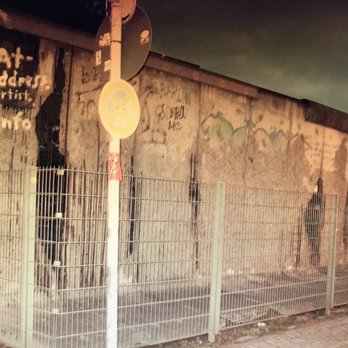
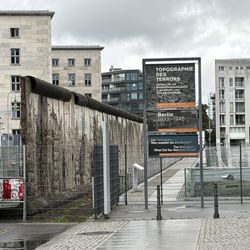
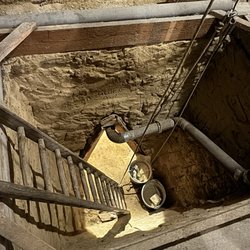
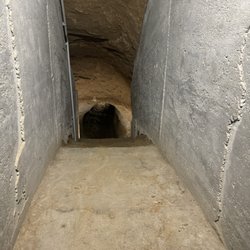
This is a free open air museum which is an approximately one-mile stretch along Bernauer Strasse where remnants of the Berlin Wall still remain. There are sections where the wall is still standing intact. In some areas the wall is completely gone with only markers showing its place; in some areas the wall is demolished but the steel bars (rebar) still remain. You can clearly see the outer wall and inner wall, with the area in between known as "no man's land" where guard towers were once located. There are numerous pictures and audio tracks along the way to document the history of the wall and all the events and crises surrounding it. There are also plenty of pictures with markers showing visitors their exact locations relative to the days of the wall. The markers along the entire path are very precise, letting the visitor know where they are standing and how east and west were separated at the time. Another section shows the history of the tunnels. People used to be able to escape by crawling through the sewage until the East German Police found out and blocked it off. Then people dug underground tunnels which were the paths of many successful escapes. The locations of a few tunnels were shown there with steel plates on the grass showing the actual paths and directions of the tunnels. It's a humbling, sobering, and enriching experience that motivated me to study the history of the Cold War - something that never quite interested me, until I was able to place my hand on the Berlin Wall, and to touch it and feel it. Berlin. A divided city. 1961 - 1989.


The literal crossing between old east and West Berlin. You put note today that they used to be a wall between the two parts of the city. Which of the walls have been taken down. There's been some sections left up as a relic and reminder of the past history of Berlin. The checkpoint itself isn't much to look at. The best part of checkpoint Charlie in the vicinity are all the remaining walls. Just to see the fortress that was built around the east and west Berlin wall. You could easily spend a couple hours or even longer walking around and checking out all the graffiti on the wall. And seeing the little cracks in the walls that were created by residents on either side trying to see the world on the other side. I do recall seeing rerun of the videos on TV of the wall coming down, it was a historical moment in Germany and Berlin's history.


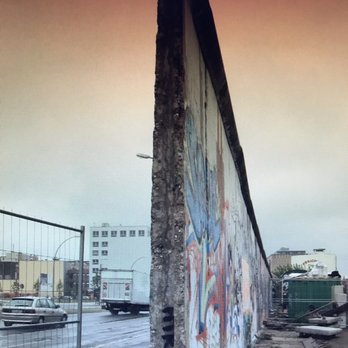
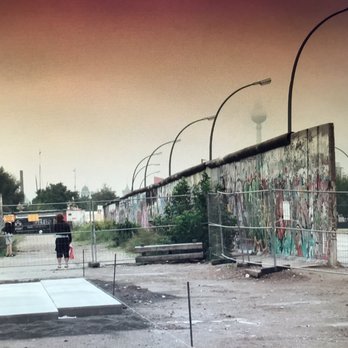
The Gedenkstätte Berliner Mauer (Berlin Wall Memorial) commemorates the division of Berlin by the Berlin Wall. Erected in 1998 by Germany and the city look for hundreds of upright rods plus a few sections of the original wall stretching along the street and consider downloading a self-guided audio tour for more details.


Captivating. Emotional. Gripping. Moving. Humbling. Heartbreaking. Educational. These are my words to describe the Berlin Wall, formerly in the capital city of Berlin, Germany. On a recent cruise to Northern Europe, we chose a land tour train excursion of the best of Berlin. One of the sites included the outdoor memorial and actual Berlin Wall, also known as the Iron Curtain. This brought back memories, as when I was growing up the 1945-1990 era, which focused on major history in the making. As a consequence of the defeat of Nazi Germany in World War II, Germany was divided into two global blocs, East and West Germany. It depicted the political hostility between the Soviet countries and the US-led Western powers. Built in 1961, the Berlin Wall consisted of concrete and barbed wire 100 miles long and 12 feet high that separated East Germany (Soviet-ruled) and West Germany (US/Allied ruled). The wall prevented the East Germans from entering West Germany, where it was more economically prosperous and granted more freedom for its citizens. The wall symbolized the lack of freedom under communism, and the term "Cold War" evolved because of the two powerful political blocs. It ended in 1989 when the last war of Soviet occupation ended in Afghanistan, and the East Germany Communist Party announced that the West Germans could now cross the border whenever they pleased. Today, the Berlin Wall Memorial is an open-air exhibition of the existing wall remnants with rebars sticking out at different places. The remnant wall pieces are included as part of a mile-long display with photos and signs posted, detailing the stories of what life was like on either side of Germany, and the escape attempts the East Germans made to reunite with their families. This visit allowed me to learn: * How the wall was constantly manned and patrolled by soldiers ordered to shoot anyone who tried to cross the wall to West Berlin. * There was an outer wall and inner wall, and in between were 302 guard observation towers. * 239 people died trying to cross the border, with 5,000 people who were successful in escaping through man-made tunnels beneath the ground to the other side. Actual paths of these tunnels were inscribed on the grounds. * Those that died had photos of them with their names were posted onto the wall as a memorial tribute. * West Germany allowed its people to fill their side of the wall with graffiti, whereas, the East Germans kept it graffiti-free. * Germans chipped away at the wall to bring it down, and some even sold remnants on e-bay. Around the corner was a replica of a guard tower named "Checkpoint Charlie," which was a famous watchtower that allowed West Germans to cross over to East Germany by permit to visit their families. Staff was dressed in guard uniforms if you wanted to take pictures with them. But, there were no signs that included a charge if you wanted to take a picture with them. Tacky! The Berlin Wall is a tourist attraction today, and I found it to be educational and poignant in seeing how this one wall made history. It was a symbol of human oppression and inhumanity. I felt compassionate for those who died and think about how trying it was for families living apart. I felt fortunate to be living in the U.S. and how our world powers can dictate our lives. Now I can understand what the Cold War was all about, as I was there, even though it's after-the-fact. One gains a lot more by just being there and experiencing the details of history, instead of just reading it in textbooks and newspapers. Can you imagine that if I knew all of this when I was in elementary school? Gee, I could have aced my history/geography class! "Travel is the only thing you buy that makes you richer" - Unknown source.


The Gedenkstaette Berliner Mauer (Berlin Wall Memorial) was a wonderful free museum commemorating the division of Berlin by the Berlin Wall and the deaths that occurred there. The memorial includes a 200-foot-long section of the wall as it was when the wall fell (which you can see well from the viewing platform at the Documentation Center). Don't miss the Chapel of Reconciliation, a church containing materials from the former Versoehnungskirche, which stood on the site until it was destroyed in 1985 because it was inside the border strip. The Documentation Center contains an exhibit depicting the history of the wall, including biographies of Germans who escaped from the East to the West and those who died trying. The memorial is free and well worth exploring on any visit to Berlin!


Not sure how to capture this review. This was on my list to visit while in Berlin and I am glad that I did. For me it was very moving. Having grown up in the US, I wasn't exposed to how everything happened. I think that they did a tremendous job of showing the history from many different perspectives.


Yes, this is a major tourist trap, but I never realized how powerful and moving a memorial could be. This is a must-see if you are ever in Berlin (and you can get here by doing the city tour), but I can just imagine how much of a grim reminder this can be to those who endured the difficult time.


Interesting place, nice memorial for those who died because of the Berlin Wall. There's not too much to see, but there are artifacts left over from the time and many explanations of what went on. There's the inner wall and the outer walls, as the supposed trench area is now where most of the memorial is. There is a visitor center across from the actual memorial. Nice place, but I would only come see this is it were along the way to somewhere else or if I were already around the area.


Checkpoint Charlie has become a somewhat tacky tourist spot since the fall of the wall and although the nearby museum is quite informative visiting the site is not as sobering an experience as a visit to Bernauer Strasse. Bernauer Strasse became famous during the first days of the wall (which initially in 1961 consisted of the buildings on one side of this street) as people jumped out of the windows of apartment buildings onto the pavement in West Berlin. In some cases human tugs of war erupted as East German guards leaned out of windows as they struggled to hold onto people being pulled to freedom from West Berliners standing on the path below. (The world's media witnessed much of this drama.) As well as these escapes it was also the location of a tunnel through which 57 people escaped and was where Conrad Schumann, an East German soldier, made his iconic leap over barbed wire. In time this ramshackle wall was replaced with the most famous incarnation that was finally toppled in 1989. On Bernauer Strasse this could only be achieved by demolishing large numbers of houses (in a city that still had a shortage of housing after so much lay in ruins in 1945) along one side of the street and, eventually, a large church. This is also the sole surviving section (albeit partially reconstructed) of the border defences. Visit Bernauer Strasse and view the wall from the nearby viewing platform and the incongruity of this lethal border running through a suburb is. Although the site is still somewhat rough around the edges more permanent visitor centre buildings are apparently in the planning stages.

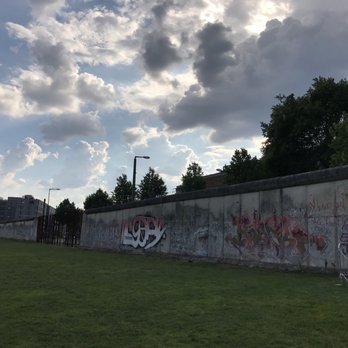
We were a bit rushed getting here at 515 when they close at 6pm. The memorial has two floors of photos and information. I couldn't get to it all but it was very detailed and gave you a lot of history. If you go to the top of observation area, you can see a replica of a watch tower. It's honestly underwhelming compared to walking over there yourself to the park with the wall. On one side of the ground level you have mostly polls remaining from the wall with a couple information posts. The other side was better with a long stretch of in tact wall. Great for picture taking. It also has some information like photos of those who died at the wall while it was active. Considering all this is free, it's a great must do in my opinion on a visit to Berlin. I'd say plan a couple hours total.

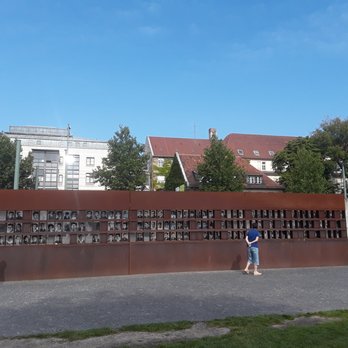
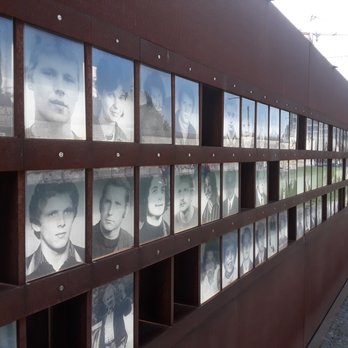
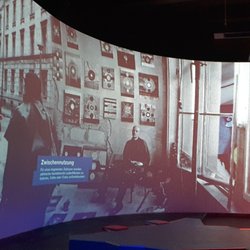
Touching, emotional and poignant memorial to the Berlin Wall with actual pieces of the wall and pictures of those who perished in an attempt to cross the wall to get to West Germany. Also, there is a visitor center across the street from the memorial which has a excellent short film about the history of the Wall with English subtitles that is well worth watching and another interesting quick film without English subtitles that good as well.


8 months ago
A must visit when in Berlin. I admired the German that they're acknowledging their past and willing to learn their mistakes. It's a free area that you roamed and see what it's like to be separated by a wall. There is a museum nearby to honored the falling ones. It's a honored to be here and witnessed the history. read more


Being born in the late 1980s I have heard about the Berlin Wall and it's removal my entire life and I think it's important for everyone older and younger to understand and see the remains of this wall to understand the historical significance of it. It's one of those things that you can hear about it but once you see it, it really paints a more vivid picture. This little memorial is free to enter and has a few parts to it. There is the actual Berlin wall, a park next to it, and a tiny museum with a viewing platform across the street. It's easy to spend less than an hour here, but the memories and thoughts will last a lot longer. I have seen the Berlin Wall before in my travels to Berlin and this time was just as pleasant because I was with people who had not seen it yet. I would definitely recommend to any fan of history, to anyone visiting Berlin, and to local children, who should learn the lessons of what this wall can teach. read more


A must place to visit when in Berlin. I came at the end of November and there weren't many visitors. I suspect that it's busier in the summer months. I was able to find street parking fairly easily. I only spent about 30 minutes here (had some other places I wanted to visit) but could have easily spent more time here. For me, visiting the Berlin was was a must see! read more


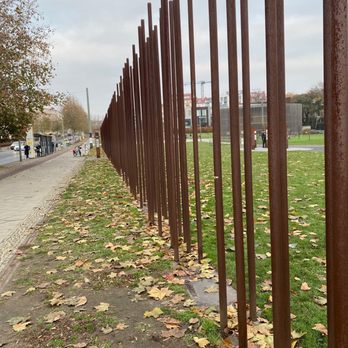


This is a free open air museum which is an approximately one-mile stretch along Bernauer Strasse where remnants of the Berlin Wall still remain. There are sections where the wall is still standing intact. In some areas the wall is completely gone with only markers showing its place; in some areas the wall is demolished but the steel bars (rebar) still remain. You can clearly see the outer wall and inner wall, with the area in between known as "no man's land" where guard towers were once located. There are numerous pictures and audio tracks along the way to document the history of the wall and all the events and crises surrounding it. There are also plenty of pictures with markers showing visitors their exact locations relative to the days of the wall. The markers along the entire path are very precise, letting the visitor know where they are standing and how east and west were separated at the time. Another section shows the history of the tunnels. People used to be able to escape by crawling through the sewage until the East German Police found out and blocked it off. Then people dug underground tunnels which were the paths of many successful escapes. The locations of a few tunnels were shown there with steel plates on the grass showing the actual paths and directions of the tunnels. It's a humbling, sobering, and enriching experience that motivated me to study the history of the Cold War - something that never quite interested me, until I was able to place my hand on the Berlin Wall, and to touch it and feel it. Berlin. A divided city. 1961 - 1989. read more


The literal crossing between old east and West Berlin. You put note today that they used to be a wall between the two parts of the city. Which of the walls have been taken down. There's been some sections left up as a relic and reminder of the past history of Berlin. The checkpoint itself isn't much to look at. The best part of checkpoint Charlie in the vicinity are all the remaining walls. Just to see the fortress that was built around the east and west Berlin wall. You could easily spend a couple hours or even longer walking around and checking out all the graffiti on the wall. And seeing the little cracks in the walls that were created by residents on either side trying to see the world on the other side. I do recall seeing rerun of the videos on TV of the wall coming down, it was a historical moment in Germany and Berlin's history. read more







4 years ago
The Gedenkstätte Berliner Mauer (Berlin Wall Memorial) commemorates the division of Berlin by the Berlin Wall. Erected in 1998 by Germany and the city look for hundreds of upright rods plus a few sections of the original wall stretching along the street and consider downloading a self-guided audio tour for more details. read more


Captivating. Emotional. Gripping. Moving. Humbling. Heartbreaking. Educational. These are my words to describe the Berlin Wall, formerly in the capital city of Berlin, Germany. On a recent cruise to Northern Europe, we chose a land tour train excursion of the best of Berlin. One of the sites included the outdoor memorial and actual Berlin Wall, also known as the Iron Curtain. This brought back memories, as when I was growing up the 1945-1990 era, which focused on major history in the making. As a consequence of the defeat of Nazi Germany in World War II, Germany was divided into two global blocs, East and West Germany. It depicted the political hostility between the Soviet countries and the US-led Western powers. Built in 1961, the Berlin Wall consisted of concrete and barbed wire 100 miles long and 12 feet high that separated East Germany (Soviet-ruled) and West Germany (US/Allied ruled). The wall prevented the East Germans from entering West Germany, where it was more economically prosperous and granted more freedom for its citizens. The wall symbolized the lack of freedom under communism, and the term "Cold War" evolved because of the two powerful political blocs. It ended in 1989 when the last war of Soviet occupation ended in Afghanistan, and the East Germany Communist Party announced that the West Germans could now cross the border whenever they pleased. Today, the Berlin Wall Memorial is an open-air exhibition of the existing wall remnants with rebars sticking out at different places. The remnant wall pieces are included as part of a mile-long display with photos and signs posted, detailing the stories of what life was like on either side of Germany, and the escape attempts the East Germans made to reunite with their families. This visit allowed me to learn: * How the wall was constantly manned and patrolled by soldiers ordered to shoot anyone who tried to cross the wall to West Berlin. * There was an outer wall and inner wall, and in between were 302 guard observation towers. * 239 people died trying to cross the border, with 5,000 people who were successful in escaping through man-made tunnels beneath the ground to the other side. Actual paths of these tunnels were inscribed on the grounds. * Those that died had photos of them with their names were posted onto the wall as a memorial tribute. * West Germany allowed its people to fill their side of the wall with graffiti, whereas, the East Germans kept it graffiti-free. * Germans chipped away at the wall to bring it down, and some even sold remnants on e-bay. Around the corner was a replica of a guard tower named "Checkpoint Charlie," which was a famous watchtower that allowed West Germans to cross over to East Germany by permit to visit their families. Staff was dressed in guard uniforms if you wanted to take pictures with them. But, there were no signs that included a charge if you wanted to take a picture with them. Tacky! The Berlin Wall is a tourist attraction today, and I found it to be educational and poignant in seeing how this one wall made history. It was a symbol of human oppression and inhumanity. I felt compassionate for those who died and think about how trying it was for families living apart. I felt fortunate to be living in the U.S. and how our world powers can dictate our lives. Now I can understand what the Cold War was all about, as I was there, even though it's after-the-fact. One gains a lot more by just being there and experiencing the details of history, instead of just reading it in textbooks and newspapers. Can you imagine that if I knew all of this when I was in elementary school? Gee, I could have aced my history/geography class! "Travel is the only thing you buy that makes you richer" - Unknown source. read more


The Gedenkstaette Berliner Mauer (Berlin Wall Memorial) was a wonderful free museum commemorating the division of Berlin by the Berlin Wall and the deaths that occurred there. The memorial includes a 200-foot-long section of the wall as it was when the wall fell (which you can see well from the viewing platform at the Documentation Center). Don't miss the Chapel of Reconciliation, a church containing materials from the former Versoehnungskirche, which stood on the site until it was destroyed in 1985 because it was inside the border strip. The Documentation Center contains an exhibit depicting the history of the wall, including biographies of Germans who escaped from the East to the West and those who died trying. The memorial is free and well worth exploring on any visit to Berlin! read more


Not sure how to capture this review. This was on my list to visit while in Berlin and I am glad that I did. For me it was very moving. Having grown up in the US, I wasn't exposed to how everything happened. I think that they did a tremendous job of showing the history from many different perspectives. read more


Yes, this is a major tourist trap, but I never realized how powerful and moving a memorial could be. This is a must-see if you are ever in Berlin (and you can get here by doing the city tour), but I can just imagine how much of a grim reminder this can be to those who endured the difficult time. read more


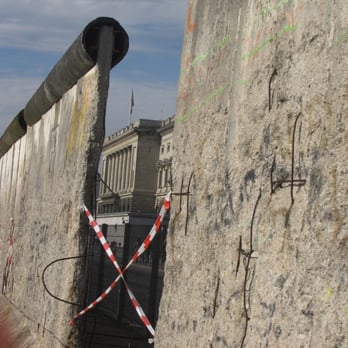
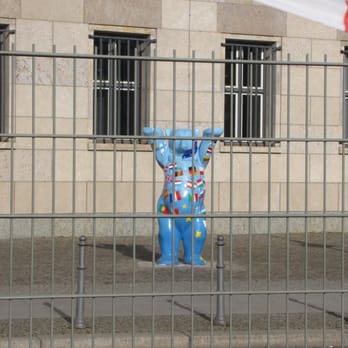



Interesting place, nice memorial for those who died because of the Berlin Wall. There's not too much to see, but there are artifacts left over from the time and many explanations of what went on. There's the inner wall and the outer walls, as the supposed trench area is now where most of the memorial is. There is a visitor center across from the actual memorial. Nice place, but I would only come see this is it were along the way to somewhere else or if I were already around the area. read more


18 years ago
Checkpoint Charlie has become a somewhat tacky tourist spot since the fall of the wall and although the nearby museum is quite informative visiting the site is not as sobering an experience as a visit to Bernauer Strasse. Bernauer Strasse became famous during the first days of the wall (which initially in 1961 consisted of the buildings on one side of this street) as people jumped out of the windows of apartment buildings onto the pavement in West Berlin. In some cases human tugs of war erupted as East German guards leaned out of windows as they struggled to hold onto people being pulled to freedom from West Berliners standing on the path below. (The world's media witnessed much of this drama.) As well as these escapes it was also the location of a tunnel through which 57 people escaped and was where Conrad Schumann, an East German soldier, made his iconic leap over barbed wire. In time this ramshackle wall was replaced with the most famous incarnation that was finally toppled in 1989. On Bernauer Strasse this could only be achieved by demolishing large numbers of houses (in a city that still had a shortage of housing after so much lay in ruins in 1945) along one side of the street and, eventually, a large church. This is also the sole surviving section (albeit partially reconstructed) of the border defences. Visit Bernauer Strasse and view the wall from the nearby viewing platform and the incongruity of this lethal border running through a suburb is. Although the site is still somewhat rough around the edges more permanent visitor centre buildings are apparently in the planning stages. read more


We were a bit rushed getting here at 515 when they close at 6pm. The memorial has two floors of photos and information. I couldn't get to it all but it was very detailed and gave you a lot of history. If you go to the top of observation area, you can see a replica of a watch tower. It's honestly underwhelming compared to walking over there yourself to the park with the wall. On one side of the ground level you have mostly polls remaining from the wall with a couple information posts. The other side was better with a long stretch of in tact wall. Great for picture taking. It also has some information like photos of those who died at the wall while it was active. Considering all this is free, it's a great must do in my opinion on a visit to Berlin. I'd say plan a couple hours total. read more



7 years ago
Touching, emotional and poignant memorial to the Berlin Wall with actual pieces of the wall and pictures of those who perished in an attempt to cross the wall to get to West Germany. Also, there is a visitor center across the street from the memorial which has a excellent short film about the history of the Wall with English subtitles that is well worth watching and another interesting quick film without English subtitles that good as well. read more



16 years ago
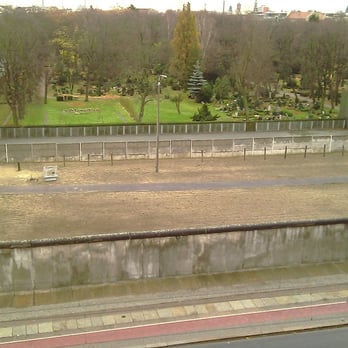
A great memorial to the Berlin wall and to the people who were killed trying to cross it - very moving museum and documentation centre. A section of the wall is preserved in its entirety along with watchtower, graffiti, and a viewing platform and history. The memorial to the victims is very well done. read more



9 years ago

8 years ago


9 years ago

10 years ago


Page 1 of 3
More info about Gedenkstätte Berliner Mauer
Gedenkstätte Berliner Mauer Reviews in Other Languages
Review Highlights - Gedenkstätte Berliner Mauer

















Why does Yelp recommend reviews?
13 reviews that are not currently recommended
The reviews below are not factored into the business's overall star rating.

9 years ago

9 years ago

13 years ago
13 years ago

12 years ago

7 years ago
15 years ago

9 years ago
14 years ago

14 years ago
14 years ago
14 years ago

14 years ago


