Flagler Memorial Bridge Photos


More like Flagler Memorial Bridge
Recommended Reviews - Flagler Memorial Bridge
Start your review...



If one is interested in the history of this bridge, one could surf the web and learn some interesting facts about the bridge. Recently, the Flagler Memorial Bridge was redesigned and reconstructed to maintain traffic for this active causeway to Palm Beach. The original Flagler Memorial Bridge was constructed in 1927. The new design provides a rolling lift span over the widened channel. The community had requested that the innovative bridge commemorate their famous historic resident, Henry Flagler, and provide a traditional visual appearance. I traveled over this bridge often to visit the Northside of Palm Beach Island where I enjoy an easy bicycle ride through the neighborhood and shorelines. read more


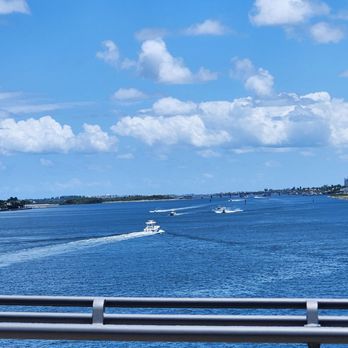
A bascule drawbridge allowing the yachts and sailboats to pass on the intercoastal. Based on quick research, the bridge, also known as the North Bridge, use may be temporarily by the Secret Service since Pres Trump's Mar-a-Lago home is nearby. Today we crossed over the bridge and viewed incredible intercoastal water on both sides. Lots of huge boats nearby and massive homes in the distance. read more

2 years ago

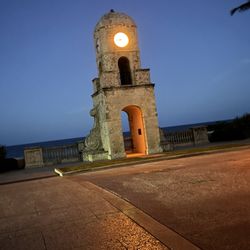
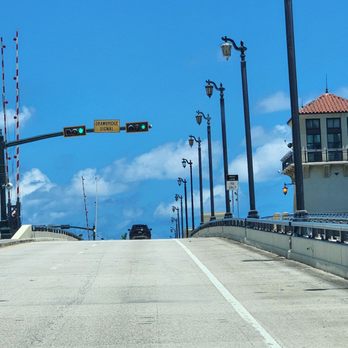
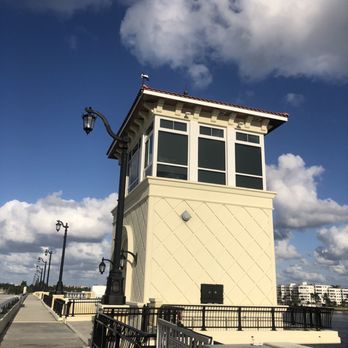
The Flagler Memorial Bridge, also known as north bridge, is the northernmost of the three bridges between West Palm Beach and the barrier island of Palm Beach. The bridge was named for Henry Flagler who built the overseas railroad from 1905 to 1912. It traveled over 128 miles of water and crossed over 42 bridges. The Flagler Memorial Bridge was first built in 1901 to replace a 1895 railroad bridge that Henry Flagler built and which annoyed his wife because the sound of trains was to close to her mansion. The 1901 bridge was replaced with a bridge that was constructed in 1927 and opened on July 1, 1938. The two span drawbridge was built at a cost of $725,000. It was the oldest movable bridge over the Intracoastal Waterway from North Miami to Cape Canaveral until it was replaced in 2017 by a new 131.8 million dollar bridge. Sixteen thousand vehicles cross the bridge every day and the old bridge was deteriorating. Palm Beach wanted the old bridge kept open while the new one was built next to it. Construction of the new bridge led to cracks and settling of the beams on the old bridge forcing ten million dollars of repairs while the new on was built. The first two lanes of the new bridge opened in December of 2016. Eight months later all four lanes were opened. The new bridge is beautiful with a Mediterranean style bridge tender booth, four wide lanes, and ornamental lights and handrails. Before the bridge was built commuters were plagued with five years of construction problems. It took teams of subcontractors six years to rebuild the half mile long bridge. Unfortunately there was a number of breakdowns associated with the the new bridge, 20 within the first 11 months which frustrated motorists. The first one occurred on September 21st. The rolling bascule design of the bridge has thousands of parts that must sync in order to raise the 900 ton span. Bascule is a French word that means rocking. The design of the bridge dates back to the 1890's and the base of each span pivots and rolls like a rocking horse. The bridge has four spans, each one weighing 900 tons. Two connect in the eastbound lanes and two connect in the west bound lanes coming together to create the road surface allowing the cars to cross over the water. It took engineers a long time and many tries to get the bridge fully functional while motorists patience wore thin. Hopefully the breakdowns are behind the bridge now. Crossing over the bridge you get a stunning view of the West Palm Beach's skyline with views of the Biltmore Hotel and Henry Flaglers Whitehall mansion. Docked below the bridge are mega yachts and sailboats. A walk over the bridge provides a gorgeous view. It is an undeniably beautiful bridge when it is working. read more


3 years ago