There are plenty of parking spaces, you will see guides to lead your car to available spot…read more Currently tulips are off from its peak season, you can still see some, daffodils are in full bloom, also the azaleas are poised to burst forth at any moment. With weak or no cellular signal or Wi-Fi available within the gardens, visitors can pay full attention on admiring the beauty of nature.
The gardens occupies total of 376 acres, featuring over 250 acres of landscaped gardens divided into several distinct sections: the Japanese Gardens, the Monet Waterlily Gardens, the Daffodil Gardens, and the Manor Gardens.
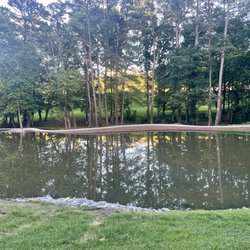
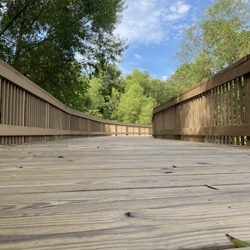
The Japanese Gardens occupy a central position within the estate, covering 40 acres and featuring streams, ponds, miniature islands, small bridges, and Japanese maples. As one strolls through this section, one can deeply contemplate the core tenets of Japanese aesthetics: *Mono no aware* (物の哀れ the pathos of things), *Wabi-sabi* (侘寂 Wabi-austere beauty and sabi -rustic patina or beauty in aging), and *Yūgen* (幽玄 profound and mysterious grace and subtleness rather than obvious beauty. mystery). *Mono no aware* is certainly palpable here; the seasonal colors are vivid, yet most of the tulips have already faded. However, visitors do not see the withered blooms, as they are swiftly cleared away. This practice is, in fact, an authentic element of Japanese aesthetics--one that does not seek to deliberately pander to visitors. After all, imperfection and impermanence inevitably evoke a sense of melancholy, which lies at the very heart of Japanese aesthetic philosophy. As for *Wabi-sabi* and *Yūgen*, they are subtly woven into every detail of the landscape, inseparable from the whole. I could sense the garden's inherent simplicity and minimalism--its use of "negative space" and evocative atmosphere--such as the circular stone steps leading into the lake, only to come to an abrupt stop. Is it perhaps an example of the essence of sudden enlightenment found in Buddhist philosophy?
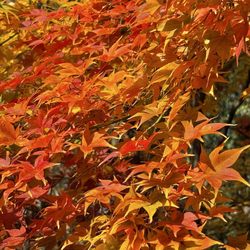
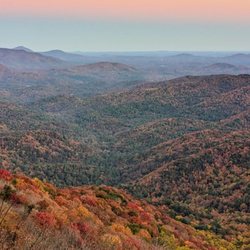
Throughout the gardens, various Japanese-style shrines and stone lanterns are scattered everywhere, exuding that distinct aura of ethereal elegance and profound tranquility characteristic of traditional Japanese gardens. The floral plantings are meticulously designed to rotate with the changing seasons: spring brings a display of tulips and daffodils; summer features water lilies--specifically in the "Monet Water Lily Garden," which boasts 140 varieties of lilies and a replica of Monet's bridge; and autumn offers a vibrant tapestry of colorful foliage alongside sweeping fields of Sulfur Cosmos wildflowers.
I visited the Butchart Gardens in Victoria over 30 years ago--a truly stunning garden that, at the time, was awash with tulips. In terms of sheer size, Gibbs Gardens is more than six times larger than Butchart Gardens.