The arch is accessible 24 hours, and is just for pictures and passing through (no museum or entry…read morevenue). It is an interesting part of the city's history, located in the heart of main cultural attractions, and some great restaurant and shopping activity.
So as many know, back in Medieval times, cities had defense walls around them. Depending on the size of the circumference, there were a varying number of gate entries. This arch was one of them.
In Spain, the arches were named with very practical titles, often for the direction in which they headed (for example, Seville's Puerta de Jerez was the gate you exited to head down to Jerez). Other times they were named for the mercantile business happening at that gate. In this case, Arco del Postigo del Aceite (arch of the olive oil shutter) was the olive oil gate. Shutters were a name for the doors of these Medieval gateways.
Apprently, this is one of only 3 remaining gateways from the old Arab wall (which used to have 20), dating back to 1107. Nearby Plaza del Cabildo, still has a small section of the same wall. The other two arches are Puerta de la Macarena, and Puerta de Córdoba.
This arch was called "Ship's Gate" (bad al-Qatay), in the 12thC, when shipyards were built outside it. It later had other names, as the city changed, and it was used for new functions: Puerta de la Alhóndiga, Puerta del Aceite or Puerta de la Aceituna.
My cousin from NYC likes to say "everything in New York is famous," which may be true, but in Seville, everything seems to be involved in Holy Week. This arch is no exception. Almost every landmark, monument, sculpture, fountain, etc. in Seville, has some role to play in their annual Holy Week festivities. In this case, the Arco del Postigo del Aceite is along the route of the brotherhoods' processions, and is yet another place to pay respect and homage to the past.
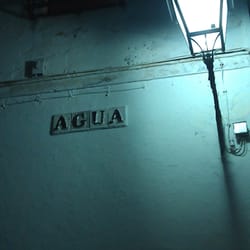
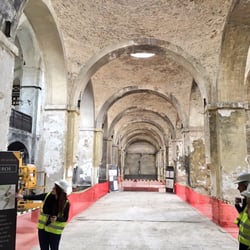
This arch has a statue of San Fernando, with bishops Isidoro and Leandro and a plaque about the reform of Tortello. Inside the arch, there are remnants of the planks used to stop the flooding from the river.
Just next to the arch is a little 18thC chapel, dedicated to the Immaculate Conception.