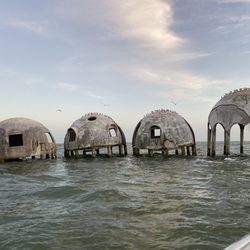
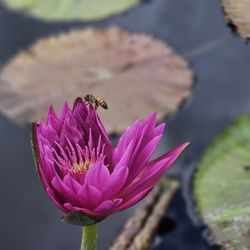
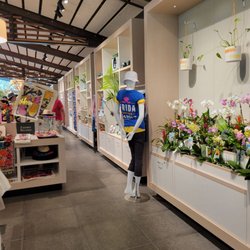
Collier-Seminole State Park Photos


You might also consider


More like Collier-Seminole State Park
Recommended Reviews - Collier-Seminole State Park
Start your review...


Reviews With Photos


Needed a silent retreat place and this did the job great!! I camped Thursday to Sunday and it was quiet and empty the weekdays. Saturday it picked up but other campers enforced the quiet hours . There are so many song birds that it was glorious. Cardinals and woodpeckers galore, hawks, and others I don't know. Check in and checkout was easy and smooth. There are plenty of trails and I love you have to check in before you go out for safety. There was a high alert for Florida black bear while I was there so no food allowed to be left out. The loop A tent only is beautiful and woodsy. Most lots are in partial shade though they say full shade because at midday the middle of the lot is in plain sun . Some lots work that you could put a four people tent on the edge of the lot enough to be under shade. There are shrubs and bush all around the lot for privacy and noise reduction. Water and electric hook ups, and the bathrooms are clean. NOTE: Mosquitoes here are big enough you can see them fly. Totally vicious. Bring DEET. I had taken my organic repellent and felt like mosquitoes ate it up like BBQ sauce. There's a gas station next door that sells OFF and not one mosquito got near me again .


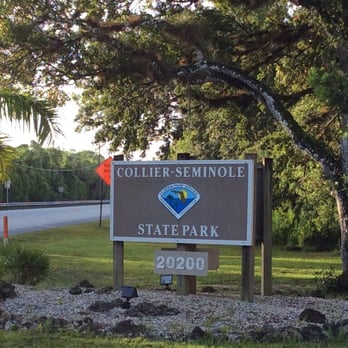
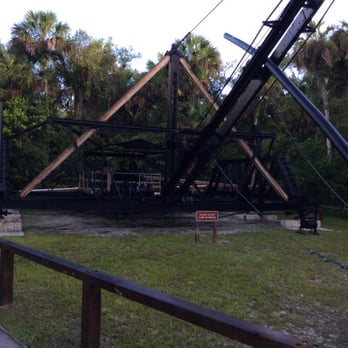
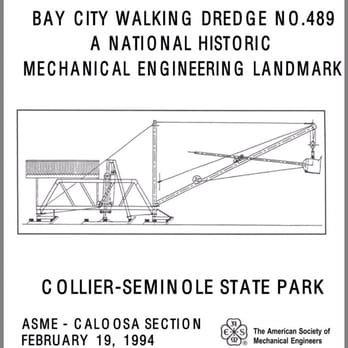
Barron Collier's name is well known in this part of Florida. Collier earned his fortune in the trolley car advertising business. He had to foresight to see the economic opportunities involved with opening up the west coast of Florida and he invested heavily into building a highway that cut through the Everglades and ran from coast to coast in south Florida. 1920 he owned a million acres of land in this area. When Barron Collier died in March 1939, he was Florida's largest landowner. Part of his holdings included a rare stand of native royal palm trees that he reserved. The land was originally supposed to be a National Park but the federal government wasn't interested so the state of Florida stepped in and created a state park in 1947. The Seminole in the parks name reflects that before Collier owned the land it was the home of the Seminole Indians. There is a memorial to Barron Collier in the park. At the entrance to the park is a National Historic Mechanical Engineering Landmark, the last existing Bay City Walking Dredge built in 1924. This large piece of equipment has historical significance. It is a walking dredge that was used to dig the Tamiami Canal in the 1920's. The 60 foot long machine would scoop the land between it's legs and then walk along before scooping again. The material was then placed next to the canal to form a road. The machine operated 6 days a week for ten hours a day. This road opened up the west coast of Florida to travelers. In May of 2013 the Bay City Walking Dredge was added to the National Register of Historic Places. The park includes of 6,430 acres of mangrove swamp, cypress swamps, salt marshes, mangrove river estuaries, and pine flatwoods. Park amenities includes two nature trails, the .9 mile Royal Palm Hammock Trail and the 6 mile Collier-Seminole Trail. The Collier-Seminole trail requires wading through swamp water and you have to check in at the ranger station to get the combination for the gate. There are primitive camp sites on this trail. There is an an interpretive center located in a cypress log block house which was the type used by white settlers during the Second Seminole War. You can embark on 3.5 miles of hiking and biking trails or rent a canoe for the Blackwater River which originates in the park and travels several miles through the mangroves to Blackwater Bay and the Ten Thousand Islands, This park has a boat ramp, guided boat tours, and a campground. There is so much to do here and park admission is only $5. The .9 mile Royal Palm Hammock Trail is located adjacent to the picnic area. Part of the trail is natural earth and part is boardwalk. The trail starts out in a tropical and temperate hardwoods and then transitions into habitats that lead to the mangrove fringe along the edge of Florida Bay before ending at a platform overlooking a salt marsh. Along this trail are large royal palms, Jamaican dogwoods, and gumbo limbo trees. You may see the colorful and endangered liguus tree snails climbing up the smooth bark of tropical trees. Bears and panthers pass through the hammock. Birds you may see here include red-shouldered hawks, white-crowned pigeon, cardinal, yellow-rumped warbler, black-throated blue warbler and the Swallow-tailed kite. This is a great park to get out and enjoy nature while safely social distancing. There is a lot of history here and it is a wonderful place to hike, bike, boat, camp, picnic, and nature watch. Here is the latest message from the park service. "Out of an abundance of caution, all events, activities, special event reservations, pavilion rentals and camping/cabin reservations at Florida State Parks have been canceled for the next 60 days. Most Florida State Parks remain open for day use; however, hours of operation have been reduced to 8 a.m. to 5 p.m"
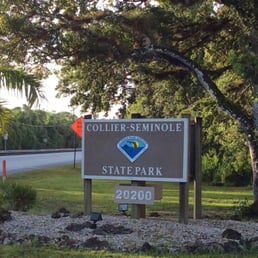

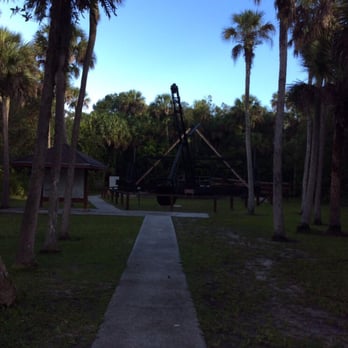
Collier-Seminole State Park is located off of US 41 a.k.a. "The Tamiami Trail" and host the only known surviving example of a "Bay City Walking Dredge" #489 circa. 1924 and was the main reason for stopping at this state park. The Bay City Walking Dredge worked on the Tamiami Trail 18 hours a day from 1927 thru 1928 removing the limestone spoils blasted away under the swampy muck to provide the road bed for the highway still used today. The dredge, a rusting steel hulk now still and silent is a behemoth that ate its way through the alligator and mosquito-infested Everglades, and is credited with opening a new frontier that, in the 1920s, was almost as forbidding and inhospitable as the moon. We arrived here just before 8:00 AM and found the Park Ranger raising the American Flag in front of the locked gate, she opened the gate and allowed us in early, the dredge is proudly displayed just a few hundred yards from the ranger's station. I had planned to walk completely around the area displaying this historic piece of machinery but the mosquitos and deer flies were so bad it was impossible to stay outside my vehicle for more than a few minutes. I can't image how problematic they must have been during the highway's construction so excuse the photos that are somewhat compromised hopefully you'll have better luck if you choose to visit this State Park.


One of my favorite parks. I was here tent camping for a few days. I like how the layout of the tent camping is. Your camp site is surrounded by trees and tall bushes in a circular like camp spot. You get more pivacy here then other parks and a nice feel of nature. The place is nice and quiet untill late in the night because you hear the sound of motorcycles back and forth and other vehicles rubbing their engines. It seems there is a bar nearby. There are things to do here I went canoeing. They advice you to take a picture of the map... GOOD IDEA The canoeing trail was nice. It had definitely changed from the last time I was here. It's a little more open now. There are number signs for you to be guided, but not in numerical order lol. Some of the signs in the river are covered by branches, sometimes there are two channels to choose from but no arrows to help. The map is a little vague. I personally use the Force to guide me back lol.


My all time favorite park for tent camping. Employees are very nice. Bathrooms are kept clean throughout the day. Spacious sites for tent. Fun trails and kayaking. Park is about a 23 min drive to stores in case you need last minute items.


Stayed one night at Collier-Seminole State Park just south of Naples, Florida ... this park gains 5-stars for the beauty and things to do ... kayaking, great hiking ... but the RV sites are really packed in and tight, so we downgraded to 4 stars ... Really beautiful park ... and the trails and park itself are perfectly maintained ... some of the largest natural bottle-neck palms I've seen and the Florida Sables are everywhere ... We stayed at site 74 which had 30/50 amp power and H2O ... no RV sight to the right of us which was nice ... Even though crowded, we'll come back ... a lot to do there and we only stayed overnight ... we'd like to kayak the mangroves which we didn't get to do ... you can see our video of the park here https://www.youtube.com/watch?v=kGA1FPBylfY


We were just driving around killing some time... And decided to drive through this cute little park. It's just a lovely little place - lots of camping, people hiking around, and a waterway for boats. Just what we needed during this locked down time period.


My husband & I camp here often with our tiny-trailer and our dog, and we love it. It is RUSTIC. It is an underfunded state park, with adequate facilities. Many will not enjoy the lack of "amenities". We're cool with it though. I love camping , but the local campgrounds are all more RV parks, and while pretty, just never really feel like we're doing anything. We pull up into formation, set-up and sit within inches of our neighbors and their gigantic rigs, with big screen TVs etc. All for about $70-100 per night. No thanks. What we like about this campground is it is so natural. The campsites are actually sites, and many are nice and private. They have hook-ups, and 3 bathhouses. It is always fun to walk around and see the different types of tents, campers, pop-ups, and big rigs. They have lots of different types of sites and even a group campsite, set aside from the rest. It is so budget friendly at $22 per night. Hello! You can make reservations on-line or by calling Reserve America, they fill up in season. There is canoeing, and lots of pretty palm tress to enjoy & inspect. You can usually have ground fires, the staff is very helpful, and yet not all in your business like at the KOA. Also they deliver wood & ice right to your site. Here you are about 15-20 mins from Marco Island. The bathhouses are not great. I try not to spend any length of time in there, and avoid using the showers if I can, mainly because they are crowded in the evenings, and mornings, and the bugs trail you in there. (which is like fish in a barrel, you trapped in the shower with bloodthirsty beasts) The bugs vary, we have had some trips with nothing Citronella & OFF could not handle, to an attack of Deer Flies which was truly awful. Be prepared for raccoons and various wildlife. Be sure to put ALL of your trash and food away before you leave the site, or they will loot. To summarize, I am endorsing this place, but am a laid back camper, who is happy with what my $22 campground offers, and second day hair.


A state park that has hiking and bike trails. There is a lot of history within the park. There are different areas of the park that highlight the history, like memorials and such. This is a place where a lot of people do camp. It was nice to explore. You definitely need bug spray. read more

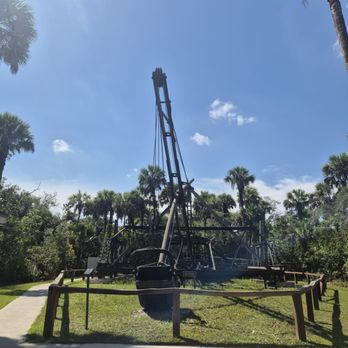

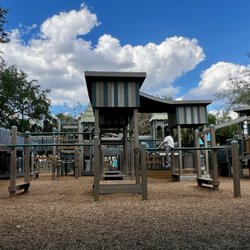
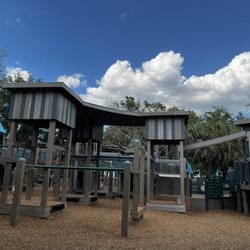
This State Park does a good job of dotting the " i's " and crossing the " t's ". There's hiking trails, camping, fishing, kayaking / canoeing, a pavilion, picnic tables, kiddies playground, and some interesting historical items. Admission is $5.00 per vehicle (maximum of 8 people), or $2.00 per person (pedestrians or bicyclists). I was on my motorcycle so I fell in the top category. I rode to the boat launch area first. This was a nice place to launch a boat or kayak. It was a protected bay like area. There was a floating boat dock nearby where one could fish from. In the same area as the boat launch was the hiking trail. It was closed (the park employee at the entrance had already told me) probably because of Hurricane Ian damages? Also the picnic and playground area was in this area. here. Restrooms are on site too. The next stop I visited while in the park was the historic Bay City Walking Dredge No. 489. This feat of engineering was used in the 1920's to help build the Tamiami Trail through the Florida Everglades. From the information provided, "Built in Bay City Michigan, this walking dredge followed the drilling and blasting rigs, averaging 80 feet per 10 hour shift. Dynamite was used to blast the limestone into small enough chunks for the dredge to lift." The road was completed, finally linking Tampa to Miami in 1928, with the help of this machine. For the mechanical and engineering nerds (like me), you'll want to see and read about this. Ha! I had a good time here and recommend you check this place out. I am going with 4 stars because the hiking trail was closed and the canoe rental cabin where one could also buy drinks was closed. Hopefully these will open in the near future. read more


I drove in to let my dog out for a pee real quick but I saw you gotta pay for this park so I turned right around:) I'm not paying for my dogs little walk. But maybe I'll come back one day for a planned visit read more



3 years ago

Needed a silent retreat place and this did the job great!! I camped Thursday to Sunday and it was quiet and empty the weekdays. Saturday it picked up but other campers enforced the quiet hours . There are so many song birds that it was glorious. Cardinals and woodpeckers galore, hawks, and others I don't know. Check in and checkout was easy and smooth. There are plenty of trails and I love you have to check in before you go out for safety. There was a high alert for Florida black bear while I was there so no food allowed to be left out. The loop A tent only is beautiful and woodsy. Most lots are in partial shade though they say full shade because at midday the middle of the lot is in plain sun . Some lots work that you could put a four people tent on the edge of the lot enough to be under shade. There are shrubs and bush all around the lot for privacy and noise reduction. Water and electric hook ups, and the bathrooms are clean. NOTE: Mosquitoes here are big enough you can see them fly. Totally vicious. Bring DEET. I had taken my organic repellent and felt like mosquitoes ate it up like BBQ sauce. There's a gas station next door that sells OFF and not one mosquito got near me again . read more






6 years ago

2 years ago

Barron Collier's name is well known in this part of Florida. Collier earned his fortune in the trolley car advertising business. He had to foresight to see the economic opportunities involved with opening up the west coast of Florida and he invested heavily into building a highway that cut through the Everglades and ran from coast to coast in south Florida. 1920 he owned a million acres of land in this area. When Barron Collier died in March 1939, he was Florida's largest landowner. Part of his holdings included a rare stand of native royal palm trees that he reserved. The land was originally supposed to be a National Park but the federal government wasn't interested so the state of Florida stepped in and created a state park in 1947. The Seminole in the parks name reflects that before Collier owned the land it was the home of the Seminole Indians. There is a memorial to Barron Collier in the park. At the entrance to the park is a National Historic Mechanical Engineering Landmark, the last existing Bay City Walking Dredge built in 1924. This large piece of equipment has historical significance. It is a walking dredge that was used to dig the Tamiami Canal in the 1920's. The 60 foot long machine would scoop the land between it's legs and then walk along before scooping again. The material was then placed next to the canal to form a road. The machine operated 6 days a week for ten hours a day. This road opened up the west coast of Florida to travelers. In May of 2013 the Bay City Walking Dredge was added to the National Register of Historic Places. The park includes of 6,430 acres of mangrove swamp, cypress swamps, salt marshes, mangrove river estuaries, and pine flatwoods. Park amenities includes two nature trails, the .9 mile Royal Palm Hammock Trail and the 6 mile Collier-Seminole Trail. The Collier-Seminole trail requires wading through swamp water and you have to check in at the ranger station to get the combination for the gate. There are primitive camp sites on this trail. There is an an interpretive center located in a cypress log block house which was the type used by white settlers during the Second Seminole War. You can embark on 3.5 miles of hiking and biking trails or rent a canoe for the Blackwater River which originates in the park and travels several miles through the mangroves to Blackwater Bay and the Ten Thousand Islands, This park has a boat ramp, guided boat tours, and a campground. There is so much to do here and park admission is only $5. The .9 mile Royal Palm Hammock Trail is located adjacent to the picnic area. Part of the trail is natural earth and part is boardwalk. The trail starts out in a tropical and temperate hardwoods and then transitions into habitats that lead to the mangrove fringe along the edge of Florida Bay before ending at a platform overlooking a salt marsh. Along this trail are large royal palms, Jamaican dogwoods, and gumbo limbo trees. You may see the colorful and endangered liguus tree snails climbing up the smooth bark of tropical trees. Bears and panthers pass through the hammock. Birds you may see here include red-shouldered hawks, white-crowned pigeon, cardinal, yellow-rumped warbler, black-throated blue warbler and the Swallow-tailed kite. This is a great park to get out and enjoy nature while safely social distancing. There is a lot of history here and it is a wonderful place to hike, bike, boat, camp, picnic, and nature watch. Here is the latest message from the park service. "Out of an abundance of caution, all events, activities, special event reservations, pavilion rentals and camping/cabin reservations at Florida State Parks have been canceled for the next 60 days. Most Florida State Parks remain open for day use; however, hours of operation have been reduced to 8 a.m. to 5 p.m" read more


3 years ago


Collier-Seminole State Park is located off of US 41 a.k.a. "The Tamiami Trail" and host the only known surviving example of a "Bay City Walking Dredge" #489 circa. 1924 and was the main reason for stopping at this state park. The Bay City Walking Dredge worked on the Tamiami Trail 18 hours a day from 1927 thru 1928 removing the limestone spoils blasted away under the swampy muck to provide the road bed for the highway still used today. The dredge, a rusting steel hulk now still and silent is a behemoth that ate its way through the alligator and mosquito-infested Everglades, and is credited with opening a new frontier that, in the 1920s, was almost as forbidding and inhospitable as the moon. We arrived here just before 8:00 AM and found the Park Ranger raising the American Flag in front of the locked gate, she opened the gate and allowed us in early, the dredge is proudly displayed just a few hundred yards from the ranger's station. I had planned to walk completely around the area displaying this historic piece of machinery but the mosquitos and deer flies were so bad it was impossible to stay outside my vehicle for more than a few minutes. I can't image how problematic they must have been during the highway's construction so excuse the photos that are somewhat compromised hopefully you'll have better luck if you choose to visit this State Park. read more



One of my favorite parks. I was here tent camping for a few days. I like how the layout of the tent camping is. Your camp site is surrounded by trees and tall bushes in a circular like camp spot. You get more pivacy here then other parks and a nice feel of nature. The place is nice and quiet untill late in the night because you hear the sound of motorcycles back and forth and other vehicles rubbing their engines. It seems there is a bar nearby. There are things to do here I went canoeing. They advice you to take a picture of the map... GOOD IDEA The canoeing trail was nice. It had definitely changed from the last time I was here. It's a little more open now. There are number signs for you to be guided, but not in numerical order lol. Some of the signs in the river are covered by branches, sometimes there are two channels to choose from but no arrows to help. The map is a little vague. I personally use the Force to guide me back lol. read more


My all time favorite park for tent camping. Employees are very nice. Bathrooms are kept clean throughout the day. Spacious sites for tent. Fun trails and kayaking. Park is about a 23 min drive to stores in case you need last minute items. read more


8 years ago
Stayed one night at Collier-Seminole State Park just south of Naples, Florida ... this park gains 5-stars for the beauty and things to do ... kayaking, great hiking ... but the RV sites are really packed in and tight, so we downgraded to 4 stars ... Really beautiful park ... and the trails and park itself are perfectly maintained ... some of the largest natural bottle-neck palms I've seen and the Florida Sables are everywhere ... We stayed at site 74 which had 30/50 amp power and H2O ... no RV sight to the right of us which was nice ... Even though crowded, we'll come back ... a lot to do there and we only stayed overnight ... we'd like to kayak the mangroves which we didn't get to do ... you can see our video of the park here https://www.youtube.com/watch?v=kGA1FPBylfY read more


4 years ago

We were just driving around killing some time... And decided to drive through this cute little park. It's just a lovely little place - lots of camping, people hiking around, and a waterway for boats. Just what we needed during this locked down time period. read more


4 years ago
Camping was amazing, very quiet. Site seeing was beautiful, fishing wasn't good as it's more of a lake. They have lots of historic items/house on site. We all went bike riding which was really fun. Camp sites are very spacious. read more


15 years ago
My husband & I camp here often with our tiny-trailer and our dog, and we love it. It is RUSTIC. It is an underfunded state park, with adequate facilities. Many will not enjoy the lack of "amenities". We're cool with it though. I love camping , but the local campgrounds are all more RV parks, and while pretty, just never really feel like we're doing anything. We pull up into formation, set-up and sit within inches of our neighbors and their gigantic rigs, with big screen TVs etc. All for about $70-100 per night. No thanks. What we like about this campground is it is so natural. The campsites are actually sites, and many are nice and private. They have hook-ups, and 3 bathhouses. It is always fun to walk around and see the different types of tents, campers, pop-ups, and big rigs. They have lots of different types of sites and even a group campsite, set aside from the rest. It is so budget friendly at $22 per night. Hello! You can make reservations on-line or by calling Reserve America, they fill up in season. There is canoeing, and lots of pretty palm tress to enjoy & inspect. You can usually have ground fires, the staff is very helpful, and yet not all in your business like at the KOA. Also they deliver wood & ice right to your site. Here you are about 15-20 mins from Marco Island. The bathhouses are not great. I try not to spend any length of time in there, and avoid using the showers if I can, mainly because they are crowded in the evenings, and mornings, and the bugs trail you in there. (which is like fish in a barrel, you trapped in the shower with bloodthirsty beasts) The bugs vary, we have had some trips with nothing Citronella & OFF could not handle, to an attack of Deer Flies which was truly awful. Be prepared for raccoons and various wildlife. Be sure to put ALL of your trash and food away before you leave the site, or they will loot. To summarize, I am endorsing this place, but am a laid back camper, who is happy with what my $22 campground offers, and second day hair. read more


This is for the primitive camp site (hiking). What i really wanted to do was canoe out to the grocery place primitive site but the park doesn't allow overnight rental of conoes.. even if you're camping in the park. It is recommended that you call in and make a reservation for whichever primitive site you want since they can only accomodate so many people. It's as simple as calling in and providing your name and the date. The check in / out process was really simple and quick. When i was told that the site was 3 miles out, i got excited thinking that i'd be sleeping with gators. Unfortunately, the trail you get on to head towards the site does a J-hook back towards US41. The ranger gave good instructions but the actual marker for the begining of the trail wasn't clear, so i took the extrascenic route. The campsite is small, only having room for one or two 4-6 person tents. There a few different clearings that you can go off to for your hygiene needs (please dont go around peeing right on the site). The bark that was on site was wet and useless for a fire but i had brought a bunch of newb-logs with me and i suggest you do the same. I only stayed here for 1 night with my partner. Even though you could hear some road noise, and clearly heard what sounded like a rock cover band playing for a few hours - after the sun goes down, it really feels like you're alone out there. The trees provide great shade during the day which also means they make it hard to do any stargazing. If doing this in the winter (including feb-mar) then it would be a good idea to bring a multi layered sleeping bag - better too much bag than waking up a popsicle! It was first time doing this kind of camping with someone and i realllllly enjoyed it. I'll definitely be doing a lot more "primitive" camping throughout my life - i'm looking forward to seeing what other parks have to offer. read more


6 years ago


15 years ago
8 years ago
6 years ago

9 years ago
8 years ago

8 years ago
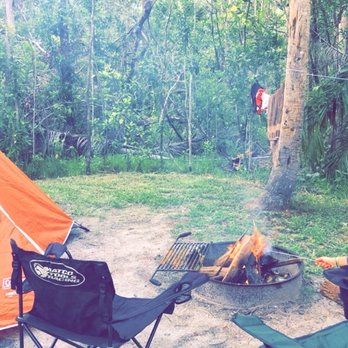
I have camped all over the U.S. and this is by far the coolest campground I have ever stayed in. Very nice bathrooms and showers, thick with palm trees and plants it feels like you're in the middle of the jungle! Fun bugs to see (that don't bother you) and beautiful set up for the sites. Love love love. So happy we found this place! read more



9 years ago

9 years ago
13 years ago

12 years ago

8 years ago

12 years ago
More info about Collier-Seminole State Park
20200 E Tamiami Trl
Naples, FL 34114
Directions
(239) 394-3397
Call Now
Hours
Outdoor Amenities
Other Amenities