Cancel

    Open app

    Search

    Cold War Bunker

    4.0 (1 review)
    Closed 10:00 am - 6:00 pm

    Cold War Bunker Photos

    Recommended Reviews - Cold War Bunker

    Your trust is our priority, so businesses can't pay to alter or remove their reviews. Learn more about reviews.
    Yelp app icon
    Browse more easily on the app
    Review Feed Illustration

    10 years ago

    Helpful 0
    Thanks 0
    Love this 0
    Oh no 0

    Verify this business for free

    Get access to customer & competitor insights.

    Verify this business

    The Church of All Saints, North Street

    The Church of All Saints, North Street

    (2 reviews)

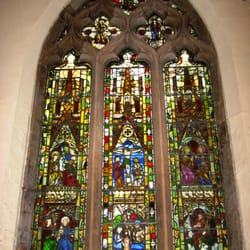
    If you visit just one church in York (aside from the Minster), make it this one. This fascinating…read morelittle church, tucked away on the rather less touristy west bank of the Ouse, has a fascinating history and contains one of Britain's most impressive collections of mediaeval stained glass. History There has been a church here since at least the 11th century, and probably predating the Norman invasion. In the 12th century, the single-cell church was expanded with aisles, some of which incorporated Roman columns from the original Roman settlement of Eboracum. The chancel was reconstructed in the 13th century in the Early English style, but a major rebuilding in the 14th century saw the east end rebuilt in the decorated style, with the aisles extended to form a rectangular plan. Later in the same century, the tower and 120ft spire were built, and the fine chancel and aisle ceilings were added in the 15th century. The church On entering, the church has a slightly rustic and homely feel to it. With no crossing, the nave is divided from the chancel only by the rood screen, and the aisles run uninterrupted from east to west. The arcades are in the simplest Early Gothic style, with simple capitals. One of the original Roman columns can clearly be seen between the north aisle and chancel. But the main event is unquestionably the stained glass: almost all of it is mediaeval, and of very high quality. There is simply too much to describe here in great detail, but there is more information available on the church's website. But essentially, the north and south aisles and east end contain windows which are complete or almost entirely complete in their original form, and date mostly from the 14th and 15th centuries. The most famous are in the north aisle: first, the 'Corporal Acts of Mercy Window' shows a bearded man (who may be the donor, Nicholas Blackburn, a merchant and mayor of York), carrying out six of the seven bodily acts of mercy, ie feeding the hungry, giving drink to the thirsty, offering hospitality to strangers, clothing the naked, visiting the sick and relieving those in prison. The final act (burying the dead) is omitted. Next along in the aisle is the unique 'Pricke of Conscience' window, so named after a Middle English poem, written in the Northumbrian dialect, describing the last 15 days of the world. The panels depict the destruction of the world and the fate of humankind, each panel underscored with the relevant passage of the poem, and all intended to call people to repent. As you might expect, the images include some wonderful beasts, demons and devils, along with people in varying states of terror or torment. The families of the donors sit watching all this at the bottom of the window. Finally, in the south aisle, look out for the bright and colourful 'Orders of Angels' window in the south aisle: in one of the lower panels is a man wearing a pair of very uncomfortable looking 15th century spectacles. Other fittings of note include a fine 15th century memorial slab on the floor of the south aisle near the chancel arcade, and the imposing late 17th cetury pulpit. Don't forget to look up, either, to the chancel and aisle ceilings with their beautifully carved 15th century hammerbeams depicting angels and men of the church. Practicalities The church is in the Anglo-Catholic tradition, and Mass is said on Thursday at 12.45, and on Sundays at 12 noon and 17.30. The church is normally open for visitors in the middle of the day.

    Not as impressive as The Minister, but worth a look. In my opinion, this was an Archeologist gem,…read moremedieval structure. This church received my admiration twice on my 5 day visit. Super good vibes.

    Barley Hall - Barley hall with stocks.

    Barley Hall

    (5 reviews)

    My wife and I visited Barley Hall in September 2024. It was an afterthought, having bought tickets…read moreto the Jorvik Viking museum, this was a small additional fee. But it was worth it. Not a long visit, probably an hour or so. There are several rooms to explore, each with laminated info cards to pick up and read the history and purpose. Interactive games for kids learning too. Along with the Jorvik museum, this gave us a really good insight to medieval life in York. It makes sense to get the package, even though we did not have time to visit the other 2 attractions in the package. Finding the Hall was an adventure in itself, tucked away down a narrow lane, under an archway into a courtyard. We were there on a weekday, at the end of the day, and it was not busy. We were able to take our time and enjoy the exhibit.

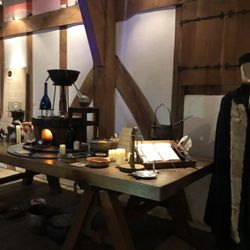
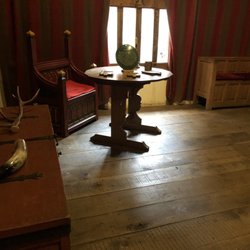
    Coffee Yard is a snickelway that runs between Stonegate -- a very fashionable address in the later…read moremiddle ages a site tucked away in one of its back alleys--Barley Hall, a fifteenth-century townhouse in Coffee Yard. A house occupied by one of Richard III's urban supporters. One of the emerging middle class that gave such strong allegiance to the Yorkists. Barley Hall is a stunning medieval townhouse, once home to the Priors of Nostell and the Mayor of York. Until the 1980s the house was hidden under the relatively modern façade of a derelict office block. Only when the building was going to be destroyed was the amazing medieval building discovered and its history uncovered. Barley Hall's medieval origins had been long forgotten by 1980, when it appeared to be a jumble of brick structures. Ironically, millions of tourists had literally walked right through what was originally an internal corridor of the L-shaped house as they used the Coffee Yard snickelway (an alley-like passageway from one street to another) to travel from busy Stonegate to Swinegate and Grape Lane. I am not sure but I think I stood in a coutyard, that I ten realised wasn't, that may have been a part of this. It was a roofless room and I was looking at interior walls. The building has now been lovingly restored to its original splendour with stunning high ceilings, beautiful exposed timber frames, and possibly the only horn window in England. It has been decorated to replicate what it would have looked like as the Snawsell home around 1483 and boasts a magnificent Great Hall. It is a hands-on living museum, letting visitors experience life in a 15th century house in the centre of York. This is one historic attraction where you are encouraged to touch and pick up exhibits. Sit on the chairs, open chests, and generally explore the house as you choose,and experience what it would have been like to live in Medieval England.. They also have many events. In July and August medieval summer schools for children and coming up: Thu 27 - Sun 30 Nov 2008 St Nicholas Fayre Medieval Market Wed 3 - Sat 6 Dec 2008 Deck the Hall A Medieval Christmas Thu 4 Dec 2008 Barley Hall by Candlelight Sat 6, Sun 7 Dec 2008 Barley Hall Christmas Fayre Wed 10 - Sat 13 Dec 2008 Deck the Hall A Medieval Christmas Thu 11 Dec 2008 Barley Hall by Candlelight Sat 13, Sun 14 Dec 2008 Barley Hall Christmas Fayre Wed 17 - Sat 20 Dec 2008 Deck the Hall A Medieval Christmas You can follow costumed guides as they escort groups through the hall, or hire an audio tape tour. On summer weekends there are special period events, such as mystery plays and medieval markets. Great place to visit.

    St. Martin-Le-Grand Church

    St. Martin-Le-Grand Church

    (2 reviews)

    St Martin's clock is situated on Coney Street, it features a figure of a naval officer which was…read moreadded in 1779. The church in which the clock was situated was badly damaged by bombing in World War II and the clock was last restored when the church reopened in the 1960s and the restored clock will now strike the hours and chime every quarter for the first time since 1942.

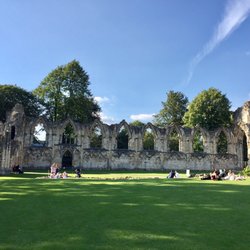
    St Martin's is one of York's most notable landmarks, best-known for its impressive clock which…read morehangs over Coney Street. But it has also had a tumultuous history, and contains one of York's most impressive mediaeval stained glass windows. The church was one of one of York's largest and finest, prior to a fateful night in 1942 when an air raid reduced the church to a smouldering ruin. Before then, it boasted a large nave and chancel with full length aisles and chapels. The fabric dated from the 11th to the 15th centuries. The well-known and large double-sided clock on Coney Street was fitted in 1668, and was topped by the statue of the 'Little Admiral' in the 18th century. The clock and statue survived the bombing, but little else did. The church was eventually rebuilt between 1961 and 1968, with the 15th century tower and south aisle becoming the church, and the remainder (most of the former nave and north aisle) becoming an enclosed garden of remembrance. Substantial parts of the north walls survive, however, including elements from the 11th century. Although much smaller, the restored church is an attractive space, combining modern works with a 17th century memorial to Sir William Sheffield (d. 1633) and - above all - its mediaeval stained glass. This had fortunately been removed for safe keeping in 1940, and includes one gem: the window depicting the life and works of St Martin of Tours, dating from around 1440. Formerly the west window, this is now in the new north wall and faces visitors as they enter. It is huge for a parish church (and is the largest in the city outside the Minster): 9m high and 4m wide, it is one of the best preserved of its type and contains no Victorian additions or repairs. The church is normally open during weekdays for private prayer and visitors.

    Cold War Bunker - landmarks - Updated May 2026

    Loading...
    Loading...
    Loading...