Treasurers House Photos


Recommended Reviews - Treasurers House
Start your review...




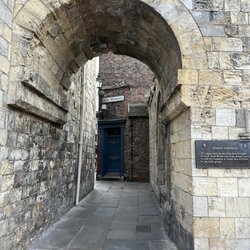
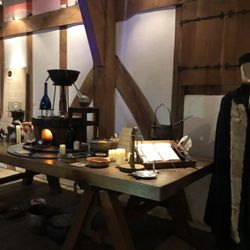
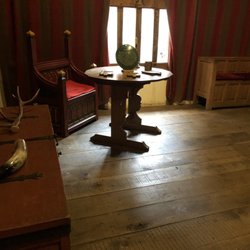
In the care of the National Trust since 1930 (it was one of its first major properties), and tucked away behind the Minster, this has both a lovely garden and fascinating collection of art and antiques. History The name derives from it being on the site of the mediaeval house of the Minster's Treasurer, a post abolished at the Reformation. The present building dates from the 17th century, but had been added to with various accretions and was actually three separate houses when, in 1897 it was bought by Frank Green (1861-1954). He was the son of wealthy Wakefield entrepreneurs, and used his considerable wealth and educated taste to restore the house to what he thought it should look like in its heyday, albeit with a central great hall which was entirely of his own imagination. He was an early collector of antiques, and his aim was not to deliver a home so much as a show-case for his collection of furniture, paintings and other treasures, with great attention to paid to the detail of their presentation. Each room was designed in the style of a different period, the better to show off the collection. He was famously fastidious, not to say fussy, and and the house abounds with notices telling the staff what to do and how to behave, and metal floor studs to indicate the exact position of the furniture. It is said he even wandered around to check on things at night! A bachelor, he gave the house to the Trust in 1930, while he moved on to Ashwick House in Somerset. The House The tour begins in the kitchen, adjacent to which is a display relating Green's life and the restoration of the house. The main rooms are then arranged essentially in two wings, either side of the Great Hall. The most impressive is the wing beyond the hall, with its fine William & Mary staircase, and bedrooms filled with 17th and 18th century furniture and paintings. To reach the cellar and attic you need to go on an accompanied tour: the cellar tour is mainly of interest to ghost enthusiasts, the story being fully related in Templar's thorough review. The basement is down steep stairs and has a tearoom, (11.00-16.30) and toilets: the nearest toilets with level access are in the York Tearoom nearby. There is a ramp available to provide wheelchair access to the Great Hall, Dining Room and Kitchen, but not to the rest of the house. Visitors can wander on their own, and there is an audioguide available on request, as well as braille and large print guides. In each room there is a separate guide to the pantings on display. Afterwards, the gardens (free entry) make a great place to escape the touristy bustle of the city. read more

18 years ago
This is a 17th and 18th-century house, in the heart of historic York Minster , with a beautiful formal sunken garden and herb garden. Originally home to the treasurers of York Minster and built over a Roman road and teeming with ghosts. (apparently). Entry is free to the tearoom and garden, but you have to pay to enter the house and the cellar is extra. This is one of THE famous ghost stories. In 1953 a young plumber called Harry martindale saw a compant of Roman soldiers in the celler. The soldiers marched through the wall into the cellar, though they were cut off at the knees as they were walking at the level of the original Roman road. The garden is a great place to eat a sarnie and chill when visiting York. I found more info on the ghosts..maybe nothing much new but In February 1953, Henry Martindale, an 18-year-old apprentice heating engineer, claims he heard a weird sound, faint at first, but then louder 'like a wireless coming though the wall'; then it became apparent it was a horn being blown. Then he saw Roman legionaries in twos led by a horseman in cellar, marching through, all cut off at knees! He was fixing central heating pipes and fell off his ladder onto his backside. He hid in a corner on seeing ghosts, and was off work for two weeks with shock. He cannot have been lying as he later became a policeman. Believe it if you wish! This story came to prominence in 1971 due to his description of insignia and uniforms of legionaries, Roman road found 18 beneath cellar and the Tourist boom! read more


18 years ago