Cocoanut Grove House Photos


More like Cocoanut Grove House
Recommended Reviews - Cocoanut Grove House
Start your review...



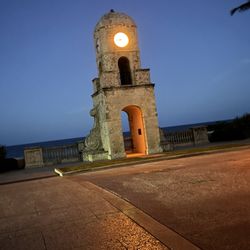
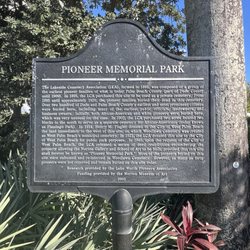
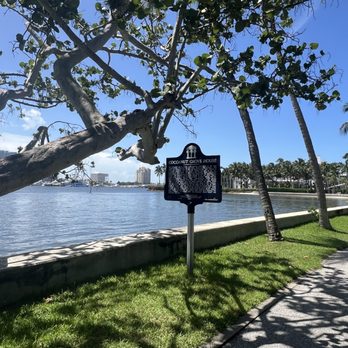
Lake Trail is a five and a half mile scenic path that offers some of the most beautiful views of Palm Beach. The trail runs along the Lake Worth Lagoon from South Lake Drive near Peruvian Avenue northward, ending just north of the Sailfish Club. I picked up the trail near Whitehall, Henry Flagler's former home, which is now a museum. Along the way, there are several other historic points of interest, including Sea Gull Cottage, Bethesda-by-the-Sea, and the Sailfish Club. While walking along the trail just past the historic kapok tree, I spotted this marker commemorating the site of the Cocoanut Grove House, once Florida's only hotel on the east coast between Titusville and Key West. The blue marker is part of Florida's Historical Marker Program, one of the Division of Historical Resources' most recognizable public-history initiatives. These markers commemorate significant people, places, and events throughout the state and can be found along roadways, at archaeological sites, battlefields, colleges, historic districts, schools, churches, cemeteries, and locations where historic buildings once stood. Historical Marker F-727 was erected in 2011 by the Seminole Chapter of the National Society Daughters of the American Revolution (NSDAR) and the Florida Department of State. The Cocoanut Grove House was the first hotel on Lake Worth. Elisha Newton "Cap" Dimick, one of the early founders of Palm Beach, built the original structure in 1876 as a private residence for his family. In 1880, Dimick expanded the building by adding eight rooms and converted it into an inn. Two years later, he sold the hotel to Commodore Charles J. Clark, who continued operating it for several years. The hotel became an important stop for visitors arriving in Palm Beach. Approximately 4,500 guests stayed at the Cocoanut Grove House between 1883 and 1895, many arriving aboard the Illinois, a flat bottomed sharpie that traveled between the Indian River and Lake Worth. Guests could dine on local specialties such as fish, green turtle, venison, and vegetables for $1.50 per day or $6 per week. The hotel also played a role in the early development of Palm Beach. In 1893, Henry M. Flagler stayed at the Cocoanut Grove House while planning the extension of the Florida East Coast Railway to Palm Beach. Flagler later leased the Cocoanut Grove House to house his workers while they constructed his Royal Poinciana Hotel.. In 1893 the Cocoanut Grove House was destroyed by fire. Although the hotel is long gone, the original location is marked at the northwest corner of Pendleton Lane and Lake Trail, making it an easy stop to visit while exploring Lake Trail. read more