Cheese 2017 Photos



Recommended Reviews - Cheese 2017
Start your review...



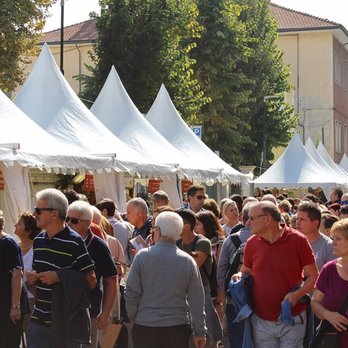
We arrived at this world famous exhibition (cheese stands from the entire planet!), Cheese 2017, held twice a year in a small town of Piedmont, after a two hour drive. We were immediately immersed in an unusually hot weather and an overwhelming crowd. Our love for cheese and high cholesterol won over my complaints, also because I had some fun first arguing with some folks who wanted to steal my parking space. Thanks to this episode, I was ready to thread on the crowd like Terminator. My dead father's walking cane (always kept it in the car together with pepper spray: too many people on cocaine in Milano) kept these rioters at bate. I has wished for some rain, as this exhibition in a small Northern Italian village attracts people from all over Europe; rain might have discouraged a few Italians...But hey, the streets of Bra (before World War II it was named Brah from the ancient Celts who lived in Northern Italy) were exploding with people. This semester the organizers wanted to stress out the goodness of cheese produced with raw milk. There were cheesemakers, shepherds, cheese mongers and affineurs from Italy and round the world. In fact, a number of foreign countries were present at the Exhibition, but the focus in 2017 was on USA, during which the Slow Food organization launched the historic American Raw Milk Cheeses Presidium. Raw milk cheese is banned in Australia & the U.S. (although just in a few States), however in the latter the manufacturing of this odorous staple is increasing. Don't be fooled by American press that refuses to recognize the superiority of raw-milk cheese. The 2 deaths in Vermont & Connecticut a few months ago, after eating the artisanal cheese by O., made by V. C. in W., NY, were caused by listeria, a bacterium normally found in water and ground, which can contaminate water but also animals in an asymptomatic manner. Both deaths were either caused by poor hygiene in the dairy farm or by bacteria present the wood planks where the cheese forms were placed to season. Cheese 2017 was divided in zones: the first was truly wonderful, dedicated to the international market, with stands of French, British, Spanish, Slovenians farmers, etc. The Italian cheeses accounted for some rare delicacies from various regions, such as: Macagn (Piedmont) Piacentinu Ennese (Sicily) Casòlet (Trentino) Caciocavallo Podolico del Gargano (Puglia); Storico Ribelle (Lombardy); Ciùc di Mont (Friuli) and many more, some so rare and impossible to find outside the areas of production. An exhibit worth visiting at least once in a lifetime. read more