Casimir Pulaski Monument Photos


More like Casimir Pulaski Monument
Recommended Reviews - Casimir Pulaski Monument
Start your review...



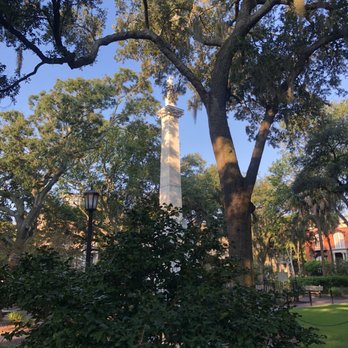
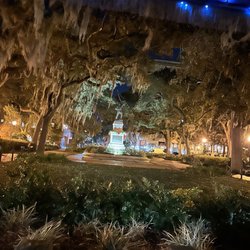
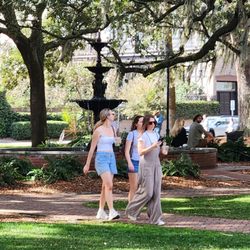
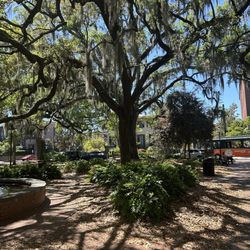
On a recent trip to Savannah, one of my favorite things to do has been to learn the history of the monuments and squares that are all over this beautiful city. This monument has a very interesting story, both about the man it is dedicated to and who might possibly be buried at its base. The Pulaski Monument is located in the center of Monterey Square in Savannah. The monument is dedicated to one of our country's favorite military figures, Brigadier General Count Casimir Pulaski. Kazimierz Pułaski (1745-1779) was born into a noble family in Warsaw, Poland. He developed a passion for politics and came to the notice of the Continental Army while fighting against Russia. He was then issued an invitation to come to the colonies to aid them in their fight for independence. During the Revolutionary War he fought with honor at the battle of Brandywine despite not having fully enlisted and he became famous for organizing the American calvary. Pulaski was fatally injured at the Siege of Savannah. During the war, the British captured Savannah. Pulaski launched an attempt to take it back but was forced to retreat. As he attempted to inspect the battlefield he was mortally wounded by grape shot. To this day Pulaski remains a popular figure in American history and many parks and monuments throughout the country are named for him. After the war Savannah wanted to honor two war heroes, Pulaski and Nathanael Greene but the cost was prohibitive to the young nation saddled with war debt. Prior to 1823, both men were honored with an obelisk in Johnson Square. The monument to Pulaski was originally slated for Chippewa Square where a cornerstone was laid in 1823, but there wasn't enough money to build it and the location was changed to Monterey Square where a new cornerstone was laid in 1853. Russian born, New York artist Robert Eberhard Launitz created the 55 foot Italian marble monument. About the monument he designed, Mr. Launitz has said, "The monument is surmounted by a statue of Liberty, embracing with her left arm the banner of the Stars and Stripes, while in her right hand is extended the Laurel Wreath. The love of liberty brought Pulaski to America; for love of liberty he fought, and for liberty he lost his life. Thus, I thought that Liberty should crown his monument, and share with him the homage of the free." Once the Pulaski monument was built the obelisk in Johnson Square became the Nathanael Greene monument. A 241 year old mystery haunts Savannah involving Pulaski's final resting place. Some people believe General Pulaski was buried at the base of his monument while others are not so sure. After Pulaski was mortally injured at the Siege of Savannah, he was taken by boat up the coast to Charlestown. Some records say he was buried at sea while others say he made it to the Bowen Plantation where he was buried in an unmarked grave. In 1854 the body was dug up and interred at the base of the memorial despite that it might not actually be Pulaski. After eight years of testing and tracking down Pulaski's relatives in Poland, DNA testing has failed to settle the matter conclusively. Perhaps the general is not at rest as people have reported that this square is haunted by the sound of dying Revolutionary War soldiers. read more