Lafayette Square Photos


You might also consider

More like Lafayette Square
Recommended Reviews - Lafayette Square
Start your review...


Reviews With Photos


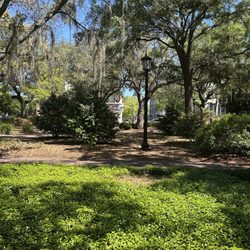
Beautiful green park with shade, live oaks and Nissans some history stories on signs. You run into squares throughout downtown!


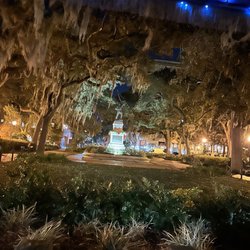
Located right beside the Baptist Church, this Square has a nice fountain within. The trees are in great condition, and there are lots of benches to sit on. This place is perfect to relax and take it all in.


Lafayette Square was one of my favorites because of it's size and beauty and location to the Cathedral of St. John the Baptist. You can sit in this square and enjoy the incredible twin steeples from the church, the highest in all of downtown Savannah. The square is named after a Frenchman who served as Washington's Aide de Camp during the American Revolution, Marquis de Lafeyette. Interesting fact: Lafayette later dedicated a monument to Nathanael Greene over in Johnson Square (so many circles and ties in these Savannah squares!) Although you won't find a statue in this square, you will find a beautiful fountain that commemorates the 250th anniversary of the founding of the Georgia colony. You can also spot the home of Andrew Low, who's widow, Juliette Gordon Low, founded the Girl Scouts of America. Square Review 5:22


Square number I don't know anymore. On my way to writing reviews for all 23 squares this is only my third or fourth to date. As we walked all the squares in one day I will not be writing about all the squares in that little of time. Now I've randomly picked our time at Lafayette Square which is as equally beauteous as any other square. Lot's of green grass, those magnificent Savannah trees and all surrounded by those one a kind Savannah homes! Great spot to break down and have a picnic, nap or almost anything one would do in a park like area. Again Savannah beauty and charm at it's finest!


3 years ago
Lafayette Square is gorgeous. We dropped by and between the trees with their spanish moss sweeping low over the green grass and brick pathways--we were charmed. It's also home to the Cathedral of St. John the Baptist, which we stopped by while were were there as well. There's a beautiful fountain in the center of the square that makes for a lovely focal point. There are plenty of benches along the brick pathways for lingering as well. We enjoyed a leisurely afternoon here of reading in lovely weather while listening to the sound of the fountain in the distance. read more


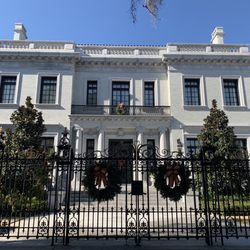
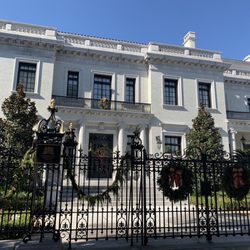
Lafayette Square is located on Abercorn Street between Charlton and Harris Streets. This square was laid out in 1873 and named in honor of Gilbert du Motier, the Marquis de Lafayette who visited Savannah in 1825. He was a leader of the Garde National during the French Revolution and was a major general in the Continental Army under George Washington during the American Revolutionary War. Lafayette was wounded at the Battle of Brandywine in 1777 and was considered a hero of the Revolutionary War. He became an aid and close friend to George Washington. This square is most well known for containing the Roman Catholic Cathedral of St. John the Baptist whose twin steeples are so high that they can be seen from all over the downtown. In the center of the square is the Semiquincentenary Fountain that the Colonial Dames of America presented the city to commemorate the 250th anniversary of the Savannah's founding. On St. Patrick's Day the water is dyed green. Notable houses on the square include the Hamilton-Turner House, former home of businessman Samuel Pugh Hamilton. In 1883 this mansion became the very first residence in Savannah to get electricity and today it is the Hamilton-Turner Inn, a bed and breakfast. On the southwest corner of the square is the Andrew Low House. The land here once held the city jail. When it was moved, Englishman Andrew Low had a house designed by John Norris and built here in 1849. Andrew's son, William, married Juliette Gordon Low, the founder of the Girl Scouts. General Robert E. Lee was a visitor to the Low house. The house is now owned by the National Society of Colonial Dames who operates it as a museum. The Battersby-Hartridge-Anderson House was built in 1852, by Andrew Lows partner in the cotton business, William Battersby. The house is one of the rare Charleston Style homes found in Savannah. It has a side-facing orientation and a two story porch. The childhood home of author Flannery O' Conner is also located here and operated as a museum. Like all of the squares in Savannah, this is the perfect place to take a break and soak in the beauty and history surrounding you. read more

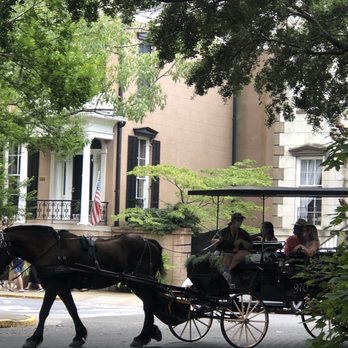


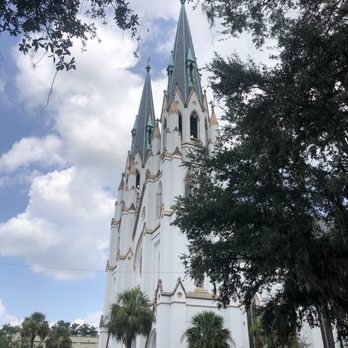


Lafayette Square was one of my favorites because of it's size and beauty and location to the Cathedral of St. John the Baptist. You can sit in this square and enjoy the incredible twin steeples from the church, the highest in all of downtown Savannah. The square is named after a Frenchman who served as Washington's Aide de Camp during the American Revolution, Marquis de Lafeyette. Interesting fact: Lafayette later dedicated a monument to Nathanael Greene over in Johnson Square (so many circles and ties in these Savannah squares!) Although you won't find a statue in this square, you will find a beautiful fountain that commemorates the 250th anniversary of the founding of the Georgia colony. You can also spot the home of Andrew Low, who's widow, Juliette Gordon Low, founded the Girl Scouts of America. Square Review 5:22 read more


10 years ago
Square number I don't know anymore. On my way to writing reviews for all 23 squares this is only my third or fourth to date. As we walked all the squares in one day I will not be writing about all the squares in that little of time. Now I've randomly picked our time at Lafayette Square which is as equally beauteous as any other square. Lot's of green grass, those magnificent Savannah trees and all surrounded by those one a kind Savannah homes! Great spot to break down and have a picnic, nap or almost anything one would do in a park like area. Again Savannah beauty and charm at it's finest! read more


9 years ago

13 years ago

More info about Lafayette Square
Lafayette Square
Savannah, GA 31401
Directions
(912) 651-6610
Call Now
Hours
Outdoor Amenities
Ask the Community - Lafayette Square
Review Highlights - Lafayette Square

















Why does Yelp recommend reviews?
1 review that is not currently recommended
The reviews below are not factored into the business's overall star rating.

2 years ago


