Camp Greene Memorial Photos



More like Camp Greene Memorial
Recommended Reviews - Camp Greene Memorial
Start your review...



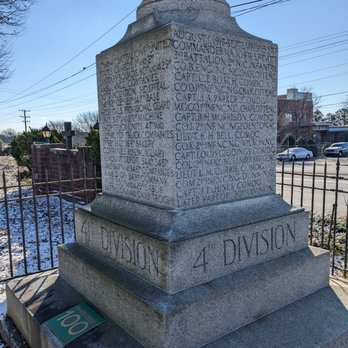
Camp Green was a US Army training camp here. In 1917, both the 3rd Infantry Division and the 4th Infantry Divisions were first organized and assembled at this camp. It was named for Revolutionary War hero Nathanael Green. Major General Greene was the Continental Army major general who forced the British out of the Carolinas. Charlotte was selected over other cities due to the land, weather, and infrastructure to accommodate a camp, as well as a location on a major rail line, giving the city a logistical edge in transporting soldiers and munitions to New York City for the eventual trip abroad. Camp Greene is a massive facility by early 20th-century standards. Its 2,500 acres of forest and cotton fields, bought from families like James Dowd, are eventually expanded to 6,000 acres, which stretch from the cusp of downtown, on what is now Wilkinson Boulevard, west to the Catawba River and Gaston County. There is plenty of room to dig five miles of trenches, to simulate the preferred method of ground combat in Europe. At its peak, more than 60,000 soldiers live on base. The 41st Infantry Division, which trains for 16 weeks, is the first to ship off to France as part of the American Expeditionary Force, followed by the 3rd and 4th Divisions. Today, the only camp remnants that survive are the Dowd family's farmhouse -- now designated as a historic site -- and a couple of rectangular barracks that are converted into permanent housing. And this marker at the corner of Wilkinson and Monument Street. The marker was erected by the Mecklenburg Chapter of the Daughters of the American Revolution. It lists the names of the different brigades trained her and the dates, July 12 1917 to June 30, 1919. [Review 16684 overall - 3189 in North Carolina - 196 of 2022.] read more