Bishop Albert Kee Statue Photos


More like Bishop Albert Kee Statue
Recommended Reviews - Bishop Albert Kee Statue
Start your review...



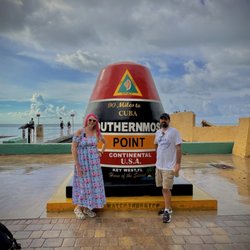
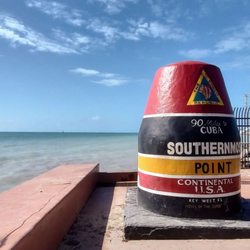
Bronze statue of Bishop Albert Kee in seen blowing a conch shell in front of the temporary spot of the recent replica Southernmost Point buoy. The sculptor Tom Joris lives in Bahama Village and built the statue in 2015 in honor of the beloved "Conch Ambassador" Bishop Albert Kee. The statue is surrounded by random pieces of art by local artists. read more

This bronze statue is located right next to the Southernmost Point landmark at the corner of Whitehead and South Street. It's a nice remembrance of the history of the town and the struggles that some of their residents had to endure decades ago. The statue, erected in March 2015, celebrates the life of Bishop Albert Kee, a preacher, businessman, and Key West's official ambassador of goodwill. Each day, Bishop Kee could be seen at the Southernmost Point, greeting the Conch Train with a cheerful wave and toot on a conch shell. He educated visitors about the origins of conch and various uses for conch meat and also explained how Key West's natives came to be called Conchs. Bishop Kee, and his father before him, left a 50-year legacy of welcoming all who visited the Southernmost Point and popularized conch blowing. More important, they were emissaries of the multi-cultural, multi-ethnic community that had made Key West unique since its inception. Bishop Kee witnessed the Southernmost Point evolve into a spot that thousands of tourists flock to for their photos. And he was there when the old wooden southernmost billboard was replaced with the oversized buoy proclaiming that it is the southernmost point in the continental United States. The buoy design originated from a large floating buoy that marked the entrance to the Black Beach. A number of years prior to this, President Harry Truman took a big step in support of equal rights when he ordered that the military become desegregated. His orders were interpreted to mean that desegregation applied only to military personnel. President Dwight D. Eisenhower took this a step further and desegregated the entire military.The historic Black Beach could not be returned to the community since a large portion of it was now a military base with Navy housing built along the adjacent shores. However, as a gesture to the community, the city built a large community pool and community center at the edge of Bahama Village. The pool was situated to look over the beaches that were once Black Beach and toward the waters of the Atlantic Ocean. It had ground level space for community gatherings and was open to all. The pool is currently called the Martin Luther King Community Center and is located at 300 Catherine Street in Bahama Village. read more

3 years ago