Cancel

    Open app

    Search

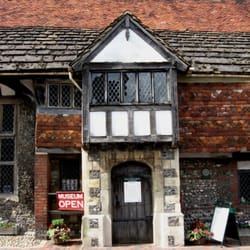
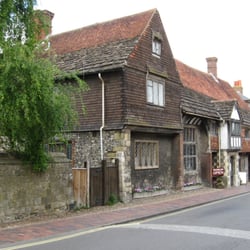
    Bateman's

    4.8 (4 reviews)

    Bateman's Photos

    Recommended Reviews - Bateman's

    Your trust is our priority, so businesses can't pay to alter or remove their reviews. Learn more about reviews.
    Yelp app icon
    Browse more easily on the app
    Review Feed Illustration
    Photo of Jake D.
    3
    61
    13

    8 years ago

    Helpful 0
    Thanks 0
    Love this 0
    Oh no 0

    7 years ago

    Helpful 1
    Thanks 0
    Love this 1
    Oh no 0

    16 years ago

    Helpful 0
    Thanks 0
    Love this 0
    Oh no 0

    14 years ago

    Helpful 0
    Thanks 0
    Love this 0
    Oh no 0

    Verify this business for free

    Get access to customer & competitor insights.

    Verify this business

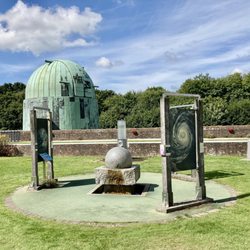
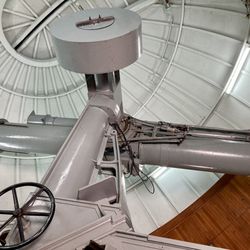
    Observatory Science Centre - Observatory and pond

    Observatory Science Centre

    (2 reviews)

    Formerly the site of the Royal Observatory (from 1958-1990), the site is now run by a charity as a…read morevenue for exhibitions, lectures and educational programmes. The renovated telescopes can be visited by the public, for school visits, and are used by colleges and astronomical societies. It makes a great fun-but-educational family day out. Most people associate the Royal Observatory with Greenwich, where it was founded by Charles II in 1675. It was increasingly recognised that London was not a good location due to light and atmospheric pollution, and the effects of vibrations from rising road and rail traffic. Plans were made to relocate the observatory in the 1930s; transfer began to the new site at Herstmonceux in 1947 and was completed in 1958. The complex of buildings was constructed to house three reflecting and three refracting telescopes in six domes, of brick and concrete with green copper domes and balustraded balconies, with adjoining support buildings, all set around a central ornamental pond. These are themselves classic examples of 1950s architecture. The telescopes were joined in 1967 by the giant 98-inch Isaac Newton Telescope (INT) once housed in the silver dome to the south of the main complex. The UK was never an ideal site for astronomical observations because of the preponderance of cloud, and over time, increasing light pollution from Eastbourne. The growth of cheap air travel in the 1960s enabled astronomers to travel to parts of the world with clearer skies and in 1984 the INT telescope was moved to the Canary Islands. Eventually, the decision was taken to close the site and move the remaining staff to the Institute of Astronomy at the University of Cambridge. The site reopened in its current guise in 1995 and the site, including the telescopes, was refurbished in 2004. Visitors now enter through the eastern grounds of Herstmonceux Castle (itself now a college of Queen's College, Ontario). Car parking is available in a small car park but in summer most park on the lawn in front. The ticket office at the entrance houses a small shop with merchandise aimed at children and young people, covering a range of scientific subjects. Numbers are limited, so advanced booking is strongly recommended. There are guided tours of the telescopes (which take about half an hour) and separate science demonstrations. The site has both indoor and outdoor hands-on activities for children (of all ages!) covering aspects of science and engineering - a bit like a small hands-on science museum. We found the volunteer staff to be friendly and knowledgeable, and the sessions were very interactive for the children. We happily spent a couple of hours there. There is a small cafe on site, serving drinks and a limited range of snacks. The site is on several levels and has a lot of steps and gravel pathways, but there are ramps for level access and a disabled toilet: more details are on the main website. Children must be accompanied and supervised by an adult at all times, and dogs are not admitted (except assistance dogs). As well as being open for general visits, there are periodic stargazing evenings: numbers are also limited for these and need to be booked in advance.
    This is such an interesting place to take the kids for some star-gazing. They are so good at…read morekeeping everyone's attention on the go (things like this can get a bit boring). There's so many different night and daytime events on offer here and a lot of them depend on weather and, of course the stars but we had a great night there and got to see so many beautiful sights. There's a fantastic shop to pop into at the end of the day with some really interesting and informative books to buy.

    The British Museum - At British Museum

    The British Museum

    (1.3k reviews)

    Bloomsbury

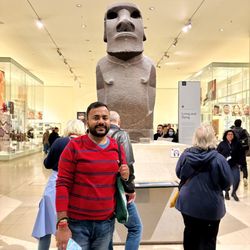
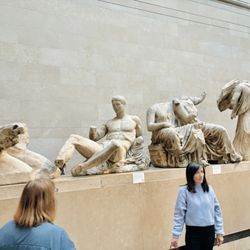
    Huge crowds and it wasn't even a weekend. Reason: free…read more This is equivalent to Natural History ones in US. However, there are historical contexts with british roman empires and other inclusions that makes this place distinct in a variety of ways. There are also kid packet activities- ask front desk. Some areas have uneven heating and cooling so you may be prone to fainting / esp if the ennui alone is not enough to get you there- ha! Place is great for history buffs, though, as it is free- do not expect high end bathrooms and overall exceptional service. Otherwise, 5 stars for being free and for a very elaborate set up.

    British Museum, London, April 5…read more Our family of four with kids ages 9 and 10 spent part of the afternoon at the British Museum as an easy cultural stop during our London stay. Entry to the permanent collection is free and straightforward, with no reservation required, which made it simple to drop in. There are paid special exhibitions, but the main museum itself is open access. Arrival and First Impressions Entry to the building was very easy, and once inside the scale is immediate. The Great Court sets the tone right away, and everything feels larger and more layered than expected. Even just orienting yourself takes a moment because of how expansive the space is. Getting in was smooth and flexible, and the museum handles steady crowds well without ever feeling restrictive, which helped a lot with kids in tow. The Highlights The Egyptian galleries are one of the first moments where the scale really lands. The large stone sculptures and statues are far bigger in person than photos suggest, and they create a dramatic backdrop as you move through the space. The Rosetta Stone was another key highlight. Seeing it in person adds a different level of context, especially knowing its role in unlocking ancient Egyptian writing. It is not large or flashy compared to some of the other artifacts in the room, but it carries a quiet importance that draws attention naturally. The Samurai exhibition was a standout and required a paid entry ticket. It was absolutely worth it. The display of full armor sets, helmets, weapons, and artwork created a complete and visually rich picture of samurai life. The craftsmanship in the armor in particular held everyone's attention far longer than expected, and it felt more immersive than a typical museum exhibit. We also spent time in the hands-on style learning stations, which were a strong break in pace. These included real artifacts like a flint knife that was thousands of years old and a Roman cosmetic jar believed to have been used for eye makeup. Seeing objects like that up close made history feel very tangible for the kids in a way that glass cases alone do not. There is also a family area tucked away downstairs that worked well as a short reset point. It felt quieter and more relaxed, and it gave the kids a chance to decompress before continuing, which made the overall visit more sustainable. The museum works best as a series of short, flexible stops rather than a structured route, and we naturally moved based on interest and energy levels. The Challenges The main challenge is scale. It is very easy to underestimate how large the British Museum is, and even with breaks built in, pacing becomes the key factor in how enjoyable the visit feels. Trying to cover too much quickly would likely be overwhelming, especially for kids. Would We Return Yes, but with a more focused plan and specific sections chosen in advance rather than trying to see everything broadly again. Final Thoughts The British Museum is best experienced in segments rather than as a single continuous visit. The Egyptian galleries, the Rosetta Stone, the Samurai exhibition, and the hands-on artifact stations all offered very different but equally strong experiences. It is free, accessible, and incredibly rich, but the real value comes from slowing down and treating it like a collection of smaller discoveries, with breaks built in, rather than a single museum to "finish."

    The Natural History Museum - Monkey carvings

    The Natural History Museum

    (544 reviews)

    Knightsbridge

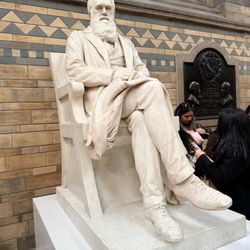
    April 4, Natural History Museum, London…read more Our family of four with a son 9 and daughter 10 visited expecting a quicker stop and ended up spending several hours exploring. Arrival and First Impressions We had tickets reserved which helped us get in quickly. The building itself is stunning, one of the most impressive museum entrances we saw on the trip. The main hall immediately grabs your attention with massive displays and a very grand feel. The museum was busy but manageable. The Highlights The dinosaur exhibit was the clear favorite. The animatronic Tyrannosaurus rex was a big hit and kept both kids fully engaged. There is a strong mix of exhibits covering natural history, geology, and the origins of Earth. I personally enjoyed the sections on plate tectonics and geological history and the kids stayed interested longer than expected. The scale of everything stands out. Large animal displays, interactive areas, and plenty of visual elements make it easy to explore as a family. The Challenges It is easy to lose track of time and energy. After a few hours fatigue sets in, especially for kids. Would We Return Yes, there is still a lot we did not see and it is worth another visit with a more focused plan. Final Thoughts The Natural History Museum is a great balance of education and entertainment. It is visually impressive and very engaging for kids, making it an easy recommendation for families.

    Lots of bones! Plenty of old stuff! Great turn-of-the-century over-the-top ornate architecture!…read morePlan on an hour unless you're hardcore. Ride the escalator into the middle of the earth to find out what music is playing inside. See extraordinary taxidermy handiwork. Even see a fake dodo bird thought to be an adjacent species that didn't exist. And if you like dinosaurs this is your Mecca. Just don't dare sit anywhere like on some stairs in the corner or some overzealous guard will kick you right out. But otherwise you'll have a great time. Also enjoy the outside grounds for a stroll, and hit up the West entrance for zero lines while the hoards line up on the other side.

    Bateman's - museums - Updated May 2026

    Loading...
    Loading...
    Loading...