Cancel

    Open app

    Search

    Age Concern Liverpool

    3.0 (1 review)

    Age Concern Liverpool Photos

    Recommended Reviews - Age Concern Liverpool

    Your trust is our priority, so businesses can't pay to alter or remove their reviews. Learn more about reviews.
    Yelp app icon
    Browse more easily on the app
    Review Feed Illustration
    Photo of Megan C.
    3
    922
    667

    16 years ago

    Helpful 0
    Thanks 0
    Love this 0
    Oh no 0

    Verify this business for free

    Get access to customer & competitor insights.

    Verify this business

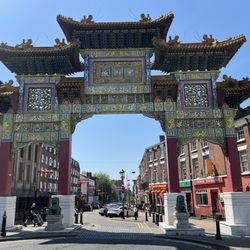
    China Town

    China Town

    (2 reviews)

    Pretty arches but not much else to see. We didn't see it at night when it is meant to light up but…read morelooks very run down along the street.

    Liverpool has one of the oldest established Chinese communities in Europe. The trade links between…read moreChina and Britain via the ports of Shanghai and Liverpool were instrumental in the establishment of a Chinese community within the city. The main trading goods were silk and cotton wool. The first vessel arrived in Liverpool direct from China in 1834. With the revision of the East India Company's charter, the China trade was for the first time thrown open to private enterprise. The first wave of Chinese immigrants arrived in 1866 with the establishment of the Blue Funnel Shipping Line a branch of the Holt Ocean Steamship Company, which ran a line of steamers directly from Liverpool to China. Chinese sailors who decided to stay in Liverpool and work from here settled in an area of the city that was close to the docks in Cleveland Square. It was here and in the surrounding streets that the first Chinese settlers started their own businesses supplying services to their countrymen who found themselves in a strange city, where the language and customs were alien. For example, they opened boarding-houses where the men could talk in their own language and be understood, cafes so that they could buy cooked food and shops where they could buy the necessary groceries to prepare their own meals. One of the first Chinese shops to open was in Pitt Street. Marriages between Chinese men and local women were quite common in this period. The seamen were seen as being more responsible than their British counterparts in that they did not drink alcohol often or beat up their wives and they would support their families. The women were willing to help in their husbands' businesses in the shops and the laundries. After World War One the settlement spread slowly inland into the side streets such as Cornwallis Street and Dickenson Street, Kent Street and Greetham Street. There were some fourteen places in Pitt Street where you could either eat or buy Chinese food, five of which were restaurants. Some gambling houses opened along these streets which were mainly visited by those Chinese seamen who were required to stay on shore for a period. The time they spent in Liverpool could vary from two weeks to a month. Since there was no other entertainment for the seamen to spend their money on, they usually gathered in gambling establishments. Efforts were made to try to stop the seamen from gambling away their wages. The Chinese Seamen's Welfare Centre was opened in 1917 in Bedford Street. It provided a place for them to gather, socialize, and hopefully get their attentions away from the gambling dens. The demolition of the area known as Chinatown began as part of the 1930s council scheme to replace the old unsanitary courts and warehouses with modern buildings. Understandably, this plan met with some resistance from members of the community. It was at this time due to the general economic depression and immigration restrictions that the Chinese community in Liverpool saw a reduction in its population size. The bombing of Liverpool in the 1940s destroyed much of the Pitt Street and Cleveland Square area and hastened the demolition of old Chinatown. In 1944 a plan was put forward in an effort to attract members of the community back into the heart of the city. A Chinese architectural student planned a new 12.5-acre Chinatown, including a pagoda and a Chinese garden. This idea was rejected on the grounds of cost by the City Council. Although, it was alleged that policy restricted gathering of minority groups. Members of the community were moved into the new tenements in Kent Street, Pitt Street and Upper Frederick Street. These times saw the community undergo great upheaval but the spirit of the people remained positive and the intervening years saw them establish many new projects including: The Chinese Republican Club, The Chinese Language School, The Chinese Bank and The Chinese Seamans' Club amongst others. With the demolition of slum housing and natural movement the Chinese community eventually settled around the Nelson Street area and since the 70's this is what is recognised as home to 'Chinatown' and its miriad of wonderful restaurants run by the descendants of the original settlers who are now part of this city's fabric.

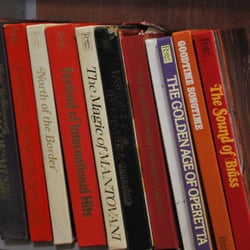
    Total Reuse - Vinyl records box sets.

    Total Reuse

    (1 review)

    Total Reuse CIC is an all-encompassing social enterprise to do with recycling and resuse. I've…read moremainly been a customer of The Bike Shed, which is one aspect of what they do, with The Tool Shed, The Paint Shed, The Sewing Room etc being other aspects of the enterprise. It looks like they offer a domestic and industrial clearance and decluttering service. The furniture etc from the clearances plus other donated items are then refurbished and upcycled for sale in their warehouse shop. I would think their workforce are combination of paid project leaders plus volunteer clients who need a hand to get back into employment. The warehouse is impressively full of white electrical goods, beds, tables, chairs, sofas, vinyl records, paint and so on. I think you could bag a bargain here, especially in terms of the more basic or less fashionable stuff, but if it is a really cracking old pine table then I think they will price it accordingly and also there are probably a certain class of people (retro interior designers or hobbyists) watching this sort of place like hawks. If you are looking to kit out an unfurnished house on a budget, then Total Reuse should be your first stop. If you like the British Heart Foundation furniture shop in the Connie, then this place is probably right up your street. There is probably more chance of a bargain at Total Reuse, their showroom is much bigger and also they have some unique lines depending on what has recently been donated. For example, Laura Ashley denim paint seems to be there in some quantity at the moment. Plus, with The Sewing Room on site, if you like the chairs but not the upholstery, they will reupholster them with the fabric of your choice. And then there is the whole "upcycling" aspect, which could easily see you walk out with your very own custom-built Heath Robinson machine, if that is your bag! Given the fairly boring retail environment that is the Connie and indeed the shopping centres on all of Skem's estates, I think Total Reuse is a must visit for the intrepid shopper.

    The Black-E - 25th Anniversary

    The Black-E

    (2 reviews)

    The Black-e gets its name from its location at what was know as The Black Church before it was…read morecleaned in the 80's. The church was the former Great George Street Congregational Chapel built in 1841. It's a grand old building and as one of the finest in the city was also nick named Liverpool's third cathedral. Launched in 1968 by artists and run mainly by women as an arts and community centre, it is open to all and its proximity to Caribbean and Chinese communities adds diversity. There are a load of workshops and exhibitions not to mention ..although I must as its my favourite martial art, the Yang style Tai Chi classes on Tuesday evenings. I love the centre's motto of "Education - Enthusiasm - Energy" and I am wanting to get involved myself. You can volunteer as much or as little as you want. They also offer apprenticeships, training schemes and student placements. This is a great resource to have on your doorstep and if you do nothing else, visit the museum showing 40 years of cultural history.

    The original community arts project, The Black-E has been a part of cultural life for the…read moresurrounding city centre and Toxteth community since 1968 but the building has been an imposing structure that will be familiar to all scousers since the 1800s. I remember being told by a colleague how she remembers the venue being as much a social club for late night parties back in the late 70s and early 80s when everything from Reggae and Soca, Norther Soul and early Hip Hop could be heard, the Black-E has always been about being an active and relevant performance and arts space for its community and being amongst a rich mix of cultures this work is often divers and energetic.

    Age Concern Liverpool - nonprofit - Updated May 2026

    Loading...
    Loading...
    Loading...