Cancel

Open app

Search

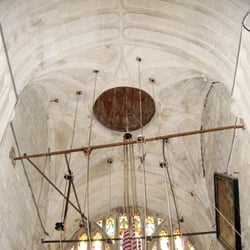
Wesley Methodist Church

3.0 (1 review)

Wesley Methodist Church Photos

Recommended Reviews - Wesley Methodist Church

Your trust is our priority, so businesses can't pay to alter or remove their reviews. Learn more about reviews.
Yelp app icon
Browse more easily on the app
Review Feed Illustration

17 years ago

Helpful 0
Thanks 0
Love this 0
Oh no 0

Verify this business for free

Get access to customer & competitor insights.

Verify this business

St John's Church

St John's Church

4.5(2 reviews)
0.1 mi

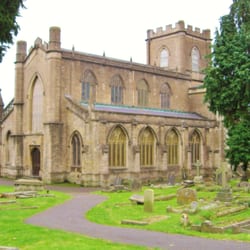
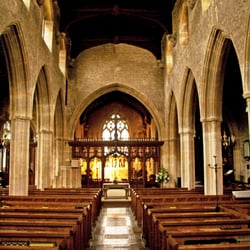
Frome's large parish church fitting for a town that was larger than Bath until 1650 lies a short…read moredistance up a hill from the town centre. From the outside, much of what the visitor sees is Victorian, but inside are substantial elements from a complex mediaeval building. History The church was founded around 685AD by St Aldhelm, Abbot of Malmesbury, and this Saxon building survived until the Norman period. It was replaced late in the 12th century, and fragments of the new Romanesque church can be found in the present fabric. Around 1300, the nave was replaced, and the lower stages of the tower were built. The nave was extended late in the 14th century (or early 15th), and the northern transept rebuilt and the tower completed. In addition, chantry chapels added to the east of the tower (around 1412) and to the west of the north transept (1517). The clerestory was also raised in the 15th century but, like much of the fabric, rebuilt in the 19th century, as it was said to be in very poor condition. These works included rebuilding the chancel (1847-9), the north porch (1862), the north and south aisles (1862-5), and the west front (1865). The church The two approaches to the church could not be more different: from the end of King Street and Cheap Street, a series of steep steps rises alongside a stone wall with sculpted stations of the cross, forming a processional way (or Via Crucis) to the North door; to the west a spacious forecourt is closed off from Bath Street by a five arched screen, designed in 1814 by Jeffry Wyatt. Once inside, one is struck by the scale of the building, and particularly by the long nave. Here, the division between the earlier and later 14th century parts is clear in the design of the arcades. Both the clerestory and the rather intrusive sculpted roundels are Victorian. The north chantry chapel is entered through a fine panelled arch. This is now a baptistery and, besides the font, contains many wall monuments. An attractive round-arched doorway with continuous mouldings (ie no capitals) from the Norman church opens into the north transept. Another Norman fragment is the round-headed piscina on the north wall of the chancel. Architecturally, the ornate Victorian chancel is less interesting than the south chantry chapel and the room beneath the tower, both of which have elaborate rere arches. The church has many interesting furnishings. In the baptistery chapel are a 13th font in the shape of a quatrefoil, with four shafts; fragments of 15th century stained glass and an unusual wall monument to Richard Stevens (d. 1796), depicting an urn with two orphan boys on one side and an elderly man the other, with an asylum in the distance. The north transept has more 18th and 19th century monuments, but more striking is the large table tomb with a cadaver underneath, to a member of the Leversedge family. The elaborate rood screen is by Kempe, and the reredos in the chancel (of Carrarra marble) by the prolific sculptor, James Forsyth (1826-1910), beneath an East Window by Clayton & Bell. Finally, in the tower room opposite are two fragments of Saxon sculpture, depicting a monster and interlaced carving. The accompanying description postulates that they may have been from a cross, one of several erected where St Aldhelm's funeral procession stopped as it moved to Malmesbury for burial. It admits there is no evidence for such a claim but says, 'we at St John's like to think it is a reasonable assumption'.


The church of St John the Baptist is probably the most significant church, historically speaking,…read morein the town. A church was first founded here in 685 AD by St Aldhelm, and has grown and developed into the fine imposing building that sits half way up Bath Street today. Inside, there are still a few examples of Saxon stone carvings to be seen, and the stained glass windows are stunning. Definately somewhere to browse for those interested in ecclesiastical architecture and local history, as well as being a stately and spiritual place of worship for the CoE parishioneners.

Photos
St John's Church
St John's Church
St John's Church

See all

Christ Church Frome

Christ Church Frome

4.0(2 reviews)
0.2 mi

Christ Church lies just a short walk south west of the town's mediaeval parish church of St John…read morethe Baptist, set attractively in the centre of an extensive churchyard on Christchurch Street West. History The church was built largely to provide additional capacity at a time when the main Parish church was no longer large enough to cater for its congregation, and particularly to provide more free pews (as opposed to those which were rented, as was the custom at the time). The churchyard was originally shared with St John's, but is closed for burials. It has a fine long stone wall on Christchurch Street - which, alas, has lost its railings. The building The church was built in 1817-18 to designs by the local architect George Allen Underwood (1793-1829), although much altered subsequently, most notably with new window tracery by Manners & Gill around the 1840s onwards, supposedly based on those of the church at Yatton, near Weston-super-Mare. The style is broadly Neo-Gothic (Perpendicular) and cruciform in plan, with a tall clerestory, low crossing tower and substantial aisles to the nave. An unusual feature is that the altar is under the crossing, with a later projecting Lady Chapel (now the Sacristy) added in 1929. Furnishings are decent Victorian work, including a substantial carved reredos and a later Rood erected in 1910, and some brightly coloured stained glass. The church is a Grade II* listed building. Practicalities The church has had an Anglo-catholic tradition since the mid 1850s, and provides for a friendly welcome. Parking seems relatively straightforward along the road outside.

Nearly 200 years old, this gem of a Victorian classical gothic style church sits in it's own…read moregrounds along Christchurch Street West. I always think of it as Reverse-tardis in that it's seems bigger on the outside than on the inside. But ti's well worth stopping by if classical churches are your interest. Old wooden pews, dark with age and use, beautiful stained-glass windows and a small simplicity iof style that is still grand and elegant. Choir stalls complete the package, and the local vicar is a delight - managing to bring the spiritual side of life out in an easy-listening, relevant and light-hearted package that makes strikes a chord with believers and athiests alike. A gorgeous venue for a wedding (which I had the pleasure to attend recently) and a lovely part of Frome's heritage.

Photos
Christ Church Frome
Christ Church Frome

See all

St Andrews Church - Photo courtesy of Frank Collins.

St Andrews Church

4.5(2 reviews)
3.2 mi

Mells is a pretty and interesting little village just west of Frome, with houses scattered along…read moresteep lanes. At its heart is the impressive church of St Andrew, set alongside an equally impressive Tudor Manor House, approached along a planned 15th century street - the combination being described by architectural historian Nikolas Pevsner as "among the happiest in Somerset". The church itself - now Grade I listed - was founded in the 13th century, but almost entirely rebuilt in the 15th and 16th centuries in the Perpendicular Gothic style. From this period, the most notable features are the wonderful porch and tower - the latter with impressive pinnacles. Indeed, the whole church is decorated with battlements and pinnacles, as well as an unusual two-storied polygonal vestry. Both porch and tower are vaulted with elaborate fan vaults, of a quality which would grace any cathedral. Inside, the roofs and furnishings are largely Victorian, but it still feels like a mediaeval church: the north chapel has its original wooden roof, and the south chapel - largely filled with the 19th century organ - has two very impressive brasses to earlier Vicars, unfortunately rather hard to appreciate in their cramped surroundings. Look closely and you can also find the remains of the odd Jacobean pew. The adjacent manor house was once home to the Horner family, and passed by marriage to the Asquiths. Around the turn of the century, the house became something of a magnet for the artistic worthies of the time such as Eric Gill, Edwin Lutyens and Burne-Jones, who left some impressive furnishings, including tombs, memorials, glass and tapestries. Most notable are the tapestry and a plaster memorial depicting a peacock to Laura Lyttleton, both by Burne-Jones; and the handsome equestrian statue by Mannings and Lutyens in the north aisle. This is a memorial to Edward Horner, the last of the male Horner line, killed in action at Noyelles in France in 1917, aged 28. Outside, behind the East end of the church are memorials to the Horners and Asquiths, to Lady Violet Bonham-Carter, and - most notably - to Siegfried Sassoon, who asked to be buried close to his friend, Ronald Knox, the Catholic priest and scholar. To the north, a clipped avenue of yews is another example of Lutyens' work.

For history buffs there's several points of interest at St Andrews church in the tiny village of…read moreMells, some 3 miles out of Frome. Situated at the end of New Street (new in the 16thC that is..) this church was built in the 15th Century, although there has been a church on that site since the 13thC. My auntie and uncle used to live in New Street, so this is very familiar territory to me, clambering over the style in the churchyard to the fields beyond to play when I was a nipper. The church - and village - has strong manorial links to the Asquith family. Raymond Asquith, the son of the former Prime Minister Herbert Asquith (PM from 1908 to 1916) has a memorial on the wall following his death in WW1. The theme of War Remembrance is noteably continued as the grave of Siegfried Sassoon, the great War Poet is situated in St Andrews churchyard, close to the grave of Monseignier Ronald Knox. Historically, there are links to the Horner Family also - most children will know of the nursery rhyme 'Little Jack Horner' about the boy who stuck his thumb in a pie and pulled out a plum.. allegorically this is believed to refer to the Dissolution of the Monasteries back in the 1530's. At that time, the Manor of Mells was given as a 'prize' the to Horner family by Henry VIII (a 'plum prize'). There is even a legend that the deeds were delivered hidden inside a pie. Artistically, the work of Sir Edward Lutyens can be seen in several places, including a statue plinth, the gravestones of Sir John and Lady Horner, and an avenue of clipped yews designed by Lutyens. Lovely and fascinating old church, with a wealth of history to be seen.

Photos
St Andrews Church - Photo courtesy of Frank Collins.

Photo courtesy of Frank Collins.

St Andrews Church - Photo courtesy of Frank Collins.

Photo courtesy of Frank Collins.

St Andrews Church - Photo courtesy of Frank Collins.

See all

Photo courtesy of Frank Collins.

All Saints Church - Photo courtesy of Frank Collins.

All Saints Church

5.0(1 review)
2.6 mi

Lullington's village green has a small scattering of houses, a former school, a farm and a church…read more So perfect is this little ensemble, it could almost be a film-set. The church is ancient however: possibly a Saxon foundation, it was in the ownership of the Bishop of Coutances in 1086. The building we see today dates from the 12th century, with a South Aisle added around 1280, the Chancel in 1340, and South Porch around 1450. Extensively but sensitively restored in 1862, it is chiefly known for its Norman work, regarded as among the best in Somerset. On the exterior, this is most clearly visible on the north side, where the north door has a fine Tympanum with Christ in Majesty, above an arch of two orders, one zig-zag and the other a series of wonderful beak-heads. Beneath, two animals eating from the Tree of Life. The supporting columns have zig-zag and spiral carving with heavily weathered capitals. Look above and the corbel table is a delight, with the subjects including a surprised-looking king and two beasts embracing. The south doorway is also Norman, although of a simpler design. Inside, there is yet more Norman work in the tower and chancel arches, with carved capitals depicting green man, a winged lion and a peculiar ox with two bodies apparently joined by a single head. But the best furnishing is its font: dating from the 11th century, it has interlinked arches under a frieze of flowers and an inscription which reads: "Hoc Fontis Sacro Peveunt Delicta Lavacro". Above the inscription is another frieze, this time of 'Green Cats', linked with long bands of foliage spewing from their mouths. Such green cats were probably meant to be lions but, whatever their origina, it makes the font a unique and fascinating object. Well worth a detour.

Photos
All Saints Church - Photo courtesy of Frank Collins.

Photo courtesy of Frank Collins.

All Saints Church - Photo courtesy of Frank Collins.

Photo courtesy of Frank Collins.

All Saints Church - Photo courtesy of Frank Collins.

See all

Photo courtesy of Frank Collins.

St George's Church

St George's Church

5.0(1 review)
0.2 mi

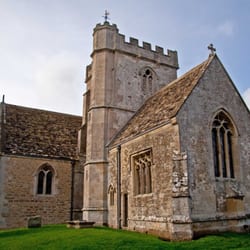
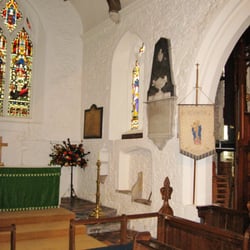
The attractive village of Beckington is, according to Pevsner's Buildings of England, 'uncommonly…read morerich in worth-while stone houses'. It also has an impressive church, tucked away along a short lane from the village crossroads. The village has a substantial entry in the Domesday Book, although there is no mention of a church. But during the Norman period a substantial church was built, with the impressive tower that we see today. The chancel was rebuilt in the 13th century and the nave rebuilt, and much of the fabric renewed, in the 15th century. On entering the churchyard, the tower impresses by both its size and the quality of decoration on its bell openings, with paired round-headed arches within a wider arch with zig-zag decoration and blank arcading either side. Inside the tower there is a Perpendicular fan vault. The rest of the interior is rather scraped, although whitewash has been applied to the bare stonework in the chancel. Apart from a Decorated window in the chancel, most of the internal detail, including the elegant but low arcades and the clerestory, are Perpendicular Gothic. At the east end of the north aisle is some stone panelling and a niche, doubtless once flanking a side chapel altar. The church abounds in interesting corbels, mostly in the form of human heads, but the north aisle has two in the form of seated beasts (one clearly a sheep). The nave roof has an interesting Queen post roof, with cusped struts. The church has some excellent fixtures and fittings. The chancel has two tombs dating from around 1370: the larger has a knight and lady in a recess, decorated on the outside with vigorous blank arcading. Adjacent is a similar effigy, this time of a lady, under a simpler arched recess. On the chancel floor, a pair of remarkably well preserved brasses depict John St Maur (d. 1485) and his wife. An early 16th Century brass in the south chapel to the Compton family was inaccessible on my visit. A further brass on the south aisle wall commemorates Thomas Webb (d. 1585), a local cloth merchant. Above is a separate brass with his merchant's mark. Above the south door that is a real rarity the Royal Arms of Elizabeth I, dated 1574, carved in stone and brightly painted. The font beneath is octagonal, with a plain circular stem ringed by eight further shafts. The adjacent south chapel has an attractive Jacobean screen. Back to the north aisle, the wall monument to Samuel Daniel (1562-1619), the poet laureate who was a contemporary of Shakespeare, is an accomplished early example of the then new Classical style. The church has a very active parish, hosting both traditional and modern family worship, and on my visit the walls were screened with lovely examples of the children's art work.

Photos
St George's Church
St George's Church
St George's Church

See all

Wesley Methodist Church - religiousorgs - Updated May 2026

Loading...
Loading...
Loading...