Cancel

    Open app

    Search

    Walter Reed Birthplace Photos

    Recommended Reviews - Walter Reed Birthplace

    Your trust is our priority, so businesses can't pay to alter or remove their reviews. Learn more about reviews.
    Yelp app icon
    Browse more easily on the app
    Review Feed Illustration

    6 years ago

    Helpful 0
    Thanks 0
    Love this 0
    Oh no 0

    Ask the Community - Walter Reed Birthplace

    Verify this business for free

    Get access to customer & competitor insights.

    Verify this business

    Colonial Williamsburg Cooper

    Colonial Williamsburg Cooper

    5.0(2 reviews)
    10.1 mi

    How many times have you heard of a barrel, bucket, or cask being made by hand. Well it's just not…read moredone much anymore, but at CW the spirit of doing it the 18th Century way is kept alive. Located off the side street of Nicholoson across the street from the cabinetmaker. There are no demonstrations given, they are doing real work, with real orders. There are no formal tours, but the Cooper will stop what he is doing and show you some work that they are currently doing. They work done by the Cooper is Cooperage. The word itself for the trade of bucket/barrel making derives from the Middle Dutch, or Middle Low German meaning Kopper, or copper from kupe cask, in turn from Latin cupa tun. The gentlemen James I talked with had over 35+!yrs experience at the art of Barrel, bucket, cask and other items making. He was super friendly and led our group through the process woods used etc. Is this a lost art, close to it. Very few shops in the world produce hand made work. The local Craft Beer maker Hardywood took delivery of some CW barrels recently. As in all of the CW trades I have a lot of respect for the skill it takes to continue this old world tradition of making things by hand.

    Well, I figured for review #1000 I needed to pick somewhere special and for me that is the cooper's…read moreshop at Colonial Williamsburg. While my reviews for CW will attest to the fact that I'm very down on how the place is run as a whole, I am 100% fascinated by what goes on at this shop. The art (and to me it is an art) of cooperage has more or less not changed in centuries and to me something about that is uniquely awesome because while cardboard boxes and metal containers have replaced wooden casks, if you for example need a cask made, the old school way of making it is still the best way. The one fallacy that you hear is that some people refer to coopers as barrel makers but that's not the full story as a barrel is only one size of cask. If you're lucky enough to visit at a time when James is in he'll be more than happy to talk with you about a barrel, a rundlet or a hogshead just like the difference between wet coopering and dry coopering plus a whole lot more than I can remember. Getting back to James, he's been coopering at CW since the early 70's and before that he got his start in England in a shop that dated back to 1742. He's the real deal in every way about the process and is always extremely generous with his time to answer no doubt the same question a thousand times a day or even questions where in his head he's probably rolling his eyes yet his answer is always gracious. My favorite quote of his which I've heard him say two or three times when asked what he or any of the coopers do is that they make circles. That I suppose while true, is a huge understatement of how difficult the trade actually is. (Only a small handful of people have completed a cooper apprenticeship at CW over the last forty plus years.) For me personally what it boils down to is that watching what the coopers do here is history in its most pure form. You have a trade being done the same way it was done three hundred years ago being taught by people who learned from the prior generation who learned from the prior generation, etc. Those experiences are what make coming to CW worthwhile and they're at the core of what makes the cooper's shop at CW 100% authentic.

    Photos
    Colonial Williamsburg Cooper - Brickyard

    Brickyard

    Colonial Williamsburg Cooper
    Colonial Williamsburg Cooper - Brickyard

    See all

    Brickyard

    Thomas Everard House

    Thomas Everard House

    5.0(2 reviews)
    10.1 mi

    The Everard property is home to three of the original 88 buildings at CW (house - kitchen -…read moresmokehouse). Note that I referenced buildings, because sometimes you will see people reference 88 homes but most of the originals at CW are not homes, but instead are outbuildings. Like my fellow CW loving friend JD pointed out in his superb review, the story of Thomas Everard is a one that for the times in which he lived was no more unlikely than it would be today. Basically he did two things right. 1. He married well. 2. He really hustled his entire life. Not to say that the wealthier contemporaries of the day in town such as Geddy, Wythe, Carter or Randolph didn't hustle, but with some of them there was the presence of inherited wealth and of already having a path set for them whereas with Everard did it all himself. www.history.org/features/orphan/ On the 20+ minute tour we took the volunteers were very knowledgeable about not only Mr. Everard's life but the history of the house. In short form, he had been living there until his death in 1781 after which time the house changes hands multiple times until the CW foundation buys it. The last occupants were two older sisters who had left a lot of the original fabric of the house in tact. They were still using the original detached kitchen as their kitchen. Certain changes took place like removing a 2nd floor porch, a small fenced in front yard/porch and a brick office building next to the house. Also the name of the house by this time was The Audrey House. If you're going to see the house it is not one that is open daily. We were told that the house is only staffed by volunteers and it's Tu-Th-Fr in season and Tu & Fr shoulder season with it being closed in winter. While small, the volunteers we had were great and it is always interesting to know that you're standing in a 300+ year old house that was actually inhabited by the guy who it's named after. Well worth a stop. Brick Office building to the right of the house. https://s3.amazonaws.com/omeka-net/3854/archive/files/2963ed1326d8460a879df207d9cccddb.jpg?AWSAccessKeyId=AKIAI3ATG3OSQLO5HGKA&Expires=1555545600&Signature=Sc103cDX7WzG8rUmj5jHPDdC2h0%3D House is the 1st on the left from 1928. https://s3.amazonaws.com/omeka-net/3854/archive/files/518d5e43d920e124c8044899eb560053.jpg?AWSAccessKeyId=AKIAI3ATG3OSQLO5HGKA&Expires=1555545600&Signature=EUke%2FzGxad%2BPZsRYsyTM8AxA0K8%3D Pre-restoration https://s3.amazonaws.com/omeka-net/3854/archive/files/2a5dd81989f2a9cd3a8dc4f994b12586.jpg?AWSAccessKeyId=AKIAI3ATG3OSQLO5HGKA&Expires=1555545600&Signature=hSHs%2B2B2soFcdYV1BhstObOai9A%3D Some other pix of the house www.dailypress.com/features/history/dp-the-restored-thomas-everard-house-colonial-williamsburg-20180228-photogallery.html

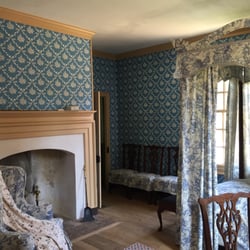
    The Thomas Everard House reflects the name of the most prominent owner during the 18th century. Its…read moresometimes referred to as the Brush-Everard House. Everard's background is one of a rags to riches. The home is one of the 88 originals on Colonial Williamsburg property. Tours are available for ticketed visitors on selected days. John Brush built the modest story and a half home of split weatherboard in 1718 for himself. He created what is known as a center passage plan in the home that would be later improved upon by Everard. Brush was the Keeper of the Magazine, his profession was of gunsmith and armourer. Brush passed in 1727. The story of Thomas Everard begins in London where he hailed and was an orphan child at Christ Hospital that's still in operation today. The young boy of 10 learned bookkeeping skills that would prove to be the primary reason for his success later in life. Everard moved to Williamsburg Virgina and apprenticed for 7 years. He received his own clerkship for York County Court that he held until he passed in 1781. Everard was also Secretary of the Colony of Virgina. Everard's position and wealth in the community grew after his marriage into the prominent family of Diana Robinson. In the day he was considered a wealthy man with salves and over 1,500 acres of property. Thomas was also a Patriot and public servant. He helped select those that would attend the Continental Congress. Its true as much today as it was then regarding location. The residence just off the Palace Green and beside the Governors Palace was magnificent. The structure was expanded & embellished to reflect Everard's high standing in the civic community around 1770. The home is best known for its elaborate staircase, turned balusters and sweeping handrails. Other decor of imported paint and carpeting. The house as you see it today reflects Everard's 18th century taste for impressing his his guest. The fancy green paint above the parlor fireplace and wall is period after research was completed using paint samples. Wallpaper samples were also used in order to be as correct as possible when the home was restored in the 1940's. The furnishings are both period and actual 18th century pieces of Everard/Brush day. The enlarged home and grounds presents beautifully. There are also original outbuildings including a kitchen and slave quarters in the rear. These can be viewed on the tour. It's interesting to note that the original brick pavers that Everard/Brush would have walked on were excavated in the front of the structure and are seen today. The Everard home had never been a priority of mine to tour, as well as it was never open on days touring. The location beside the Playbooth Theater may have you overlook it, but try not to. The cool story of the man and the unique structure are important to Williamsburg's founding history.

    Photos
    Thomas Everard House
    Thomas Everard House
    Thomas Everard House

    See all

    Walter Reed Birthplace - landmarks - Updated May 2026

    Loading...
    Loading...
    Loading...