Cancel

    Open app

    Search

    James River Access Photos

    Recommended Reviews - James River Access

    Your trust is our priority, so businesses can't pay to alter or remove their reviews. Learn more about reviews.
    Yelp app icon
    Browse more easily on the app
    Review Feed Illustration
    Photo of Ward D.
    8
    1239
    3207

    1 year ago

    Helpful 0
    Thanks 0
    Love this 0
    Oh no 0

    Verify this business for free

    People searched for Landmarks & Historical Buildings 175 times last month within 5 miles of this business.

    Verify this business

    Colonial Williamsburg Cooper

    Colonial Williamsburg Cooper

    (2 reviews)

    How many times have you heard of a barrel, bucket, or cask being made by hand. Well it's just not…read moredone much anymore, but at CW the spirit of doing it the 18th Century way is kept alive. Located off the side street of Nicholoson across the street from the cabinetmaker. There are no demonstrations given, they are doing real work, with real orders. There are no formal tours, but the Cooper will stop what he is doing and show you some work that they are currently doing. They work done by the Cooper is Cooperage. The word itself for the trade of bucket/barrel making derives from the Middle Dutch, or Middle Low German meaning Kopper, or copper from kupe cask, in turn from Latin cupa tun. The gentlemen James I talked with had over 35+!yrs experience at the art of Barrel, bucket, cask and other items making. He was super friendly and led our group through the process woods used etc. Is this a lost art, close to it. Very few shops in the world produce hand made work. The local Craft Beer maker Hardywood took delivery of some CW barrels recently. As in all of the CW trades I have a lot of respect for the skill it takes to continue this old world tradition of making things by hand.

    Well, I figured for review #1000 I needed to pick somewhere special and for me that is the cooper's…read moreshop at Colonial Williamsburg. While my reviews for CW will attest to the fact that I'm very down on how the place is run as a whole, I am 100% fascinated by what goes on at this shop. The art (and to me it is an art) of cooperage has more or less not changed in centuries and to me something about that is uniquely awesome because while cardboard boxes and metal containers have replaced wooden casks, if you for example need a cask made, the old school way of making it is still the best way. The one fallacy that you hear is that some people refer to coopers as barrel makers but that's not the full story as a barrel is only one size of cask. If you're lucky enough to visit at a time when James is in he'll be more than happy to talk with you about a barrel, a rundlet or a hogshead just like the difference between wet coopering and dry coopering plus a whole lot more than I can remember. Getting back to James, he's been coopering at CW since the early 70's and before that he got his start in England in a shop that dated back to 1742. He's the real deal in every way about the process and is always extremely generous with his time to answer no doubt the same question a thousand times a day or even questions where in his head he's probably rolling his eyes yet his answer is always gracious. My favorite quote of his which I've heard him say two or three times when asked what he or any of the coopers do is that they make circles. That I suppose while true, is a huge understatement of how difficult the trade actually is. (Only a small handful of people have completed a cooper apprenticeship at CW over the last forty plus years.) For me personally what it boils down to is that watching what the coopers do here is history in its most pure form. You have a trade being done the same way it was done three hundred years ago being taught by people who learned from the prior generation who learned from the prior generation, etc. Those experiences are what make coming to CW worthwhile and they're at the core of what makes the cooper's shop at CW 100% authentic.

    R. Charlton Coffee House

    R. Charlton Coffee House

    (3 reviews)

    My 9 y/o daughter, mom and I had a wonderful time at the Coffee House. We were lucky enough to meet…read moreand talk with Michael. He is friendly, knowledgeable and kind to children. Everyone should make a beeline to the Coffee House for free coffee and hot chocolate. Be sure to tip!

    Another CW visit in the books which equals another chance to expound on experiences plus talking…read moreabout what if anything has changed. This time it would be three visits to the coffee house over three days which equaled three different presentations. #1 - The employee out front miscounts the number of people initially when everyone is led inside so they are short two chairs. (They're supposed to stop at 15 instead of 17 in this case) They grab two chairs from the room next door and then we begin. This visit they have a guy in character playing Mr. Charlton from the year 1765. He mostly focuses on making jokes and talking about how good his products are while bantering with another in character person who sings a Christmas song with him and then we move to the next two rooms uneventfully. #2 - For this visit the guy playing Charlton is there except today it's 1766 and he only talks about the recent repeal of The Stamp Act. Totally different group of people working there and no song like the day prior. #3 - The guy playing Charlton is off today and things in the serving room and in Mr. Charlton's office are beyond boring. The person leading us through the rooms has the personality of a cardboard box but things get salvaged in the end. In the last room we are met by Young Thomas Jefferson from the year 1766 and he was nothing short of amazing. Funny. Engaging. Witty. Smart. It truly may have been the best five minutes I have ever had at CW! He engaged almost the entire group staring with the children and had a short Q&A which delved into his views on slavery, adultery, tyranny, philosophy and the sciences. CW needs to get this guy into more places or they needs to do more things like this. It was very much an old school touch of things that they did more of in the past but have gotten away from. I remember the guy playing Charlton from prior visits when he used to play a role in their end of day program about marching to Yorktown. Always loud and over the top which has its place but the experience with Jefferson was very much the real thing. If you like the chocolate (I don't) or the coffee they sell it everywhere in town and if you are coming for the tour note that they start every twenty minutes at :00, :20 and :40.

    Peyton Randolph House

    Peyton Randolph House

    (2 reviews)

    Even though Peyton Randolph is a historical unknown to the average person, it doesn't mean that he…read morewas a lightweight by any means. Speaker of the House of Burgesses, Attorney General of Virginia and 1st President of the Continental Congress. That last one to me is the biggie. Would things have turned out differently for the colonies if Peyton doesn't die in Philadelphia while having dinner with Jefferson in 1775 versus John Hancock taking over after his death? By that's for another time. If you visit CW one of the must see stops is his house which is located at the corner of East Nicholson and North England Street (the Yelp map marker is wrong - the house is on the other side of East Nicholson). While the main house is one of the original 88, the breezeway-kitchen-assorted outbuildings are all reproductions. One of the larger historically inaccurate things that CW sort of fixed was when they moved the windmill that spent 50-ish years on the property over to Great Hopes Plantation. No evidence has ever been found that a windmill was on the property and the thing had been inoperable well over a decade by the time it got moved. Of course CW bungled that one as well by also closing Great Hopes to any kind of active interpretation not long after the move. So while the windmill in essence got a nice paint job, it still doesn't work and is marooned in CW Siberia with potential plans to convert that area to parking or some kind of future entertainment space. But that's also for another time. Over the years CW has changed how touring is done at the house. In the past, a few years ago, the house was only open on certain days or only for a 1/2 day with the staff then moving over to the Wythe House for the other 1/2. Thankfully that changed and of late the Randolph House has been open more or less daily. With that said, they still do timed tours which start (??) twice an hour. Sometimes you begin at the side entrance on the street corner but when the crowd is larger you are sometimes herded into the breezeway that separates the house from the kitchen until it's go time. Aside from the house tour that you would expect at CW, recently they have further emphasized the slavery angle at the house. Randolph was a very wealthy individual and he and his wife owned in excess of 100 slaves during his lifetime. That story gets told more as you get to the outbuildings at the end of the tour. The other thing that the house is known anecdotally is that supposedly it's very haunted. That's not covered on the official house tour unless someone asks but every ghost tour company in Williamsburg, including when CW offers them, makes a stop here. I think that has something to do with people dying here during the Civil War when the house gets used as a hospital for a brief time. Like the Everard House or the Wythe House, any time you can tour one of the 300+ year old CW originals it's a must do.

    The Peyton Randolph Home is one of the 88 original structures on CW property and was home to the…read moreprominent Williamsburg resident Peyton Randolph. He served as president of the first Continental Congress. He resided in the home 1721-1775. The large two story house is unique for its seven paneled rooms which was a sign of wealth. It's size is deceiving from the front. Each room has been decorated in period time, however there are few items that are authentic to the Randolph's. The rear of the property has outbuildings. The home is open for guided tours on selected days. This is my favorite guided tour in Colonial Williamsburg.

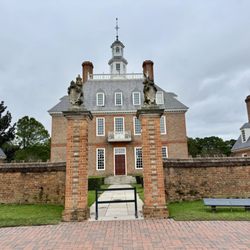
    The Governors Palace of Colonial Williamsburg - Front

    The Governors Palace of Colonial Williamsburg

    (17 reviews)

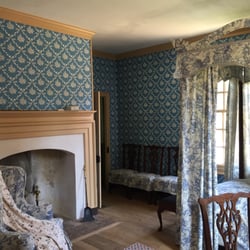
    You need a ticket to take the escorted tour inside the Palace. This is the only way to see what's…read moreinside. AnnMarie was our tour guide. She was knowledgeable, funny, and very nice. When we walked inside we sat in a room waiting for the tour to begin at noon. AnnMarie told us how it burned to the ground, and skeptics were not sure how to rebuild. But they found pictures of it outside and inside among papers in England and Thomas Jefferson's papers in America. This is truly a beautiful building inside and out. After seeing the butler's pantry, the parlor, the bedrooms & salon, and the dining room, we walked the grounds before moving on to the next historical landmark.

    . As someone who's…read morebeen coming to Colonial Williamsburg for years, I can honestly say the Governor's Palace never loses its charm. The guided tours inside the palace are very well done. They're informative without being stuffy. The docents really know their stuff, and it's impressive to see how well-preserved everything is. The real magic is behind the palace. The gardens are my favorite spot. They are absolutely stunning in every season. Everything is always so neatly kept, and the atmosphere is calm and peaceful. I love wandering the paths and taking in the different views. At the end of the garden, the hedge maze is such a fun surprise. It's always a little adventure finding my way through. Whether you're into history or just looking for a beautiful place to walk, the Governor's Palace is worth the visit. I keep coming back because it always feels special.

    George Wythe House

    George Wythe House

    (3 reviews)

    Two brief noteworthy updates about what CW is doing with the Wythe property. As of now they have…read morechanged the format of how you tour the grounds. In the past you were grouped up with maybe twenty others at the entrance then eventually led through the house by a CW employee. Whether this will still be around for next summer remains to be seen but a few of the people at the house said that CW ditched that format for allowing you to roam the grounds/house on your own. Now when you get to the entrance an employee gives you a few pointers then you're off. Inside there is one person on each floor to answer any questions. One of the reasons why I would assume this change occurred would be on account of CW closing the long time home of The Cooper Shop and relocating it to a building in the back of the Wythe House. The change coincided with CW closing several other long time buildings while consolidating some of those operations at the Wythe, Getty and Randolph houses. I like the new self-touring format here as it is less formal and restrictive which is always good. Although hopefully in the future the Coopers are given their own shop again as it seems odd and historically inaccurate to have them at the back of this house. Beautiful house and beautiful grounds. Well worth a visit. (Note that CW ditched the off hours of years prior where the house was only open on certain days or for only 1/2 day. Currently it's open daily from 9-5.)

    The George Wythe residence was completed in 1754. The stately two story brick home sets off the…read morePalace Green. Self guided tours are on selected days when the house is open for ticketed visitors. Wythe was the signer of the Declarations of Independence & first law professor at College of William & Mary. He was also mentor to Thomas Jefferson, John Marshall and Henry Clay. The residence in the past has had a violinist play at selected times. The rear and gardens are picturesque and perfect for a photo op. An outbuilding houses a basket weaving demonstration. There are other demonstrations in the rear of the property depending on the season. Today Wythe is considered the Father of American jurisprudence. The home was HQ to George Washington September 1781 just prior to seize on Yorktown, Va. A room is transformed to show visitors what this time may have looked like. The George Wythe home is one of the original 88 in Colonial Williamsburg and a favorite of mine for its authenticity.

    Thomas Everard House

    Thomas Everard House

    (2 reviews)

    The Everard property is home to three of the original 88 buildings at CW (house - kitchen -…read moresmokehouse). Note that I referenced buildings, because sometimes you will see people reference 88 homes but most of the originals at CW are not homes, but instead are outbuildings. Like my fellow CW loving friend JD pointed out in his superb review, the story of Thomas Everard is a one that for the times in which he lived was no more unlikely than it would be today. Basically he did two things right. 1. He married well. 2. He really hustled his entire life. Not to say that the wealthier contemporaries of the day in town such as Geddy, Wythe, Carter or Randolph didn't hustle, but with some of them there was the presence of inherited wealth and of already having a path set for them whereas with Everard did it all himself. www.history.org/features/orphan/ On the 20+ minute tour we took the volunteers were very knowledgeable about not only Mr. Everard's life but the history of the house. In short form, he had been living there until his death in 1781 after which time the house changes hands multiple times until the CW foundation buys it. The last occupants were two older sisters who had left a lot of the original fabric of the house in tact. They were still using the original detached kitchen as their kitchen. Certain changes took place like removing a 2nd floor porch, a small fenced in front yard/porch and a brick office building next to the house. Also the name of the house by this time was The Audrey House. If you're going to see the house it is not one that is open daily. We were told that the house is only staffed by volunteers and it's Tu-Th-Fr in season and Tu & Fr shoulder season with it being closed in winter. While small, the volunteers we had were great and it is always interesting to know that you're standing in a 300+ year old house that was actually inhabited by the guy who it's named after. Well worth a stop. Brick Office building to the right of the house. https://s3.amazonaws.com/omeka-net/3854/archive/files/2963ed1326d8460a879df207d9cccddb.jpg?AWSAccessKeyId=AKIAI3ATG3OSQLO5HGKA&Expires=1555545600&Signature=Sc103cDX7WzG8rUmj5jHPDdC2h0%3D House is the 1st on the left from 1928. https://s3.amazonaws.com/omeka-net/3854/archive/files/518d5e43d920e124c8044899eb560053.jpg?AWSAccessKeyId=AKIAI3ATG3OSQLO5HGKA&Expires=1555545600&Signature=EUke%2FzGxad%2BPZsRYsyTM8AxA0K8%3D Pre-restoration https://s3.amazonaws.com/omeka-net/3854/archive/files/2a5dd81989f2a9cd3a8dc4f994b12586.jpg?AWSAccessKeyId=AKIAI3ATG3OSQLO5HGKA&Expires=1555545600&Signature=hSHs%2B2B2soFcdYV1BhstObOai9A%3D Some other pix of the house www.dailypress.com/features/history/dp-the-restored-thomas-everard-house-colonial-williamsburg-20180228-photogallery.html

    The Thomas Everard House reflects the name of the most prominent owner during the 18th century. Its…read moresometimes referred to as the Brush-Everard House. Everard's background is one of a rags to riches. The home is one of the 88 originals on Colonial Williamsburg property. Tours are available for ticketed visitors on selected days. John Brush built the modest story and a half home of split weatherboard in 1718 for himself. He created what is known as a center passage plan in the home that would be later improved upon by Everard. Brush was the Keeper of the Magazine, his profession was of gunsmith and armourer. Brush passed in 1727. The story of Thomas Everard begins in London where he hailed and was an orphan child at Christ Hospital that's still in operation today. The young boy of 10 learned bookkeeping skills that would prove to be the primary reason for his success later in life. Everard moved to Williamsburg Virgina and apprenticed for 7 years. He received his own clerkship for York County Court that he held until he passed in 1781. Everard was also Secretary of the Colony of Virgina. Everard's position and wealth in the community grew after his marriage into the prominent family of Diana Robinson. In the day he was considered a wealthy man with salves and over 1,500 acres of property. Thomas was also a Patriot and public servant. He helped select those that would attend the Continental Congress. Its true as much today as it was then regarding location. The residence just off the Palace Green and beside the Governors Palace was magnificent. The structure was expanded & embellished to reflect Everard's high standing in the civic community around 1770. The home is best known for its elaborate staircase, turned balusters and sweeping handrails. Other decor of imported paint and carpeting. The house as you see it today reflects Everard's 18th century taste for impressing his his guest. The fancy green paint above the parlor fireplace and wall is period after research was completed using paint samples. Wallpaper samples were also used in order to be as correct as possible when the home was restored in the 1940's. The furnishings are both period and actual 18th century pieces of Everard/Brush day. The enlarged home and grounds presents beautifully. There are also original outbuildings including a kitchen and slave quarters in the rear. These can be viewed on the tour. It's interesting to note that the original brick pavers that Everard/Brush would have walked on were excavated in the front of the structure and are seen today. The Everard home had never been a priority of mine to tour, as well as it was never open on days touring. The location beside the Playbooth Theater may have you overlook it, but try not to. The cool story of the man and the unique structure are important to Williamsburg's founding history.

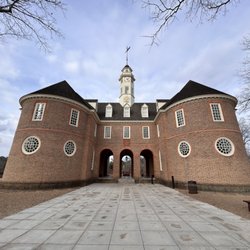
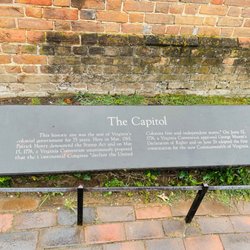
    The Capitol of Colonial Williamsburg - South Entrance

    The Capitol of Colonial Williamsburg

    (7 reviews)

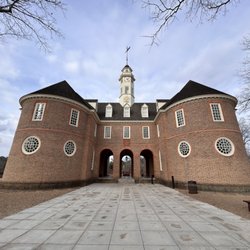
    A great place to visit and learn about Colonial America government history…read more Colonial Williamsburg is a wonderful place to visit that really brings American history to life. It offers visitors a unique glimpse into 18th-century America with real shops, people dressed in period costumes and buildings maintained as they would be in Colonial times. Located in Williamsburg, Virginia, this living history museum spans over 300 acres and includes restored buildings, interactive exhibits, and costumed interpreters. The site is an immersive experience where you can walk along cobblestone streets, interact with blacksmiths, shopkeepers, and even participate in colonial-era activities. I would recommend starting your experience at the Colonial Williamsburg Visitor Center but you can go directly to the city where there is plenty of parking in parking garages along the outer streets. You can see lots of different working places in the city like bookbinders, silversmiths, gunsmiths and the capitol building. This is at the East end of the Duke of Gloucester street. It is surrounded by a courtyard. We caught it just right and grouped up into a tour with about 20 people. The guide did a wonderful job of taking us through the building and discussing the various rooms and their histories. In each of the rooms there was seating and the guide encouraged us to sit while she told the story of the place using key people and events. It is an excellent tour. The guide was extremely knowledgeable and the tour was fascinating. I highly recommend this tour if you have an opportunity to take this tour.

    The Colonial Capitol in Williamsburg has proved the test of time. It's reconstruction in the 1930's…read morehas now out lasted it's two period originals. The Colonial Capitol was moved from Jamestown in 1705 and remained the seat of colonial government until 1779. Thereafter the capitol was moved to its present day Richmond. There is one original item in the building that was home to the House of Burgess. A large wooden chair where a judge would have presided. Visitors can take pictures. Colonial Williamsburg interpreters are what really bring the building alive. All guest are provided a guided tour. I always enjoy the talk on how massive Virginia was in the mid 1700's. A period map is on display and the audience is asked to participate. It is a must tour when visiting Colonial Williamsburg.

    James River Access - landmarks - Updated May 2026

    Loading...
    Loading...
    Loading...