Cancel

    Open app

    Search

    Valencia Historic District

    5.0 (1 review)

    Valencia Historic District Photos

    Recommended Reviews - Valencia Historic District

    Your trust is our priority, so businesses can't pay to alter or remove their reviews. Learn more about reviews.
    Yelp app icon
    Browse more easily on the app
    Review Feed Illustration
    Photo of Ariel W.
    4395
    5920
    104020

    9 months ago

    Helpful 29
    Thanks 9
    Love this 37
    Oh no 0

    Verify this business for free

    People searched for Landmarks & Historical Buildings 204 times last month within 5 miles of this business.

    Verify this business

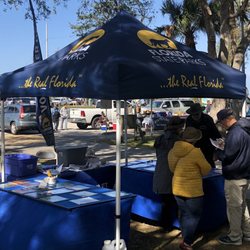
    Pelican Island Wildlife Festival

    Pelican Island Wildlife Festival

    5.0(1 review)
    39.3 mi

    This year was the 28th annual Pelican Island Wildlife Festival. The festival is held from 10:00 AM…read more- 4:00 PM in Riverview Park in Sebastian to commemorate the birthday of the refuge on March 14, 1903. Pelican National Wildlife refuge was created by one man's determination to protect the birds he loved. Paul Kroegel was a German immigrant and Sebastian resident and conservationist. He arrived in Sebastian in 1881 and homesteaded on the west bank of the Indian River across from Pelican Island. As he watched the birds on the island he fell in love with them and became increasingly disturbed by the hunters killing them. He took to protecting the birds by guarding them with his shotgun during a time when they had no lawful protection. Paul enlisted the help of the American Ornithologists Union and the Florida Audubon Society to help protect the birds. They joined together to pass legislation for protection of non-game birds. The Florida Audubon Society hired Paul Kroegel along with three other wardens to protect the birds from plume hunters and the sports hunters who would shoot at the birds while passing by on boats. During the time Paul served, two of the other wardens were murdered. Naturalist Frank Chapman and his fellow advocate, William Dutcher went to Theodore Roosevelts New York home to plead their case for the protection of the birds. In response President Roosevelt made Pelican Island the first National Wildlife Refuge in 1903. Paul Kroegel was hired as the first national wildlife refuge manager. He passed away in 1948. Since then the land was threatened in the 1960's developers attempted to buy the surrounding wetlands but local citizens stopped them. The Indian River Area Preservation League made up of local citrus growers, commercial fishermen, and sportsmen, joined with the Florida Audubon Society to convince the State to include the islands as a part of the refuge. In 1963, Pelican Island was designated as a National Historic Landmark by the Secretary of the Interior. Since then the refuge has gained over 500 more acres to help protect it from encroachment by development. There is a large parking lot with free parking adjacent to the park. Entrance to the festival is free. The event has live wildlife shows, food, environmental exhibitors, arts & crafts, a rehabilitated pelican release, raffle, amateur photography contest, native plant sale, educational presentations, historical reenactments with President Theodore Rossevelt, and for a fee boat tours to Pelican Island. I specially loved seeing all of the birds brought by the Treasure Coat Wildlife Center. Sadly because of their injuries, these birds can't be released into the wild and I was happy to donate to them. President Roosevelt is the Master of Ceremonies and is portrayed by Theodore Roosevelt interpreter, Joe Wiegand. He gave a wonderful presentation that taught about the history of Pelican Island and his efforts to protect its birds as well as other events in the life of President Roosevelt. The 2020 Pelican Island Wildlife Festival celebrated the 117th anniversary of the Pelican Island National Wildlife Reserve. The event is hosted by the Pelican Island Preservation Society and the City of Sebastian. It is a fantastic way to bring awareness to the refuge. Even though the festival is only held one day a year, you can visit the refuge 365 days a year.

    Photos
    Pelican Island Wildlife Festival
    Pelican Island Wildlife Festival
    Pelican Island Wildlife Festival

    See all

    Sams House at Pine Island

    Sams House at Pine Island

    4.8(4 reviews)
    9.3 mi

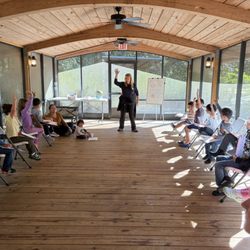
    I came here with my homeschooling co-op, they did a free mini class event for us. Very nice of the…read moreteacher to take the time to teach the kiddos all about navigation and she made it really fun for them as well as broke it down for them to understand in game form. I think it lasted about 25 mins or so. Only wish I would have walked more into their trail to see the water view if there is one I didn't get to see it. In all a cool spot to get a bit of history and sight seeing.

    Wow! What a cool place. My husband and I have been choosing a different nature sanctuary in…read moreBrevard county to explore and walk, today we chose Sams house and Pine Island sanctuary. We decided to park at the Pine Island end of the trail, there are a couple of rustic areas to park. The trail head for the Pine Island loop which is about 3/4 of a mile is near the manatee viewing area and kayak launch. The walk from parking area to the start of the garnet trail which takes you to Sam's house is a wide open green area that is used for walking or horseback riding, there is no shade but if you're lucky there is a beautiful breeze along the lake. The trail to Sam's house is very rustic with some boardwalks and lots of root covered ground. The path is clear but some areas a a little soft due to the surrounding canals. Sam's house is one of the original homes in Merritt Island. There are areas with explanations and examples of what was grown and sold in the area. Apparently there were prehistoric animal remains found in the area as well as the burial mound of Indigenous people. This is a definite place to revisit and explore the other trails and bits of history.

    Photos
    Sams House at Pine Island
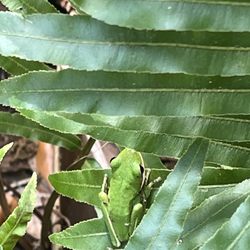
    Sams House at Pine Island - Saw this little guy while walking

    Saw this little guy while walking

    Sams House at Pine Island - Remnants from citrus trees

    See all

    Remnants from citrus trees

    Clifton Colored School 1890 - 1891

    Clifton Colored School 1890 - 1891

    5.0(1 review)
    28.8 mi

    The Clifton School House was built around 1890-1891 by Butler Campbell and Andrew Jackson, black…read moreland owners who homesteaded on north Merritt Island. A nearby neighbor by the name of Wade Holmes provided a one- acre lot as the building site, which was located in the north west corner of his property adjacent to the Campbell's. Prior to building the school house, the Campbell and Jackson children attended school in the home of a black man by the name of Mahaffey who lived nearby. They bought the lumber and building materials in Titusville and had them shipped by sailboat to north Merritt Island. Together, and with the help of Wade Holmes, they built a 12 x 16 wooden structure of heart pine lumber. Two sets of glass-paned windows were placed opposite each other on the north and south sides of the building. The front of the school house faced west which was fitted with a double paneled door, and the roof was made of cedar or cypress boards. The entire structure rested on wood pilings about one foot off the ground. By 1910 most of the Campbell and Jackson children were of the age to be out of school or attending a school in Titusville that offered a higher education, and the little wooden structure no longer was used as a school house. When the Government took over all of North Merritt Island in the 1960's the families had to relocate to other areas. Most of the structures were demolished or disassembled board by board until there was little visible evidence that any inhabitants had lived in that area. Somehow the old Clifton Schoolhouse was overlooked, or maybe thought not to be of any value, and would eventually fall to the elements of weather and time soon enough. Sometime in the late 1960's or 1970's, someone discovered the old wooden structure still standing under a heavy growth of vines, and after investigation of the site, found an old trunk inside, filled with old letters, post cards, receipts, greeting cards and other personnel items belonging to the Campbell family. IT'S NEVER TOO LATE TO RESTORE SOMETHING SO IMPORTANT!

    Photos
    Clifton Colored School 1890 - 1891
    Clifton Colored School 1890 - 1891
    Clifton Colored School 1890 - 1891

    See all

    Porcher House

    Porcher House

    3.5(4 reviews)
    1.3 mi

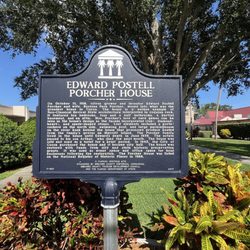
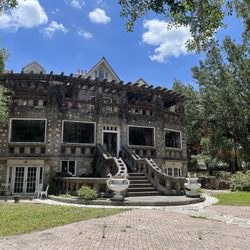
    While wandering historic downtown Cocoa I discovered the stately Porcher House in Cocoa Riverfront…read morePark. As a fan of historic architecture, this is a gem worth checking out. In front of the home is a historic marker that is part of the Historical Marker Program, one of the Division of Historical Resources' most popular and valued public history programs. The markers raise awareness of Florida's cultural history while enhancing the enjoyment of historic sites for residents and tourists. The blue historic markers tell the stories of the people and places that were important to Florida's history and they can be found in front of schools, forts, roads, archaeological sites, battlefields, cemeteries, roads, churches, historic districts, and historic buildings like this one. Historic marker F-937 was installed in 2017 by Brevard County Historical Commission, The Brevard Heritage Council, The Brevard County Tourist Development Council, and the Florida Department of State. This impressive home is associated with Edward Porcher. As a young man he moved to Cocoa from South Carolina in the late 1800's. He and wife Byrnina Peck of Atlanta settled into Merritt Island where they raised their family and operated Deerfield Groves, a citrus farm. He was the first person to grade fruit for shipping, patented the first fruit stamping machine, and he invented a machine to wash the fruit. He was the founder of the Indian River Orange Growers Association. In 1962 he was inducted into the Florida Citrus Hall of Fame. Byrnina was the first postmistress on Merritt Island. In 1895 the Porcher family moved into a three story wood frame house where the Cocoa Civic Center is now located. Construction on the Porcher's Neo Classical Revival home began in 1914 based on Mrs. Porcher's design. A special feature in front of the house are the stones that were cut to represent the suits of cards in a game of Bridge. The house was built from native coquina rock and included ten bedrooms, four and one-half baths, a partial basement, and an attic. The staircase is made of teak, the floor is oak, and the wainscoting and trim are cedar. The Porcher family moved into the grandest home in Cocoa on October 31, 1916. Portions of the house are original while others are restorations. No longer on the property are the porte-cochere on the north side, the Porcher's swimming pool, and the large packinghouse that was on the river bank behind the house. The packing house was used to process produce delivered by boat the family's groves on Merritt Island. Edward Porcher passes away in June 1939. Upon his death the house passed to his son Arthur who died the next month. The house became a hotel and then in 1945 the City of Cocoa purchased it and used it for City Hall. Money from city and state historic preservation grants were used to restore the Porcher House and it was added to the National Register of Historic Places on January 6, 1986. Today the Porcher House can be rented for private events like weddings.

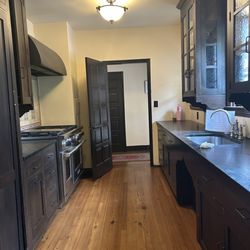
    Porcher was in the business of oranges. Later, this house was used as city hall…read more Now it is an event venue for weddings and such. The house has been restored, but it is not furnished as a residence. Some of the rooms contain offices where you can reserve the house for an event, and arrange for catering. The front door latch is a bit hard to open, so try a little harder before giving up on it. Don't expect a guided tour of the house, but walk thru and have a look, when there is no wedding or reserved private event going on. There is an elevator to the second floor, with water fountain and restrooms nearby. Look out the first floor back porch to the river. Walk out the back and stroll to the river thru a park with an amphitheater. There is another park on the block that has swing sets for the younger folk. This Porcher House is next door to the civic center.

    Photos
    Porcher House
    Porcher House
    Porcher House

    See all

    Cape Canaveral Lighthouse Tours

    Cape Canaveral Lighthouse Tours

    4.6(13 reviews)
    9.3 mi

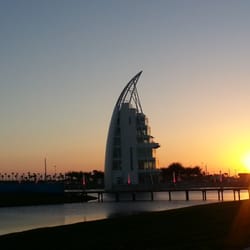
    **INITIAL REVIEW**…read more The Cape Canaveral Lighthouse Tour (which I will shorthand simply to the Lighthouse Tour) has been one of those "backyard adventures" I've been wanting to go on for the longest time. Eventually, I was able to partake in said adventure with my friends, Nate and Chops. Afterwards, I have to say that even for a probably "one-and-done" for a tour, it is definitely worth every penny spent. This tour was everything I wanted and loved, and it delivered. First and foremost, the actual business building for the Lighthouse Tour is nothing you have to worry about. According to all the tours, you will meet up at the Sands Space Museum and take a charter van to multiple locales on the tour. Before we get to the actual tour I partook in, it should be noted there are numerous tour options such as the museums alone, the lighthouse alone, or the full experience. Prices range from $35 (lighthouse only) to $65 (full tour). I went with the latter which includes numerous museums, historic launch sites, and the Cape Canaveral Lighthouse. It should also be noted that the more you do, the longer the tour. The full tour is four hours long. Please take note the things you need to check before the tour such as wearing shoes if you plan to walk up the five floors of the lighthouse, small bags allowed with small closed-contained foods and drinks only. Finally, you need to fill out a clearance check as all the stops, with the exception of Sands Space Museum, is on the Cape Canaveral Air Force Military Base. With those in mind, the full tour - known as the Cape Canaveral Lighthouse and Space Flight Tour - is all the stops if possible. I say "if possible" because some stops may be closed for maintenance or upgrades. For us, The Sands Space Museum, where the tour stars, was closed for renovation. However, the museum is free and not on protected property so I can go back and check it out. We visited four different launch sites, three museums, and the Cape Canaveral lighthouse. I personally loved the lighthouse and Hanger "A" which housed some of the larger historic rockets and jets that have helped bring NASA and the U.S. military where it is now. I personally was surprised that the first drone was used as target practice. I can't really detail everything I saw or this would become one my longest reviews, longer than I usually do. Just know that, like I said earlier in the review, for a possible one-and-done, it is worth every penny. However, if you really want to make sure the tour is a one-and-done, pay for the full tour. You'll have enough time to visit everything within the four hours, and if anything is closed, they'll take you to the Canaveral National Seashore, which was amazing because it is literally almost "untouched" by tourism. I will give this tour four out of five stars. I am not going to say consistency will earn the fifth star because only a super fan will take this tour numerous times... or work for the tour company. I will say that the lacking star has to do with the price. It can be high overall especially if stops are closed for some reason.
    Great experience an excellent adventure for all in the family. Make sure add to you agenda.read more
    Photos
    Cape Canaveral Lighthouse Tours
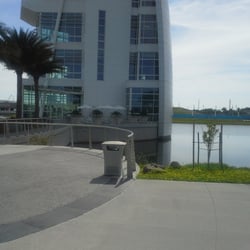
    Cape Canaveral Lighthouse Tours - What a different view

    What a different view

    Cape Canaveral Lighthouse Tours

    See all

    Valencia Historic District - landmarks - Updated May 2026

    Loading...
    Loading...
    Loading...