USS Recruit Photos


More like USS Recruit
Recommended Reviews - USS Recruit
Start your review...


Reviews With Photos


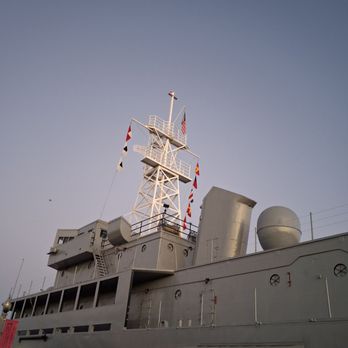
"A ship is referred to as she because it costs so much to keep one in paint and powder." --Chester Nimitz The only US Navy Ship never in the water, (though it was in drydock once for repair) is the USS Recruit. It was the first of its kind, not quite a building, but not quite a ship. The USS Recruit (TDE-1 and TFFG-1) the Navy's first non-ship, was originally a commissioned vessel and observed traditional Naval shipboard procedures like all other vessels. Any Sailor who ever served duty on board this haze gray ship awash in concrete, fondly remembers his first 'request permission to come aboard.' Affectionately known as USS Neversail, the Recruit was a two-thirds scale mock-up and served as a Sea Daddy to new recruits. When completed, it was 225 long, had a 24-foot, four inch beam and a 41-foot mast. Back in 1949, the construction was meant to look like a destroyer escort, at two-thirds the size and with fittings from salvage and mothballed ships. In the early 1980s, a reconfiguration made the Neversail into a guided-missile frigate. During construction, Sailors in San Diego NTC's seamanship division supervised the rigging with standard Navy fittings obtained from salvage and mothballed ships. The Recruit was commissioned Rear Adm. Wilder D. Baker commandant, Eleventh Naval District, on July 27, 1949. A commission pennant was broken and the ensign and Union Jack was hoisted. It served as a school for all recruits going through basic seamanship indoctrination. When the boot camp was at its busiest during the Vietnam war, for example, there were so many recruits that time spent aboard the Neversail was limited. It was just long enough to learn how to climb ladders and the difference between port and starboard, bow and stern. The ship's deck was an exact replica of what a Sailor could expect in the fleet. The Recruit had cleats, chocks and mooring lines and operated as any standard Navy ship. After that era, Sailors learned marlinspike seamanship, ground tackle operation, cargo booms, deck fittings, lift boat handling and signal equipment. Here the unsalted crew learned how to follow orders and maneuver around a ship. The Recruit was even outfitted with standard naval rigging and came complete with a 3-inch gun. Besides the regular classrooms, a company of recruits would stay on board from 8 p.m. to 8 a.m. each night to polish watchstanding skills. It was the first of three training structures built by the Navy after World War II, and it is the only one that remains. In 1982, the Recruit was reconditioned as a training guided-missile frigate. After boot camp closed in 1993 and its affiliated training center four years later, the Recruit, aka The USS Neversail went into decline. Rust and other signs of disuse were visible to motorists from heavily traveled North Harbor Drive, not far from the city airport, Lindbergh Field. The sun and salt air had taken a toll. To veterans, it was an outrage. There was talk of renovation but in the hurly-burly of transferring ownership of the 361-acre training site to a private developer, which was never done. Finally, developer Corky McMillin, officials at the Midway carrier museum, and a group of eager volunteers decided that the Neversail should be returned to its previous glory -- at least its exterior. Fixing the inside was considered far too costly. As California Registered Historical Landmark No. 1042, its plaque was placed by the State Department of Parks and Recreation in cooperation with the Corky McMillin Companies, the Redevelopment Agency of San Diego, and the "Squibob Chapter of the Ancient and Honorable Order of E Clampus Vitus" on August 13, 2005. By unofficial estimates, more than a million recruits spent time on the Neversail while Replica guns were on its deck; below they had served time in her classrooms, a 54-bed bunk room, toilets, showers and a communications room. Even a Captain's Cabin was included. Appreciate the Navy friend who knew most of this info when we visited earlier this Spring. There is no access to interior which is limiting. It's not a must see attraction in town, however a fantastic work of preservation of military history. 3.5 rounding up.


We wouldn't say that is a must see attraction, but if you are in the area, we would say it is worth stopping by to take a look and appreciate one of San Diego's historical military sites. Aside from looking and walking around this ship, there isn't anything else to do. You walk up to it, snap a few photos and maybe read the plaque about what the USS Recruit was and how it is a California Historical Landmark. But, for what it is, we thought it was pretty cool that the old Naval Training Center has kept some of its original structures, such as the Recruit. Being from a military background, we appreciate seeing it and love how we can see something that our parents had told us about when the area was still a training center. Luckily, there are a lot of things to do around the area, whether it be visiting the Public Market, NTC Park, or staying in the nearby hotels. So, if you find yourself close by, check it out. Just don't feel like you need to go out of your way to see it.


The USS Recruit is best included in a wider tour of Liberty Station or on your way out to Cabrillo National Monument and Ft Rosecrans National Cemetery. Besides walking around this historical landmark and reading the plaque, there are also several eating establishments a two minute walk away. A little further away in Liberty Station are many art galleries, restaurants, a Trader Joe's, other assorted shops and a display of the history of the once Naval Training Center. Enjoy!


The year; 1984. The time; early AM. The weather; dark, foggy and eerily still. I along with a bus load of other kids (that's what we were) of different personalities, nationalities and from different cities across America were on an extremely short bus ride from the San Diego Airport to a place that would change our lives forever. As the bus crossed over the Harbor Bridge, we looked to the right and saw a Naval Ship sitting in the middle of what would soon not only be our destination, but our new home for the next 8 weeks. The destination; The Naval Training Center (NTC) San Diego. None of us had a clue how that ship (USS Recruit) would become such a intricate part of our training, lives and memories. In years since, I have visited both San Diego and the USS Recruit many times. I'm really glad to see the city has not only preserved some of the buildings and history of the former NTC, but kept and had the USS Recruit (Neversail) listed as an Historical Landmark.


3 months ago
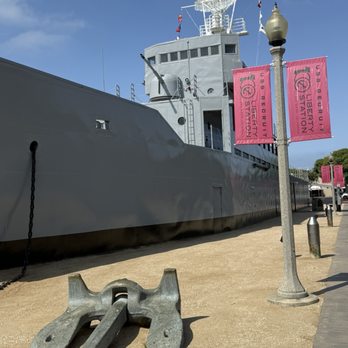
I took a double take when I saw The USS Recruit "beached" near a park on Point Loma. The 2/3s scale model destroyer escort was formally used as a training ship for navy recruits. The vessel was also used as a training guided missile frigate. The "ship" is not actually in the water, but sits on the ground. Now, the ship is retired from training but opened to the public as a museum. The ship is the only commissioned ship in the U.S. Navy to never reach water. Sailors nicknamed the vessel the "USS Neversail". Unfortunately, the museum wasn't opened during my visit as it opens at noon. A historical plaques tells the story. I was able to walk around the vessel and see the huge anchor and other ship features. It's worth a visit if you're into military history. There is nearby street parking. read more




1 year ago
Nice little stop when you're in San Diego! The USS Recruit is a cool piece of naval history and makes for a great photo spot. It's not a long visit, but you'll walk away having learned a little about Navy training history. Worth checking out if you're nearby and enjoy unique landmarks! read more


AKA USS NEVERSAIL I had time and nowhere else to be and always was so curious about this place. I enjoy history and learning. So I was all about this. Would've been cool to explore more than just the middle ground floor room. But if go again if I happened to be around and it was open. read more


5 years ago
"A ship is referred to as she because it costs so much to keep one in paint and powder." --Chester Nimitz The only US Navy Ship never in the water, (though it was in drydock once for repair) is the USS Recruit. It was the first of its kind, not quite a building, but not quite a ship. The USS Recruit (TDE-1 and TFFG-1) the Navy's first non-ship, was originally a commissioned vessel and observed traditional Naval shipboard procedures like all other vessels. Any Sailor who ever served duty on board this haze gray ship awash in concrete, fondly remembers his first 'request permission to come aboard.' Affectionately known as USS Neversail, the Recruit was a two-thirds scale mock-up and served as a Sea Daddy to new recruits. When completed, it was 225 long, had a 24-foot, four inch beam and a 41-foot mast. Back in 1949, the construction was meant to look like a destroyer escort, at two-thirds the size and with fittings from salvage and mothballed ships. In the early 1980s, a reconfiguration made the Neversail into a guided-missile frigate. During construction, Sailors in San Diego NTC's seamanship division supervised the rigging with standard Navy fittings obtained from salvage and mothballed ships. The Recruit was commissioned Rear Adm. Wilder D. Baker commandant, Eleventh Naval District, on July 27, 1949. A commission pennant was broken and the ensign and Union Jack was hoisted. It served as a school for all recruits going through basic seamanship indoctrination. When the boot camp was at its busiest during the Vietnam war, for example, there were so many recruits that time spent aboard the Neversail was limited. It was just long enough to learn how to climb ladders and the difference between port and starboard, bow and stern. The ship's deck was an exact replica of what a Sailor could expect in the fleet. The Recruit had cleats, chocks and mooring lines and operated as any standard Navy ship. After that era, Sailors learned marlinspike seamanship, ground tackle operation, cargo booms, deck fittings, lift boat handling and signal equipment. Here the unsalted crew learned how to follow orders and maneuver around a ship. The Recruit was even outfitted with standard naval rigging and came complete with a 3-inch gun. Besides the regular classrooms, a company of recruits would stay on board from 8 p.m. to 8 a.m. each night to polish watchstanding skills. It was the first of three training structures built by the Navy after World War II, and it is the only one that remains. In 1982, the Recruit was reconditioned as a training guided-missile frigate. After boot camp closed in 1993 and its affiliated training center four years later, the Recruit, aka The USS Neversail went into decline. Rust and other signs of disuse were visible to motorists from heavily traveled North Harbor Drive, not far from the city airport, Lindbergh Field. The sun and salt air had taken a toll. To veterans, it was an outrage. There was talk of renovation but in the hurly-burly of transferring ownership of the 361-acre training site to a private developer, which was never done. Finally, developer Corky McMillin, officials at the Midway carrier museum, and a group of eager volunteers decided that the Neversail should be returned to its previous glory -- at least its exterior. Fixing the inside was considered far too costly. As California Registered Historical Landmark No. 1042, its plaque was placed by the State Department of Parks and Recreation in cooperation with the Corky McMillin Companies, the Redevelopment Agency of San Diego, and the "Squibob Chapter of the Ancient and Honorable Order of E Clampus Vitus" on August 13, 2005. By unofficial estimates, more than a million recruits spent time on the Neversail while Replica guns were on its deck; below they had served time in her classrooms, a 54-bed bunk room, toilets, showers and a communications room. Even a Captain's Cabin was included. Appreciate the Navy friend who knew most of this info when we visited earlier this Spring. There is no access to interior which is limiting. It's not a must see attraction in town, however a fantastic work of preservation of military history. 3.5 rounding up. read more


3 years ago

8 years ago
We wouldn't say that is a must see attraction, but if you are in the area, we would say it is worth stopping by to take a look and appreciate one of San Diego's historical military sites. Aside from looking and walking around this ship, there isn't anything else to do. You walk up to it, snap a few photos and maybe read the plaque about what the USS Recruit was and how it is a California Historical Landmark. But, for what it is, we thought it was pretty cool that the old Naval Training Center has kept some of its original structures, such as the Recruit. Being from a military background, we appreciate seeing it and love how we can see something that our parents had told us about when the area was still a training center. Luckily, there are a lot of things to do around the area, whether it be visiting the Public Market, NTC Park, or staying in the nearby hotels. So, if you find yourself close by, check it out. Just don't feel like you need to go out of your way to see it. read more


4 years ago
The USS Recruit is best included in a wider tour of Liberty Station or on your way out to Cabrillo National Monument and Ft Rosecrans National Cemetery. Besides walking around this historical landmark and reading the plaque, there are also several eating establishments a two minute walk away. A little further away in Liberty Station are many art galleries, restaurants, a Trader Joe's, other assorted shops and a display of the history of the once Naval Training Center. Enjoy! read more


The year; 1984. The time; early AM. The weather; dark, foggy and eerily still. I along with a bus load of other kids (that's what we were) of different personalities, nationalities and from different cities across America were on an extremely short bus ride from the San Diego Airport to a place that would change our lives forever. As the bus crossed over the Harbor Bridge, we looked to the right and saw a Naval Ship sitting in the middle of what would soon not only be our destination, but our new home for the next 8 weeks. The destination; The Naval Training Center (NTC) San Diego. None of us had a clue how that ship (USS Recruit) would become such a intricate part of our training, lives and memories. In years since, I have visited both San Diego and the USS Recruit many times. I'm really glad to see the city has not only preserved some of the buildings and history of the former NTC, but kept and had the USS Recruit (Neversail) listed as an Historical Landmark. read more


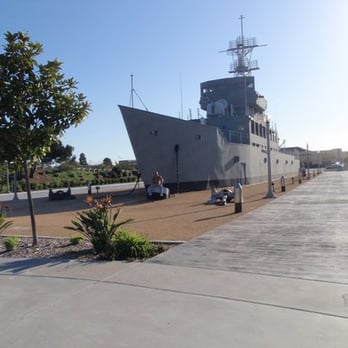

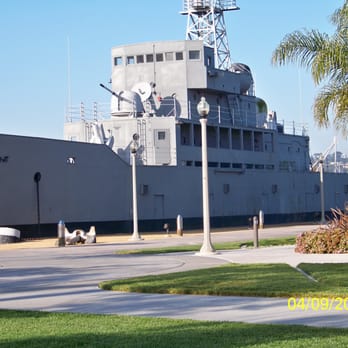

It's cool. My buddy in the photo(who is one of the most, if not THE most talented custom knifemakers in the world) attended NTC San Diego when it was one of three NTC complexes, the others being Orlando(where I went to boot) and Great Lakes, AKA Great Mistakes, which is the only one remaining, and would suck hugely in the winter, which is WHEN I went to boot in 1986. Would be nice if you could check it out as a museum, and that is what they are working towards, but as a simple reminder of times and struggles passed, very much worth taking a look at. read more


15 years ago

6 years ago


8 years ago