Tortuga Trail Photos


You might also consider


More like Tortuga Trail
Recommended Reviews - Tortuga Trail
Start your review...



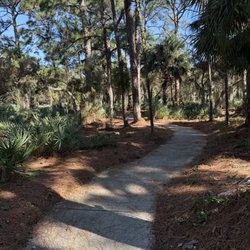
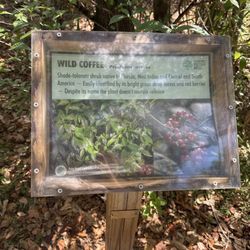
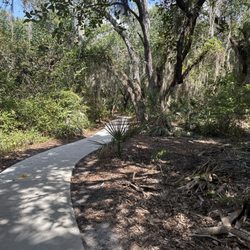
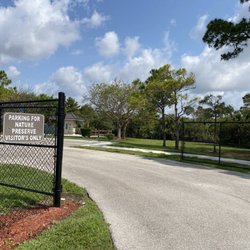
Tortuga Trail is a beautiful scrub preserve located on the campus of Florida Atlantic University, with a surprisingly rich history. Before World War II, this area was part of the vast South Florida scrubland. In 1942, it became the Boca Raton Army Air Field, where over 100,000 soldiers trained for combat. The Army constructed more than 800 buildings and four runways, and planes from across the country flew here to have radar installed. This development reduced the native scrub habitat to a small "island" between runways, which was regularly cleared. When FAU opened in 1964, part of the former base became a regional airport. The remaining conservation area continued to be mowed until the 1970s, when a determined botanist began restoring it to its natural state. In 1971, the National Audubon Society designated the preserve as an owl sanctuary--and impressively, it has continued to thrive even as the university has expanded. Originally over 100 acres, the preserve has gradually shrunk to about 90 acres due to campus development, including the stadium, parking lots, and student housing. Still, it remains a vital pocket of native Florida scrub habitat. Running through the preserve is the two-mile Tortuga Trail, an interpretive nature path built and maintained by FAU's S.E.E.D.S. club (Strategies for Ecology Education, Diversity, and Sustainability). The green trail begins at the parking area and connects to the blue and red loops; the red trail leads to Parking Lot 5 behind the stadium. Along the trail, you might spot threatened gopher tortoise and burrowing owl--the university's mascot. The plant life includes sabal (cabbage) palm (Florida's state tree), saw palmetto, slash and sand pine, live and dwarf oak, rusty lyonia, and even the fragrant tarflower. Notably, the rare Toothed Rein Orchid was discovered here in 2016. I didn't spot any owls or tortoises on my visit, but I did enjoy bright yellow prickly pear blooms, wild coffee, lantana, a cute grasshopper, and plenty of buck moth caterpillars covered in spiky (and stinging!) bristles. The trail itself is rustic and easy to follow, marked by green, blue, and red posts. Some sections are in full sun, but much of the path offers shade. Just be mindful of your footing--you may need to step over small fallen branches along the way. It was such a nice surprise to discover this hidden hiking spot. Parking is available at Lot 5 or across from the north entrance. read more


More info about Tortuga Trail
777 Glades Rd
Boca Raton, FL 33431
Directions
Hours
Outdoor Amenities