Theatre Royal Photos



Recommended Reviews - Theatre Royal
Start your review...


Reviews With Photos
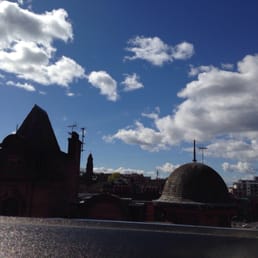

ROOF TERRACE!!! This is the second time this week I've been to the Theatre Royal and I LOVE it! I've been going since I was LITERALLY a baby in my Mum's arms for The Nutcracker and Sleeping Beauty ballets...!! The recent have really enhanced the whole place and interior is greatly improved...I'm very glad they haven't messed with the actual auditorium too much; they've cleaned all the ornate cornice and it looks beautiful!! The facade around the exterior of round bit of the new construction looks like a crown at the top: apt! AAAAAANNNNNDDDD The Crown houses the VERRRRRY cool roof terrace, with a wee bar off to the side...the views are SPECTACULAR...there are wee guides to what you're seeing on the walls if the terrace; there are also wee signs warning that the metal facing on the top of The Crown gets hot in the sun-a peril of this week's lovely weather!! One thing I would perhaps sliiiightly moan about is the price of the ice cream and food in the wee cafe...I saw a bog standard sandwich for £4.50...but I suppose that's to be expected...it's not enough to be demoted to a four-starrer, as I really do love this place...and the staff are away extremely friendly and helpful-Him Indoors had a bit of paper left over from his brownie so asked a staffmember where the nearest bin was, she said there was a lack and "I'll take it!"...he said "really...??!" And it she took it, very good of her...! Love a bit of nice service!!


This being my first visit here, I've decided I really need to come here more often! What a gorgeous building, I absolutely love it. Plus, a bit of culture never hurt anyone! You can imagine my excitement when my boyfriend surprised me with tickets to see To Kill A Mockingbird that was recently on, one of our favourite books! We had gone out for dinner just before the show started and still managed to be a bit early. We were able to walk around the theatre and take in all the sites there were to be seen. All around each level were tid bits of information about what shows have performed, who has made the Theatre Royal what it is, and random (gorgeous) costumes from various shows. We had Balcony seats, which turns out were pretty high up. No worries, we still had full view of the stage and a bit of vertigo to boot. The seats weren't necessarily the most cozy, but the view was spectacular. The theatre itself is gorgeous, any seats would have been perfect. The sold out show made my heart sing, as there were so many people who love this story just as much as we do! My friends and I are eyeing a play showing soon, and can't wait to go back!


I visited the Theatre Royal to see Noel Coward's Private Lives recently. Quite apart from the play being good (I thought it was hilarious) the Theatre itself is lovely. I didn't have much time to explore but the foyer is spacious with lots of seating and a couple of places to get a glass of wine or a cup of coffee and some cake. I was particularly delighted to see that Vanilla Black were serving the coffee and cake - I miss their Sauchiehall Street branch and I had no idea they had one in the theatre. That's almost reason enough to go back by itself. The stage itself is a good size with plenty of comfy seats from which to watch the entertainment - I'd hazard a guess that the capacity is probably a little over 1000. The whole of the interior of the building is very beautiful, apparently after some relatively recent renovations. I tend to choose a play to see, rather than a theatre to see it in, but I'll definitely keep an eye on their listings and I'll try to get back here soon.


Loved the newly improved Theatre Royal the staircase is a work of art, plenty of bars, toilet facilities and a fabulous roof terrace. The staff were very helpful interval drinks where they were supposed to be and also not overpriced. We saw To kill a Mockingbird, it was a great performance, I heard one patron say she was struggling with the diction, I would have to disagree the accents were spot on, this was an excellent production, with fabulous acting. My Friend and I had a really enjoyable evening, cant wait to see what they offer us next.


I rarely go to plays and theatre performances, but when I do, I get extra excited when they are on in here. Likewise with comedy performances. It's on a good location out the way of boozers (a problem often encountered at the Pavilion) and the interior is lush and grand. It still looks fresh and modern, even with an old fashioned interior, largely due to how clean and well kept it is. Good staff, good seats, no arguments. A really nice theatre with a substantial bar that is a bit pricy, as per usual. There's always something on in here, but I rarely get the chance to go unfortunately.


Easily the grandest and most opulent of Glasgow's theatres, the Theatre Royal has a classical Victorian style and tends to host the more high-profile productions when they come to Glasgow. I went to see Equus here, a celebrated 70s play that was recently revived. It explores some of the darkest elements of the human psyche, and features gratuitious nudity and elements of bestiality. I think it was the latter two features that brought in the crowds.

12 years ago
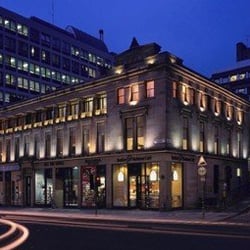
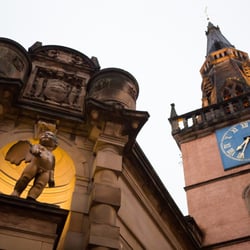
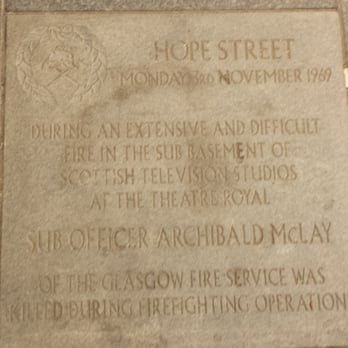
Theatre Royal is the oldest surviving theatre in Glasgow, the original building dating from 1867 when it opened as Bayliss' Coliseum before being renamed as Theatre Royal in 1869. Perhaps uniquely, it has been rebuilt twice by architect C J Phipps following major fires in 1880 and 1895. Although not as prolific a theatre architect as Frank Matcham, Phipps' style is splendidly represented in this building, regarded as the largest and best surviving example of his work. But don't judge the building from its bland exterior; you have to see the wonderfully ornate auditorium to really appreciate Phipps' work. The building was home to STV's studios for many years, before being sold to Scottish Opera in 1975, and it has been their home stage ever since, and is also the main home to Scottish Ballet's productions as well as being a main-scale house on the UK touring circuit. The stage is not huge by today's standards, but it's still larger than many London theatres and is the largest Glasgow can offer at the moment. The theatre is currently run and programmed by ATG (as is the Kings), so Glasgow is well served by the big touring shows. Currently the building is having a new foyer added at the corner of Hope Street and Cowcaddens in the form of a round tower, which has been a major feat of engineering to fit in with the existing architecture. As part of this refurbishment parts of the auditorium have been altered to something closer to the original design, with old entrance arches and the seating layout restored to improve audience flow and sightlines. Like any theatre, this one has a few ghosts, and like the Edinburgh Festival Theatre, there was a fire-related incident here that resulted in new legislation coming into force. In 1969, when STV moved out of the building into their new premises next door and the theatre was being restored, there was a major fire in the sub-stage area. The fire department tackled this with the then relatively new technique of pumping suppressant foam into the fire. One of the fire officers Archie McLay, working in the darkness of the stage area, fell through the stage floor into the sub-basement of the building - this extends about 20m underneath the stage floor and is carved out of solid bedrock (it was a former quarry), so it was full of foam. He was not reported as missing until the fire was under control, by which time it was too late. Resulting from this dreadful accident, the fire department introduced a 'deadman switch' device to be worn by all officers, which would radio an alarm signal if the officer was stationary for more than a few minutes. This incident is now marked by a stone plaque in the pavement of Hope Street. There have been a few reported sightings of Archie in the sub-basement, and most staff who have occasion to be down there late at night when the building is quiet will report a spooky atmosphere and a feeling like they are being watched by ghostly eyes... read more

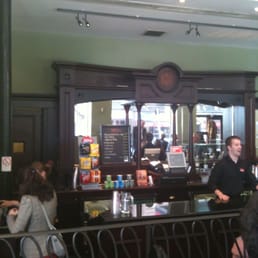
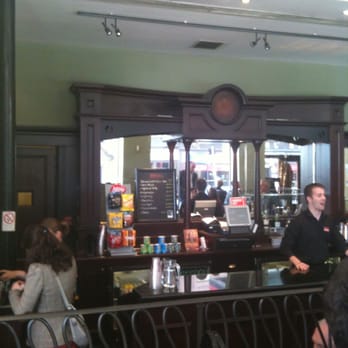
I'm fairly certain I've seen things here prior to the refurb, but for the life of me I just can't remember. However, since the refurb I've been several times: some plays and operas. And i like it. Vanilla Black's has moved from Sauchiehall St, and is now the resident café for the theatre - and it's turned out to be a handy place for me to pop in for a quick work lunch. The foyer itself is open, spacious, and very welcoming - the spiral staircase is awesome, and is becoming an iconic feature of the theatre. Beyond that, it's functional and does what you expect, and you'll tend to find quite a lot of less populist productions here. The only downside is the extreme pricing at the bar. Seriously, £11 for 2 bottles of cheap lager is disgustingly extortionist. read more


Theatre Royal is undergoing some renovations at the moment which is the only reason for the 4 stars rather than 5. I'd actually been here once before for the opera but didn't really remember the visit (it was a few years ago!) so it was great to head back to see Scottish Ballet's The Crucible with Ten Poems. I actually had to organise a replacement set of tickets as I managed to lose the set I got in the post, but thankfully this is really easy with ATG tickets and they're available for collection at the box office. The box office isn't very clearly marked but thankfully the lovely staff helped me out and handed over my tickets. It's worth noting that while the renovations are underway, the toilets are currently located on the street (portaloos) - as the weather turns a bit more chilly I'm sure this is going to be less and less appealing! Hopefully there isn't too much longer before the works are completed. We had great seats near the front and enjoyed lots of leg room (I think because we were seated where the orchestra pit normally is). There was pros and cons to sitting this close to the stage - great to hear the squeaks of ballet shoes/feet on the floor and heavy breathing, but for some scenes in the Crucible when there was a lot going on it, we were too close to get the whole view of the stage. Hot tip: for pre or post-theatre drinks, head to the bar at the Citizen M nearby. It's a great, under-appreciated bar with tasty cocktails. read more


11 years ago
ROOF TERRACE!!! This is the second time this week I've been to the Theatre Royal and I LOVE it! I've been going since I was LITERALLY a baby in my Mum's arms for The Nutcracker and Sleeping Beauty ballets...!! The recent have really enhanced the whole place and interior is greatly improved...I'm very glad they haven't messed with the actual auditorium too much; they've cleaned all the ornate cornice and it looks beautiful!! The facade around the exterior of round bit of the new construction looks like a crown at the top: apt! AAAAAANNNNNDDDD The Crown houses the VERRRRRY cool roof terrace, with a wee bar off to the side...the views are SPECTACULAR...there are wee guides to what you're seeing on the walls if the terrace; there are also wee signs warning that the metal facing on the top of The Crown gets hot in the sun-a peril of this week's lovely weather!! One thing I would perhaps sliiiightly moan about is the price of the ice cream and food in the wee cafe...I saw a bog standard sandwich for £4.50...but I suppose that's to be expected...it's not enough to be demoted to a four-starrer, as I really do love this place...and the staff are away extremely friendly and helpful-Him Indoors had a bit of paper left over from his brownie so asked a staffmember where the nearest bin was, she said there was a lack and "I'll take it!"...he said "really...??!" And it she took it, very good of her...! Love a bit of nice service!! read more

12 years ago
This being my first visit here, I've decided I really need to come here more often! What a gorgeous building, I absolutely love it. Plus, a bit of culture never hurt anyone! You can imagine my excitement when my boyfriend surprised me with tickets to see To Kill A Mockingbird that was recently on, one of our favourite books! We had gone out for dinner just before the show started and still managed to be a bit early. We were able to walk around the theatre and take in all the sites there were to be seen. All around each level were tid bits of information about what shows have performed, who has made the Theatre Royal what it is, and random (gorgeous) costumes from various shows. We had Balcony seats, which turns out were pretty high up. No worries, we still had full view of the stage and a bit of vertigo to boot. The seats weren't necessarily the most cozy, but the view was spectacular. The theatre itself is gorgeous, any seats would have been perfect. The sold out show made my heart sing, as there were so many people who love this story just as much as we do! My friends and I are eyeing a play showing soon, and can't wait to go back! read more


10 years ago
I visited the Theatre Royal to see Noel Coward's Private Lives recently. Quite apart from the play being good (I thought it was hilarious) the Theatre itself is lovely. I didn't have much time to explore but the foyer is spacious with lots of seating and a couple of places to get a glass of wine or a cup of coffee and some cake. I was particularly delighted to see that Vanilla Black were serving the coffee and cake - I miss their Sauchiehall Street branch and I had no idea they had one in the theatre. That's almost reason enough to go back by itself. The stage itself is a good size with plenty of comfy seats from which to watch the entertainment - I'd hazard a guess that the capacity is probably a little over 1000. The whole of the interior of the building is very beautiful, apparently after some relatively recent renovations. I tend to choose a play to see, rather than a theatre to see it in, but I'll definitely keep an eye on their listings and I'll try to get back here soon. read more


Loved the newly improved Theatre Royal the staircase is a work of art, plenty of bars, toilet facilities and a fabulous roof terrace. The staff were very helpful interval drinks where they were supposed to be and also not overpriced. We saw To kill a Mockingbird, it was a great performance, I heard one patron say she was struggling with the diction, I would have to disagree the accents were spot on, this was an excellent production, with fabulous acting. My Friend and I had a really enjoyable evening, cant wait to see what they offer us next. read more


I rarely go to plays and theatre performances, but when I do, I get extra excited when they are on in here. Likewise with comedy performances. It's on a good location out the way of boozers (a problem often encountered at the Pavilion) and the interior is lush and grand. It still looks fresh and modern, even with an old fashioned interior, largely due to how clean and well kept it is. Good staff, good seats, no arguments. A really nice theatre with a substantial bar that is a bit pricy, as per usual. There's always something on in here, but I rarely get the chance to go unfortunately. read more


17 years ago
Easily the grandest and most opulent of Glasgow's theatres, the Theatre Royal has a classical Victorian style and tends to host the more high-profile productions when they come to Glasgow. I went to see Equus here, a celebrated 70s play that was recently revived. It explores some of the darkest elements of the human psyche, and features gratuitious nudity and elements of bestiality. I think it was the latter two features that brought in the crowds. read more


17 years ago

16 years ago


16 years ago
Friendly, helpful staff. Historic building with a real character. Just don't buy the coffee or drinks, overpriced and generally poor quality. However, am here for the entertainment not the cafe / bar, so 4stars - mostly due to the staff! read more


18 years ago

11 years ago

18 years ago