Spending an afternoon at the National Museum of the Philippines turned out to be one of the most…read morefascinating ways I could have learned more about my husband's country of birth.
And honestly, I was not fully prepared for just how vast and layered Philippine history actually is.
The National Museum complex is enormous and covers multiple museums and collections ranging from natural history, anthropology, archaeology, fine arts, indigenous cultures, colonial history, biodiversity, and the many different regions and peoples that make up the Philippines. Walking through the exhibits, you quickly realize the Philippines is not just "one culture," but a massive tapestry of languages, traditions, histories, and influences shaped by centuries of trade, migration, colonization, resistance, and survival.
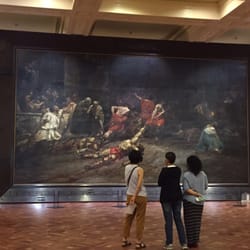
One of the most famous highlights inside the museum system is Juan Luna's *Spoliarium*, an enormous and emotionally powerful painting considered one of the greatest treasures of Filipino art and nationalism. Even tourists unfamiliar with Philippine history usually stop in awe when they see the sheer scale of it in person.
Outside the museum, I was especially fascinated by the massive "Tree of Life" structure inside the National Museum of Natural History. It stretches dramatically upward through the center of the building and symbolizes the incredible biodiversity and interconnected ecosystems found throughout the Philippine islands. It is honestly one of the most visually striking museum interiors I've seen anywhere.
Now, fair warning:
If you visit during school hours, prepare yourself for children.
Children everywhere.
Apparently Filipino schools absolutely love bringing students here for field trips, and during our visit there were enormous groups of excited students moving through nearly every section of the museum. Honestly though, it was actually kind of heartwarming seeing so many kids actively engaged and learning about their own country's history.
The museum itself is very large, and once you start walking, you are going to be walking quite awhile. One small complaint I did have was the lack of seating areas throughout some sections. At a certain point my husband and I found ourselves quietly scanning corners for open benches like exhausted archaeological explorers searching for buried treasure.
Still, the experience was absolutely worth it.
I loved wandering through the exhibits with my husband, listening to him explain little pieces of Filipino culture and history to me while I absorbed it all through fresh eyes. It felt less like simply visiting a museum and more like gaining a deeper understanding of a country and people I have grown to love deeply myself.
The Philippines truly is a beautiful country -- not just in scenery, but in history, resilience, culture, and spirit.
And this museum does a wonderful job reminding visitors of that.