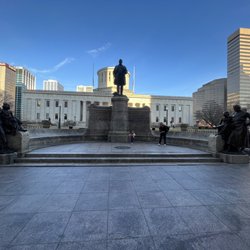
Construction began on the flat domed Ohio State house in 1839, and was completed at the opening of…read morethe American Civil War. In some states upon returning from the war soldiers pushed to have rounded domes placed on top of their state houses. It was not the case in Ohio, and the original Greek revival architecture remains.
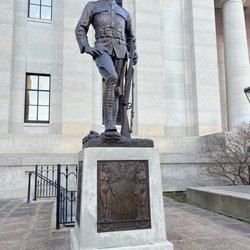
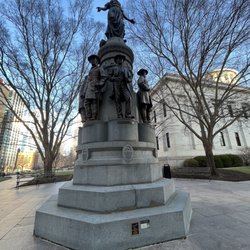
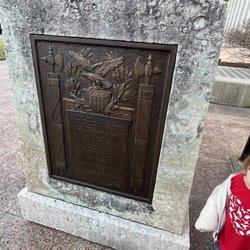
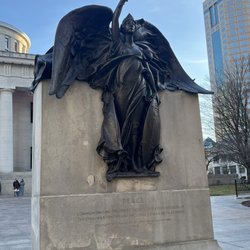
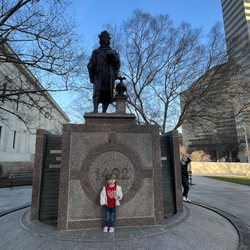
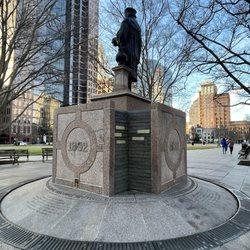
The building is a showpiece and focal point at the center of the capital city. It has been restored to its original grandeur and is carefully maintained to ensure historical accuracy. The grounds are well manicured and contain a variety of historic themed statues. There is an active and thriving bee apairy located on the north side of the grounds.
Beneath Capitol Square, and the statehouse there is a multilevel parking facility. Be aware that the maximum height of your vehicle may be too tall for this garage. There are warning indicators at the entrances, but pay attention to the height nonetheless.
Security is of Paramount concern, as this is a working capital for the statewide officeholders, including the governor, and both houses of the general assembly, Senate and House of Representatives. It is not just a museum, or a ceremonial building. This is the actual working seat of government for the state of Ohio. it is necessary for all visitors to be screened by security prior to entrance. And an active and robust security presence is maintained by the Ohio Highway Patrol.
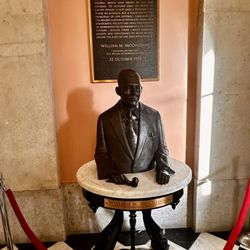
Throughout the halls can be found portraits of governors and legislative leaders, statutory representing the history of Ohio as well as large paintings of historic events in the rotunda.
Of important historic note, after his assassination, the Ohio Statehouse was a location where President Lincoln lay in state and for days tens of thousands of Ohio's paid their respects. Lincoln spoke here on occasion, and actually received official word that he had been elected president, while visiting here. A brass marker is placed at the location where he spoke to the public in the atrium between the main Statehouse building and the Senate building.
The Ststehouse Atrium has not always been here, but some years earlier was an open outdoor area. As is their habit, pigeons had taken up residence at the upper regions of the building and it was necessary sometimes to run between the Statehouse and the Senate building so as not to be "christened" by pigeon waste. The area became known as "pigeon run." If you look above the door/entry entryway to the Senate building in the atrium, you will see a historic reminder of those days in the form of a taxidermy pigeon. Those days are of course, long gone, and the atrium is now home to a variety of public and private events. Many select the statehouse and grounds as a location for wedding photo shoots, and actual weddings.
Schedules of House and Senate sessions, and committee sessions are available online and open to the public. In the basement of the atrium and Senate building there are a variety of historic interpretational displays. Also found there is a small café, and a gift shop.