Cancel

    Open app

    Search

    St. Michael-Le-Belfrey

    4.0 (1 review)
    Closed Closed

    St. Michael-Le-Belfrey Photos

    Recommended Reviews - St. Michael-Le-Belfrey

    Your trust is our priority, so businesses can't pay to alter or remove their reviews. Learn more about reviews.
    Yelp app icon
    Browse more easily on the app
    Review Feed Illustration
    Photo of David J.
    96
    2344
    11912

    17 years ago

    Helpful 0
    Thanks 0
    Love this 0
    Oh no 0

    Verify this business for free

    Get access to customer & competitor insights.

    Verify this business

    York Minster - Interior dedicated to children

    York Minster

    4.5(91 reviews)
    0.1 mi

    York is a wonderful town and well worth a visit. It's easy to park and the historic center is…read moreperfectly easy walkable. And the centerpiece of course is the massive York Minster. It's an Anglican cathedral. The first record of a church on the site dates to 627, but the bulk of the building was constructed between 1220 and 1472.The minster retains most of its medieval stained glass, a significant survival among European churches. The Minster stands tall at a max. tower height of 235 feet (72 m) and is visible from far away. Good if you get lost...just look out for the Minster. And it is a really impressive piece of history, art and architecture. Really amazes you when you first walk up to it. There are so many details to find, to explore. To think how long it's been standing here - surviving quite the fire in 1984. We didn't go in this time around, but that's surely something for another visit. Not sure it's always as windy as it was when we've visited (August), but boy....did it almost blow us away at Precentors Court on the west side of the Minster. So, hold on your hats! Definitely a must do - probably THE must-do when in York.

    My visit to York Minster was an experience far beyond just sightseeing. Our group took a day trip…read moreto York, and unfortunately, I woke up that morning with intense period pain, making the day incredibly challenging. However, stepping into York Minster provided an unexpected and profound sense of peace and comfort that truly helped me through. From the moment I entered, I was utterly captivated. The sheer scale and intricate architecture of the Minster are breathtaking. Every arch, every column, and every carved detail tells a story of centuries of craftsmanship and devotion. It's a testament to human ingenuity and faith. But what truly mesmerized me were the stained glass windows. They are simply divine. The way the light streamed through the vibrant colors, casting kaleidoscopic patterns across the ancient stone, was nothing short of magical. Each window, from the smallest to the monumental Great East Window, felt like a masterpiece, filling the vast space with a soft, ethereal glow. Looking at them, tracing the stories depicted in glass, was incredibly calming. In that moment of intense pain, the beauty and grandeur of the Minster, combined with the quiet reverence of the space, brought me a profound sense of solace. It was a true sanctuary. The hushed atmosphere, the soaring ceilings, and the kaleidoscope of light from the stained glass created an environment where, for a precious time, my discomfort seemed to fade into the background. My cramps were really painful, and it was hard to breathe and stand, so just sitting in the pews and admire the windows and the calming cathedral music really helped. York Minster is not just a historical building; it's a living work of art that can deeply move and soothe the soul. Even if you're not in pain, the beauty and architectural majesty are reason enough to visit. For me, it was a beautiful refuge that I will always remember with deep gratitude. Highly, highly recommend.

    Photos
    York Minster
    York Minster
    York Minster - Pretty

    See all

    Pretty

    The Church of All Saints, Pavement

    The Church of All Saints, Pavement

    5.0(1 review)
    0.3 mi

    All Saints is one of York's finest churches, and contains a wealth of interesting furnishings,…read morealong with impressive mediaeval glass. Tradition states that the first All Saints was built here in 685AD for St Cuthbert, and a church certainly existed here in mediaeval times. However, the present church dates from the late 14th century, and has in its Perpendicular Gothic lines an architectural unity rare in this city of ancient churches. It was a Guild church, and shields from some of the Guilds are located at the end of the pews. From the outside, the most distinctive feature is its octagonal tower, dating from around 1400, surmounted with one of the finest lanterns in the country. This really was a lantern in mediaeval times: a light was kept burning here to guide travellers into York, and inside the church are two of the huge and rather crude lenses used to focus the light. The interior is spacious, if rather truncated: the original chancel was demolished to make way for a market in 1782. The attractive blue panelled nave ceiling dates from the 15th century, but it is the fittings and furnishings that provide the interest. Chief of these is the glass: the three East windows are all by Kempe, and the West window dates from around 1370, and was brought from St Saviour's in 1957. The series of panels depicting the Passion is claimed to be unique, and is certainly rare. Other items of interest include an Anglo-Danish grave cover from the 10th century; an elegant 17th century pulpit dated 1634, from which John Wesley (1703-1791), the co-founder of the Methodist church, preached; a 15th century lectern; the aforementioned lantern lenses; a Lord Mayors' Board (34 of them are buried here); and replicas of the helmet, sword and gauntlets of Thomas Percy, 7th Earl of Northumberland, who was executed in The Pavement in 1572 for leading a rebellion against Elizabeth I.

    Photos
    The Church of All Saints, Pavement
    The Church of All Saints, Pavement
    The Church of All Saints, Pavement

    See all

    Holy Trinity Church

    Holy Trinity Church

    4.5(2 reviews)
    0.1 mi

    Phrases like 'atmospheric', 'hidden gem' and 'perfectly preserved' often get bandied about when…read moretalking about old buildings, but this church, tucked away from the busy, touristy streets of old York, fits them better than most. For a start, it really is hidden: the churchyard is secluded behind rows of old buildings, accessed by narrow alleyways. It would not look out of place in a remote village. And it is perfectly preserved: such restoration as was undertaken by the Victorians seems to have been extraordinarily sensitive. It is about as close as you can get to how a church would have looked after the Reformation: dark, quiet, homely, with uneven floors, high box pews and plain walls. With candle-light it must perfectly evoke the late 17th century. It is rightly a Grade I listed building. The church actually dates back to the 12th century, although the current building owes rather more to the 13th-15th centuries: although part of the Chancel dates from the 12th century, the South Aisle and Chapel date from date from 1340, the Tower and North Aisle were built in the first half of the 15th century. The box pews are recorded as being repaired in 1633, and new ones added in 1700-1725. The pulpit dates from 1695. But the church's most notable feature - as is so often the case in York - is its mediaeval stained glass. The windows are decorated and perpendicular in style. The best is the late Perpendicular east window: this dates from 1470-71 and was presented by the then rector, John Walker. The glass depicts saints, including St George and St Christopher, as well as heraldic shields, around a central panel in which a representation of God as the Trinity holding the dead Christ, with the donors at his feet. Other features include a simple 15th century font and wall plaques recalling Lord Mayors of York, including the 'Railway King', George Hudson. The church is in the care of the Churches Conservation Trust.

    Being so close to the Minster itself, this small church hardly gets a mention I bet. It's not…read moresurprising because unless you know it's there as there' only a small entrance onto busy Goodramgate, you'll easily miss it. What make this place stand out for me is the 18C pews inside; they're very tall and a whole family can fit inside one and sit facing each other.

    Photos
    Holy Trinity Church
    Holy Trinity Church
    Holy Trinity Church

    See all

    The Church of All Saints, North Street

    The Church of All Saints, North Street

    5.0(2 reviews)
    0.3 mi

    If you visit just one church in York (aside from the Minster), make it this one. This fascinating…read morelittle church, tucked away on the rather less touristy west bank of the Ouse, has a fascinating history and contains one of Britain's most impressive collections of mediaeval stained glass. History There has been a church here since at least the 11th century, and probably predating the Norman invasion. In the 12th century, the single-cell church was expanded with aisles, some of which incorporated Roman columns from the original Roman settlement of Eboracum. The chancel was reconstructed in the 13th century in the Early English style, but a major rebuilding in the 14th century saw the east end rebuilt in the decorated style, with the aisles extended to form a rectangular plan. Later in the same century, the tower and 120ft spire were built, and the fine chancel and aisle ceilings were added in the 15th century. The church On entering, the church has a slightly rustic and homely feel to it. With no crossing, the nave is divided from the chancel only by the rood screen, and the aisles run uninterrupted from east to west. The arcades are in the simplest Early Gothic style, with simple capitals. One of the original Roman columns can clearly be seen between the north aisle and chancel. But the main event is unquestionably the stained glass: almost all of it is mediaeval, and of very high quality. There is simply too much to describe here in great detail, but there is more information available on the church's website. But essentially, the north and south aisles and east end contain windows which are complete or almost entirely complete in their original form, and date mostly from the 14th and 15th centuries. The most famous are in the north aisle: first, the 'Corporal Acts of Mercy Window' shows a bearded man (who may be the donor, Nicholas Blackburn, a merchant and mayor of York), carrying out six of the seven bodily acts of mercy, ie feeding the hungry, giving drink to the thirsty, offering hospitality to strangers, clothing the naked, visiting the sick and relieving those in prison. The final act (burying the dead) is omitted. Next along in the aisle is the unique 'Pricke of Conscience' window, so named after a Middle English poem, written in the Northumbrian dialect, describing the last 15 days of the world. The panels depict the destruction of the world and the fate of humankind, each panel underscored with the relevant passage of the poem, and all intended to call people to repent. As you might expect, the images include some wonderful beasts, demons and devils, along with people in varying states of terror or torment. The families of the donors sit watching all this at the bottom of the window. Finally, in the south aisle, look out for the bright and colourful 'Orders of Angels' window in the south aisle: in one of the lower panels is a man wearing a pair of very uncomfortable looking 15th century spectacles. Other fittings of note include a fine 15th century memorial slab on the floor of the south aisle near the chancel arcade, and the imposing late 17th cetury pulpit. Don't forget to look up, either, to the chancel and aisle ceilings with their beautifully carved 15th century hammerbeams depicting angels and men of the church. Practicalities The church is in the Anglo-Catholic tradition, and Mass is said on Thursday at 12.45, and on Sundays at 12 noon and 17.30. The church is normally open for visitors in the middle of the day.
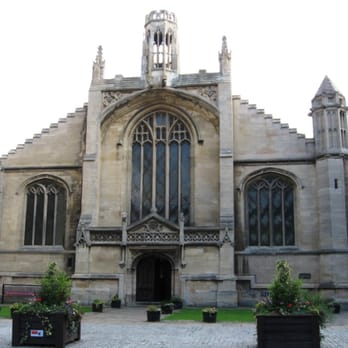
    Not as impressive as The Minister, but worth a look. In my opinion, this was an Archeologist gem,…read moremedieval structure. This church received my admiration twice on my 5 day visit. Super good vibes.

    Photos
    The Church of All Saints, North Street
    The Church of All Saints, North Street
    The Church of All Saints, North Street

    See all

    St. Martin-Le-Grand Church

    St. Martin-Le-Grand Church

    4.5(2 reviews)
    0.2 mi

    St Martin's clock is situated on Coney Street, it features a figure of a naval officer which was…read moreadded in 1779. The church in which the clock was situated was badly damaged by bombing in World War II and the clock was last restored when the church reopened in the 1960s and the restored clock will now strike the hours and chime every quarter for the first time since 1942.

    St Martin's is one of York's most notable landmarks, best-known for its impressive clock which…read morehangs over Coney Street. But it has also had a tumultuous history, and contains one of York's most impressive mediaeval stained glass windows. The church was one of one of York's largest and finest, prior to a fateful night in 1942 when an air raid reduced the church to a smouldering ruin. Before then, it boasted a large nave and chancel with full length aisles and chapels. The fabric dated from the 11th to the 15th centuries. The well-known and large double-sided clock on Coney Street was fitted in 1668, and was topped by the statue of the 'Little Admiral' in the 18th century. The clock and statue survived the bombing, but little else did. The church was eventually rebuilt between 1961 and 1968, with the 15th century tower and south aisle becoming the church, and the remainder (most of the former nave and north aisle) becoming an enclosed garden of remembrance. Substantial parts of the north walls survive, however, including elements from the 11th century. Although much smaller, the restored church is an attractive space, combining modern works with a 17th century memorial to Sir William Sheffield (d. 1633) and - above all - its mediaeval stained glass. This had fortunately been removed for safe keeping in 1940, and includes one gem: the window depicting the life and works of St Martin of Tours, dating from around 1440. Formerly the west window, this is now in the new north wall and faces visitors as they enter. It is huge for a parish church (and is the largest in the city outside the Minster): 9m high and 4m wide, it is one of the best preserved of its type and contains no Victorian additions or repairs. The church is normally open during weekdays for private prayer and visitors.

    Photos
    St. Martin-Le-Grand Church
    St. Martin-Le-Grand Church
    St. Martin-Le-Grand Church

    See all

    St. Michael-Le-Belfrey - churches - Updated May 2026

    Loading...
    Loading...
    Loading...