I lived in South Bend for almost two years at the beginning of the century, and I have visited at…read moreleast once a year (usually twice) every year since then, with the exception of 2020. I've seen South Bend change for the better and worse over that time, and while I don't spend enough time here truly to know its daily inner-workings, I have very civically engaged friends who have lived here for more than fifty years, and my regular visits show me a lot, kind of like how a person you see only a few times a year will probably notice how much weight you've lost (or gained) more than the people you see every day.
It's a difficult place to describe if you're not familiar with midsize Rust Belt cities. Its glory years are long behind it, but it has spent the better part of the past four decades trying to figure out what it wants to be. It still doesn't know, but it has thankfully stopped chasing its past. Downtown is still underutilized, but it's getting better. Downtown is almost gentrification-proof, so almost any additions to it are welcomed by most. (The same cannot be said for my dear old Northeast neighborhood, which has gentrified beyond recognition, sadly.) But you'll always be disappointed in Downtown South Bend, even if you're pleasantly surprised by not being as disappointed as you expected to be.
South Bend does parks really well, and the recent addition to Leeper Park and especially the rebuilding of Howard Park are reasons to visit all the parks around town.
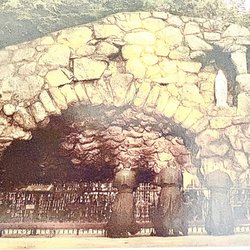
Contrary to popular opinion, the University of Notre Dame isn't actually within the city limits of South Bend; Notre Dame is in an unincorporated portion of St. Joseph County called Notre Dame, Indiana, and it controls its area with an iron fist. Sadly, while Notre Dame has benefited in myriad ways from South Bend being just across Angela Boulevard from its campus, the same cannot be said honestly for South Bend. South Bend gives and gives and gives to Notre Dame, and Notre Dame, like the rich neighbor it is, throws some crumbs South Bend's way while it pats itself on the back for its miserly contributions. Most students who move off campus now live east, north, and northeast of campus, which is to say not in South Bend. South Bend used to have a real college-town student-townie relationship with Notre Dame, but even that unequal relationship is rarer these days.
The South Bend Police are generally rude and unhelpful, in my personal experience. The public-transportation options, the few that exist, are uniformly dreadful. (It wasn't until recently that the buses ran on Sundays!) It has a cute airport that doubles as the terminus of the South Shore Line, which is fun to take to Chicago, but if you live here, you're probably going to need a car.
The weather is awful, but if you didn't know that, that's kind of on you. Yes, South Bend gets tons of lake-effect snow, and its winters are cold, long, and dismal. The springs can be magical, and the beginning of summers too. But I hated the summer humidity--I know, I'm a wuss. The very best season, though, is autumn, and not just because of Notre Dame football and hockey and basketball.
The city services that I dealt with seemed competent but not particularly friendly or customer-service-oriented. They have some nice musical and theatrical events Downtown, but Notre Dame tends to have more, so if you live in South Bend or anywhere in Michiana (the name of the region), you'll have access to more things than in most random Rust Belt cities.
In most cases, a city is defined by its people, and while many South Bend residents don't stick around long because they're chasing academic and professional opportunities elsewhere--or just buying cheap land in Granger because they've made a lot of money and want to pay fewer taxes--there is a remarkably large population that sticks around and makes the city the welcoming place that it is. Many of the city's poor wouldn't be able to afford to move elsewhere, but there are also middle- and upper-class residents who moved to South Bend at one point and chose to make it their permanent home. Part of this group of (mostly) graying do-gooders is particularly interested in resettling refugees throughout Michiana. Yes, there are quite a few refugees in Michiana, but you'd never know it, because most refugees tend to settle with their countrypeople. It's almost the opposite in South Bend; refugees who are resettled through, for example, Catholic Relief Services are from all over the world, and they're not necessarily Catholic. Because of its ties to Notre Dame, South Bend has at least indirect access to speakers of many languages and international scholars to boot. So it's more melting pot than cloistered community, and all the good and bad that comes with that distinction.