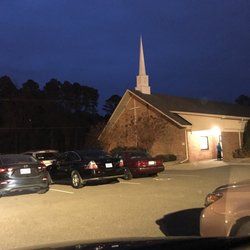
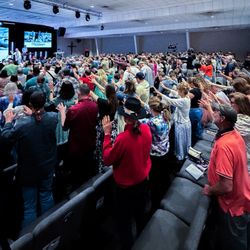
It's a classic seeker church: therapeutic music, inward‑focused prayers, and a vibe aimed at…read morefeelings rather than reverence.
The people at this church are kind, though the congregation is noticeably aging. After attending for more than seven years, we eventually realized that the focus of worship wasn't truly on Jesus. The attention seemed centered instead on the Lead Pastor, Randy, and the praise team with its emotionally driven music. The entire service has a distinctly feminine, therapeutic tone--prayers aimed inward ("What can I get from this?") rather than upward ("What can I offer to God?").
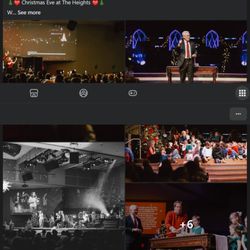
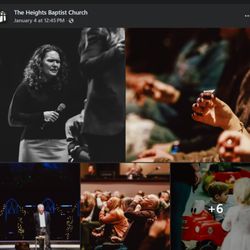
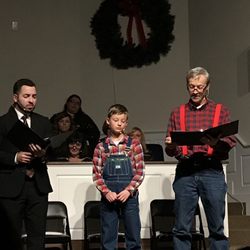
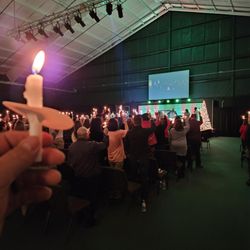
The service itself feels like a high‑tech, fragmented Bible study blended with a contemporary Christian concert. At times it becomes downright cringeworthy--think Righteous Gemstones--with random rhythmic dancers or sudden solos and duets that feel completely disconnected from genuine worship.
The overall atmosphere encourages people to come seeking an emotional, social, or spiritual experience, rather than coming to offer worship to the Lord. That's likely why it never felt like real worship to us.
Doctrinally, nearly everything is treated as symbolic--baptism, communion, even sin. That perspective becomes more understandable once you realize their pastor has no apostolic authority and therefore cannot offer sacramental grace in any historic Christian sense.
There were also moments of dishonesty. After returning from Jerusalem, Randy once claimed he had visited Christ's tomb. I was initially impressed, but later discovered he had gone to the "Garden Tomb," a site widely recognized by archaeologists as a 19th‑century Protestant invention with no historical credibility. The historically attested tomb is located at the Church of the Holy Sepulchre, maintained by Orthodox and Catholic Christians. It seems he avoided acknowledging that because of its Catholic association.
The church is affiliated with the Southern Baptist Convention, a denomination that originally formed because slave‑owning ministers insisted on retaining both slavery and ordination. Though the SBC has issued apologies, it has never formally rejected the theological arguments its founders used to justify slavery.
Our concerns extended to the children's ministry as well. After years of attendance, my oldest child couldn't identify which books of the Bible contain the Gospels. The youth ministry's impact seemed minimal. The children's ministry amounted to a large playroom and a simple craft. Essentially, childcare. Meanwhile, parents happily dropped their kids off and went to service alone. But Jesus preached to families, not segregated age groups.
Reverence is also lacking. Men routinely wear baseball caps during prayer and worship, despite the clear teaching in 1 Corinthians 11:4-7. This seems less like rebellion and more like biblical illiteracy or laziness. It's Randy's job to clean this up, but he doesn't care.
Even the visitor pitch at the end--cookies and a mug--feels tired and superficial. If someone needs a snack and a souvenir to come to Jesus, they're simply a lost person asking another lost person for directions. Most younger families seem to attend because peers at Fort Lee recommend it. It's convenient childcare, and the music is enjoyable, but it's hard to see how any of this reflects what Jesus intended His Church to be.
In a time when many--especially young people--are searching for tradition, stability, and a faith rooted in something deeper than trends, they won't find it here. Increasing numbers of young adults are turning to high Catholicism and Eastern Orthodoxy for precisely those reasons. Southern Baptist churches like this one feel stuck in the 2000s and unaware of the spiritual hunger of the post‑COVID millennial and Gen Z generations.
God bless you on your spiritual journey.