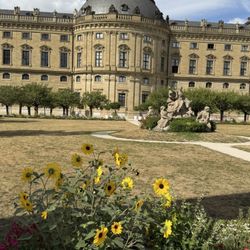
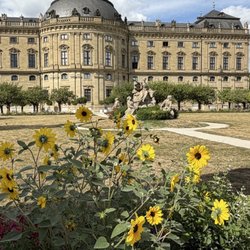
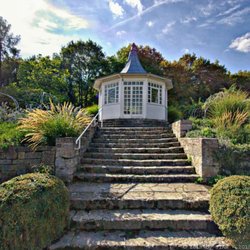
This court garden adjacent to the Residenz Würzburg has been in existence since 1770. It is mainly…read moreconsisting of two large sections--East and South Gardens.
This east garden is laid out on the exit from the garden room in the central building of the residence; It was from here that the host used to explain his treasures of plants and sculptures.
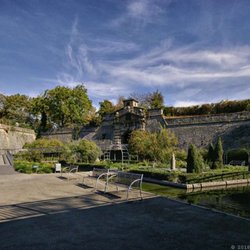
Today hundreds of old varieties of roses bloom here. In the past it was pruned fruit trees. What remains are the adjoining arcades, which are uniquely formed from cornel cherries and larches and between which 12 of Johann Peter Wagner's famous putti cavort. He also made the numerous canapes, vases, planters and other putti, Savoyard boys and figures on the stairs and the bastion. The bastion in the garden invites a stunning view of the garden, castle and parts of the city for walking. Two framing ramps and stairs lead up to this high fortification wall, with a terrace being inserted halfway up.
To the south of the residence is a flat rectangular garden, which is closed off by the orangery. The prince-bishop had this from his apartment in view. Large groups of figures "Raub der Europa" and "Raub der Proserpina" (around 1775) by Johann Peter Wagner decorate the lawns, fauns, panes and allegories of the seasons under mighty cone-shaped yew trees provide surprises.