After being dropped off on Lambton Quay to browse their local boutiques and to sightsee on our own,…read morewe ended up with eight fellow passengers following us. I shuddered because none of us had ever been to Wellington before, and I somehow felt the weight of being a group leader as they looked to me for having great navigational skills. Luckily, i was listening intently when just before our shuttle bus driver dropped us off on Lambton Quay, he directed us to the lower station of the cable car and gave us 3 options to do, based upon our fitness or stamina levels: 1- purchase a round-trip ticket from Lambton Quay to Kelburn Lookout and continue walking on Lambton Quay to their "Beehive" and Parliament Buildings on Bowen Street where the designated cruise ship shuttle stop would come by every hour; 2- get a one-way ticket to Kelburn, explore the area and dine at one of the numerous cafes in the neighborhood and catch public transportation to the Bowen Street shuttle bus stop; or 3- continue walking downhill from the lookout to the Wellington Botanical Gardens.
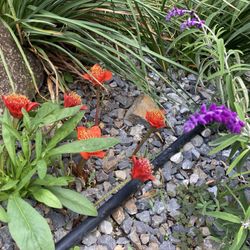
We decided on option number 3 (one-way ride up to Kelburn Lookout)) and discovered our shuttle bus driver may have meant "walk downhill THROUGH" instead of "TO" the Wellington Botanical Gardens because after getting a map from the museum, I discovered an entrance to the Wellington Botanical Gardens right across the street and found other attractions were also straight through the gardens leading to Bowen Street. Our group began the winding trail on the Downhill Path, past the Space Place, into this beautiful 61-acre botanical garden, and reveled in its 150 years of history. The gardens feature colorful and amazing botanical displays, unique landscapes, specialized native and global plant species, a protective native forest, and unparalleled views over the city.
I read that the garden and land date back well before European colonization and permanent settlement in the mid-19th century. The local Māori inhabitants of the Te Ātiawa village used this area for trade and food cultivation, collecting plants for construction, food fiber, and medicine, and birds for food. Unfortunately, during the mid-1800s, as Europeans began permanently settling in the area, the Te Ātiawa were displaced, and the official Wellington Botanic Garden was established in 1868.
We all wandered through the gardens at our own pace until we met at the Lady Norwood Rose Garden, and we looked forward to visiting the nearby Begonia House, which features permanent tropical and temperate displays. Also, because most of us had been walking or standing for at least 4 hours straight, part of our group eagerly took a break and snacked at the Picnic Café while my husband and I continued wandering the area, found the country's oldest cricket club (The Wellington Collegians Cricket Club) and its historic field, and were stopped from entering the Begonia House because it was undergoing construction or renovation. Undaunted, we explored the Peace Garden and found an eternal flame featuring the preserved flames from the 1945 atomic holocausts at Hiroshima and Nagasaki. The eternal flame was presented to New Zealand by Japan in 1990 in recognition of New Zealand's unilateral steps to stop the spread of atomic weapons. The last line on the bronze plaque reads "The Chief Priest prayed that this Flame of Peace should burn until the day all nuclear weapons are Finding the Peace Garden and reading about this country's pledge toward Anti-Nuclear development policies made me reflect upon the current global events.
After the others had eaten and rested, we continued walking through the gardens, which led to Bowen Street, where we saw the "Beehive" or Executive Wing of the New Zealand Parliament and other government buildings. We hopped on the shuttle bus after waiting for 15 minutes. Still, we wished that we had been able to spend more time in the city as we drove past Old St. Paul's Cathedral (a Gothic Revival structure built in the 1860s) and the National Library, which houses the City Gallery Wellington Te Whare Toi, a premier contemporary art gallery.