Partick Bridge Photos


Recommended Reviews - Partick Bridge
Start your review...



13 years ago
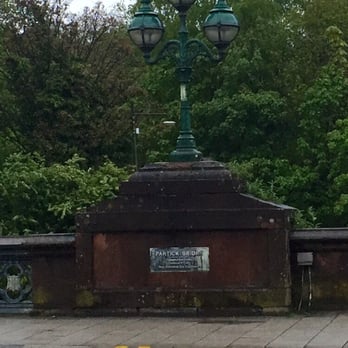
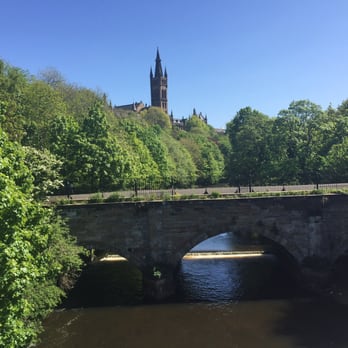
It's not the prettiest of the bridges over the Kelvin, but it does have some interesting history associated with it. Partick was until comparatively recent times a separate borough to the city of Glasgow, and the Kelvin marked the border between the two. The Bishops of Glasgow had a residence in Partick, the Bishop's Castle, where they could keep an eye on their business ventures, in particular the Bishop's Mill, one of the larger grain mills taking its power from the River Kelvin. You can still see one of the buildings associated with the Bishop's Mill on the bend of the river as you look south from the bridge, although it is now converted into yuppie apartments. The original Partick Bridge used to be there, where it replaced a ford of large stepping stones in 1577. Although demolished in 1896, it was replaced by the Benalder Street bridge. The present Partick Bridge was opened in 1878 and comprises a single cast-iron arch, with a side channel to cope with flash floods; and since it marked the boundary between the two, it appropriately bears the arms of Glasgow and Partick on the spandrels at each end. This is one of the very few places where you will see the arms of Partick these days. Whilst looking over the south side of the bridge, notice the huge pipe on its own latticework girder bridge carried between sandstone mushrooms. This is a main sewer, which runs into the pumping building on the west side of the bridge, where two major sewers combine and are pumped into a gravity-fed pipe to run to the treatment works in Dalmuir. The building, opened in 1904, is B-listed and until the recent upgrade of the pumps by Scottish Water in 2013, you could frequently tell its use by the smell emanating from it when the wind was from the south (known as the 'Partick Pong'). Crossing to the north side of the bridge, you can see a stone-arched bridge covered in ivy and set at an angle to the main road. This is popularly known as the 'snow bridge', and it marks the original line of Dumbarton Road before the present bridge was constructed. If you look at the railings in the centre of the bridge, you can see a set of gates. In winter, carts full of snow cleared from the streets would eject their load through the gates into the river below - hence the name 'snow bridge'. It's now used for pedestrians only, and if you look north past the bridge you get a fine view of the University and the mock-Tudor 'Sunlight Cottages' - remnants of the 1901 Great Exhibition, these were modelled after Lord Leverhulme's worker's village at Port Sunlight and were presented to the City after the exhibition. read more

A somewhat unassuming bridge to drive over, this is much better as a walking bridge so you can take in the views over the River Kelvin. Located right near Kelvingrove Museum, you should definitely talk a walk down this way once you've done wandering around the museum towards Byres Road. Looking north you can see the River Kelvin and the old transport museum (along the side of Kelvinhall). Looking south and up you can see the majesty of Glasgow University towering above you. Take a walk and enjoy the views. read more



10 years ago
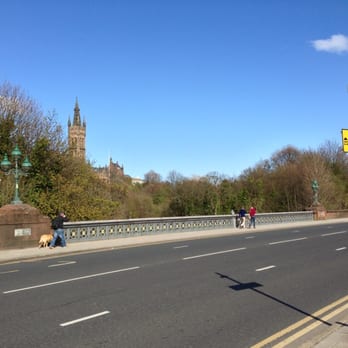
Good old Partick bridge. Drive across it and you might not even notice but if you're walking you can get some fantastic views of Glasgow University across the greenery of Kelvingrove park (the opposite side looks towards the old transport museum). It's an old, stone, single span bridge with an iron arch providing support. You can see the Glasgow and Partick coats of arms here, as well as plaques declaring the foundation stones and when the bridge was built (it opened in 1878). The bridge is lit by particularly beautiful street lamps. Apparently it originally carried a tram line but this is long gone. Take a moment to look around - this bridge is more special that it first appears. read more


This old, stone bridge has amazing views!! Right next to the lovely Kelvingrove Park and Museum, crossing the River Kelvin, with the grand spire of the Glasgow University in the distance, this short bridge makes you stop in your tracks. Whether a sunny day or a rainy day, if I am walking across, I find myself peering over the edge. At night, the old street lamps that are part of the bridge cast cool shadows over the water, and create interesting light against the dark clouds above. Unfortunately those pictures never really turn out, so you will have to go see for yourself. I have witnessed a duck crossing this bridge and a bunch of noisy swans below it; every trip seems to be a treat. I can't count how many times walking across I have been asked to take photos for tourists. Glasgow is known for some quirky, grand and cool bridges with funny names, but this lovely, old bridge is my favorite. read more