
Paisley and Stripe - Lawrence
By appointment only
Services - Paisley and Stripe - Lawrence
Applying hair extensions
Chemical treatment
Color only
Paisley and Stripe - Lawrence Photos


You might also consider


More like Paisley and Stripe - Lawrence
Recommended Reviews - Paisley and Stripe - Lawrence
Start your review...


8 years ago
I just moved to the area and was looking for a salon. I went to another salon in Lawrence and they completely botched my hair. I found Cherilyn via Instagram and loved her color corrective ability. She got me in ASAP and literally fixed my hair. She spent so much time asking me what I like about my hair and what I don't like. What products do I use, how to I liked to wear it etc. She gave me the look that I have been waiting to achieve and unable to get anywhere else. Cherilyn made me love my hair again. It was overly processed, stripy, and looked completely fake. She turned it into a soft, golden, natural color that I adore and actually goes with my skin tone! She made me feel beautiful! The salon is clean and relaxing. The atmosphere is nice. I highly, highly recommend this salon. Cherilyn is a miracle worker. I'm extremely picky about who does my hair and typically only go to aveda salons. But this salon uses all plant based, sulphate free products as well. So I'm officially switching over. I am very happy with my experience and highly recommend Paisley and Stripe to anyone! read more


4 months ago
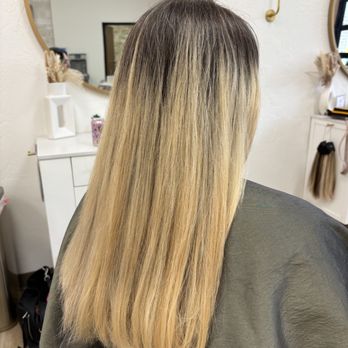
I am a disabled hairstylist with invisible chronic illness. I started going to Alix Miller at Paisley & Stripes because I needed help maintaining my hair. Chronic pain and fatigue make washing my hair difficult, and I was upfront with her from the beginning. I specifically asked if she was comfortable working with very dirty hair because I know not every stylist is. She said nothing bothered her and that she would be happy to help. At first, things were fine. We moved into haircuts and lightening services. I explained my hair history clearly: thinning around the face frame, thicker curls in the back, fragile platinum blonde, and a need for careful cutting and conservative blonding. We discussed using bonder in the lightener and low developer to protect my hair, especially around the delicate face frame. Then her attitude changed. After Paisley & Stripes moved locations, Alix became increasingly hostile toward my requests. She pushed dry cutting even though I repeatedly explained that it did not work for me. It required me to wash my hair beforehand and then have it shampooed again afterward. For someone with chronic pain, washing my hair can take days to recover from. For platinum blonde hair, shampooing twice in one day is also damaging. She also lacked the skill and cutting tools to perform a dry cut properly. She ignored me. My hair started becoming dry, gummy, and harder to brush. At the final lightening appointment, Alix told me at the last minute she was using 20 volume developer on the top and face frame of my head IN FOILS. We had already discussed why this was risky. Then she applied HEAT. As a hairstylist, I knew exactly how bad that could be. Afterward, she ripped through my hair with a detangling brush while I visibly winced. I could hear my hair snapping. Another stylist had to help finish because Alix's next client had arrived early. At later appointments, she questioned my illness, why I was not working, and how I was gaining weight despite dieting and exercising. I had to repeatedly explain my chronic illness. A salon chair should not feel like an interrogation room. The final straw was my last haircut. I came in with partially cleansed hair because I had been in pain and could not finish washing it. Alix was visibly irritated that she had to do a wet cut. At the shampoo bowl, she loudly said, "EW. I NEED A SCALP BRUSH," sighed, and walked away. I was humiliated. She cut at least an inch, struggled to detangle and dry my hair, and that was when I realized my hair was truly fried. When I ran my fingers through it, they got stuck. I asked her if she had been using bonder in my lightening services like we had discussed. She got defensive and said, "Well, no." NO. After we had specifically talked about it. I told her we needed to cut more off. She said she had no time and rushed me out. I went home and cried. No professional bond builder can fix the damage. Later, my husband, who was also seeing Alix, told me she had asked why I was so overweight. The comments and questions about my body, health, illness, and appearance were invasive, inappropriate, and cruel. We both left. Paisley & Stripes advertises inclusivity, but in my experience, that inclusivity is performative. If your disability is invisible, do not expect compassion. Expect judgment. Expect gossip. Expect to be treated like an inconvenience. Alix did not listen to me. She damaged my hair, dismissed my needs, humiliated me, and made me feel disgusting for being disabled. I will never recommend Paisley & Stripes again. There are hairstylists who care about their clients. In my experience, you will not find that care here. Photos show damaged hair after a haircut with my new stylist. The lightening is uneven and the ends break despite fresh cutting. read more



4 months ago
3 months ago

1 year ago
Business owner information

Penny S.
Hi Sepideh,…

2 years ago

4 years ago
7 years ago
Stripe is accurate, as in stripy hair. This was the worst hair appointment I've ever had. The appointment lasted over 4 hours and I ended up wasting $250. There is no blend, my hair is 20 different colors, and the tone is completely off, nor what we discussed. Attached are photos of my hair taken after I first washed my hair. Lighting can be deceiving (it is somewhat accurate), but the placement and stripes are spot-on -- icky, gross, and cheap looking. If you're contemplating this salon or Emma as a stylist - I'd look elsewhere. read more


Business owner information
Penny S.
Hi Suzie,…
6 years ago
3 years ago
5 years ago
6 years ago
3 years ago

7 years ago

10 years ago
6 years ago
6 years ago

9 years ago
6 years ago
7 years ago


10 years ago
9 years ago
More info about Paisley and Stripe - Lawrence
846 Pennsylvania St
Lawrence, KS 66044
Directions
(785) 551-7222
Call Now
Visit Website
https://paisleyandstripe.com
Hours
Payment methods
Services
Outdoor Amenities
Other Amenities
From the Business
Ask the Community - Paisley and Stripe - Lawrence
Review Highlights - Paisley and Stripe - Lawrence
You might also consider












Why does Yelp recommend reviews?
14 reviews that are not currently recommended
The reviews below are not factored into the business's overall star rating.
5 months ago
6 years ago
4 months ago
7 years ago
4 months ago
9 years ago
7 years ago

7 years ago
6 years ago
7 years ago
6 years ago

7 years ago

6 years ago

10 years ago


