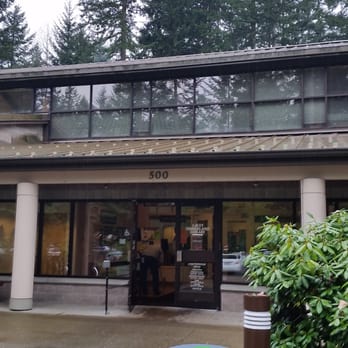
I think this is a great library. Its in a safe area and it is very nice inside. It could be a little bigger and it needs a little remodeling. For the most part its a great place.
The culmination of centuries of advances in the printing press, moveable type, paper, ink, publishing, and distribution, combined with an ever growing information-oriented middle class, increased commercial activity and consumption, new radical ideas, massive population growth and higher literacy rates forged the public library into the form that it is today.
Public access to books is not new. Romans made scrolls in dry rooms available to patrons of the baths, and tried with some success to establish libraries within the empire.
In the middle of the 19th century, the push for truly public libraries, paid for by taxes and run by the state gained force. Matthew Battles states that:
It was in these years of class conflict and economic terror that the public library movement swept through Britain, as the nation's progressive elite recognized that the light of cultural and intellectual energy was lacking in the lives of commoners.[2]
Public libraries were often started with a donation, or were bequeathed to parishes, churches, schools or towns. These social and institutional libraries formed the base of many academic and public library collections of today.
Entrance to the National Library in Tehran, Iran
The establishment of circulating libraries in the 18th century, by booksellers and publishers provided a means of gaining profit and creating social centers within the community. The circulating libraries not only provided a place to sell books, but also a place to lend books for a price. These circulating libraries provided a variety of materials including the increasingly popular novels. Although the circulating libraries filled an important role in society, members of the middle and upper classes often looked down upon these libraries that regularly sold material from their collections and provided materials that were less sophisticated.
Circulating libraries also charged a subscription fee, however the fees were set to entice their patrons, providing subscriptions on a yearly, quarterly or monthly basis, without expecting the subscribers to purchase a share in the circulating library.[citation needed]
Circulating libraries were not exclusively lending institutions and often provided a place for other forms of commercial activity, which may or may not be related to print. This was necessary because the circulating libraries did not generate enough funds through subscription fees collected from its borrowers. As a commerce venture, it was important to consider the contributing factors such as other goods or services available to the subscribers.[4]
The Malatestiana Library (Italian: Biblioteca Malatestiana), also known as the Malatesta Novello Library, is a public library dating from 1452 in Cesena, Emilia-Romagna (Italy). It was the first European civic library,[5] i.e. belonging to the Commune and open to everybody. It was commissioned by the Lord of Cesena, Malatesta Novello. The works were directed by Matteo Nuti of Fano (a scholar of Leon Battista Alberti) and lasted from 1447 to 1452.
Thomas Bodley founded the Bodleian Library in 1602 as an early public library.
Main article: History of libraries
An early library that allowed access to the public was that of the Kalendars or Kalendaries, a brotherhood of clergy and laity who were attached to the Church of All-Hallowen or All Saints in Bristol, England. Records show that in 1464, provision was made for a library to be erected in the house of the Kalendars, and reference is made to a deed of that date by which it was "appointed that all who wish to enter for the sake of instruction shall have 'free access and recess' at certain times".[citation needed] In the early years of the 17th century, many famous collegiate and town libraries were founded in England. Norwich City library was established in 1608[6] (six years after Thomas Bodley founded the Bodleian Library, which was open to the "whole republic of the learned") and Chetham's Library in Manchester, which claims to be the oldest public library in the English-speaking world, opened in 1653.[7]
Enlightenment era libraries[edit]
Claude Sallier, the French philologist and churchman, operated an early form of public library in the town of Saulieu from 1737 to 1750. He wished to make culture and learning accessible to all people.
The Załuski Library (Polish: Biblioteka Załuskich, Latin: Bibliotheca Zalusciana) was built in Warsaw 1747-1795 by Józef Andrzej Załuski and his brother, Andrzej Stanisław Załuski, both Roman Catholic bishops. The library was open to the public and indeed was the first Polish public library, the biggest in Poland and one of the earliest public libraries in Europe.[8] read more