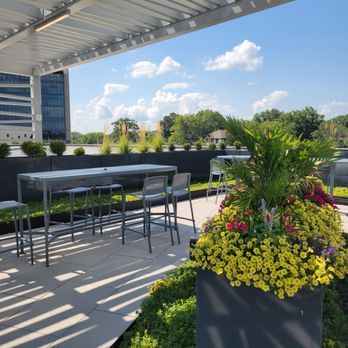
Olathe Downtown Library Photos

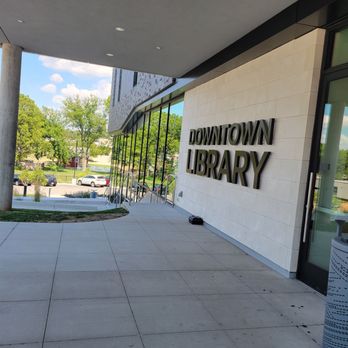

More like Olathe Downtown Library
Recommended Reviews - Olathe Downtown Library
Start your review...


Reviews With Photos
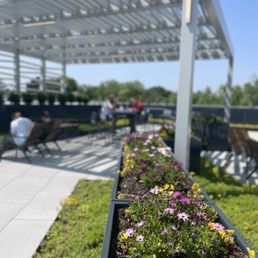

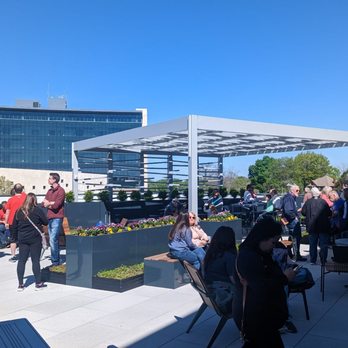
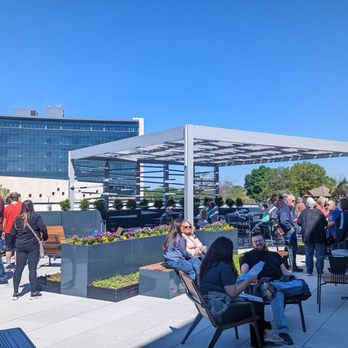
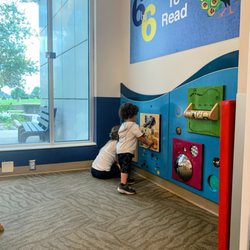
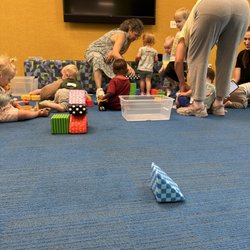
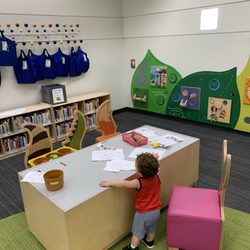
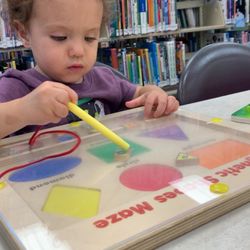
We loved our visit to the new library! Our city has worked very hard for a long time and it has paid off! There are tons of individual rooms to rent for studying and a teen gaming room (all glass walls so the younger ones can peek in too)! The 3rd floor courtyard is so beautiful! Full of beautiful flowers and ground cover greenery. Great views as well. Also love the cafe area, staffed and run by Sweet Tees. Always a delight to have STs in there! Of course the kids area has quite a few toy options to play with, or space to relax and read. Love it!


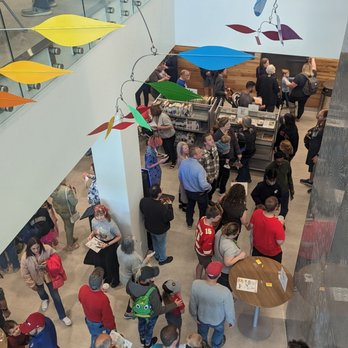
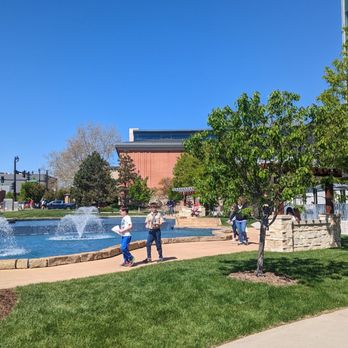
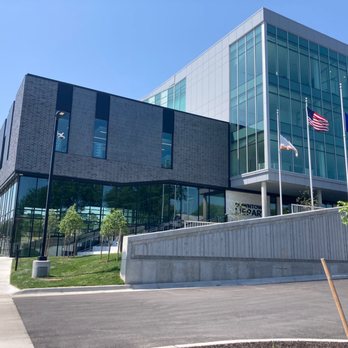
I attended the ribbon cutting and grand opening of the brand new Olathe Downtown Library today. I am so glad Olathe chose to keep a library at the heart of downtown, and it is a beautiful building. Some of the best features of the new library include a large event space - "The Flex Theatre," an outdoor amphitheatre, a locally owned coffee shop, and a rooftop terrace. The building is full of windows with lots of natural light. Some of the downsides seem to be a very choppy layout spread across 4 pretty small floors. There isn't much on each floor, and overall - it really seems to lack a gathering place - a place to feel like you're amongst others at a community library. I was pleased that there seemed to be ample parking - I got a nearby spot despite the high traffic today. The outdoor Michael E. Copeland Civic Center Park on the front side of the library is beautiful, and will certainly be a focal point of the Olathe downtown for years to come. The library opening was absolutely packed, so it was hard to sense what the normal flow will feel like. I'll have to revisit and update my review later.


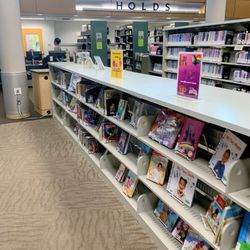
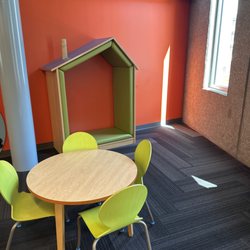
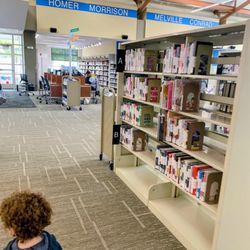
We love libraries and have visited many in Johnson County and other cities... this one is nice and shiny and new but left a lot to be desired. There are a few parking lots and some street parking, which is convenient. On level 1 you'll find a cafe with really reasonable snack and drink prices. You also pick up holds there. The second level has a small area for kids "play" that didn't have many available (yet?) play options, along with a somewhat confusing layout of kids books. Adult books are also on this level. It took us a few minutes to figure out how to access the outdoor area on the third floor--the stairway signs do not specify where to exit to find it, if you aren't already aware of the floor number. Walk through the small periodicals section on the third floor to find it. The outdoor area is beautiful and has plenty of seating and some shade. This (and the green space/fountains outside) was probably the best part of the new location. The employees we encountered were friendly and helpful! Unfortunately, the accessibility is not great. The disabled parking spots on the lowest parking level require you to navigate up a zigzag ramp to get to the first floor entrance. (There is a ground/basement level but the doors were locked and nothing was in there yet, that we could see) Two people stopped me to ask if I knew how to get in when we were walking to and from our car. When I asked inside, they seemed apologetic, however the only suggestion was to park on the upper level if they had accessible parking spots open there. The fountains were also hard to access if wheelchairs or walkers were used. Obviously, they had to meet ADA requirements so I'm hoping this is just a temporary problem. However, overall, I still felt like the layout and sparse collection of books didn't feel inviting. It almost felt like more of a meeting space or shared workspace than a library. If you don't have kids or accessibility needs, this location might be up your alley.


I have been coming here for 8 years since I moved down the street. It is strange how this is part of the Johnson County library circuit, but still maintains a separate website and even their own library cards. It is the smaller of the two Olathe libraries. Even though it has the old Olathe downtown charm, many upgrades are continuously made to it. However, it has plenty of the basics of a library. The presence of a cop on the premises for security was a strange addition. I think it is more for keeping the younger crowd inline. As in the summer time and evening it can get to looking like a school house. Staff is helpful and nice when asked.


1 year ago
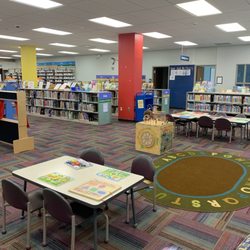
I visited the Hermetheus coffee shop that is located in this downtown library and I decided to peruse the library itself since I hadn't been here before. The entrance has the coffee shop and a librarian to help direct people to the various floors. The books are on the second floor, and that is the floor that I went to. All of the people that worked there were very nice and helpful. I had a great experience with the various librarians. The second floor if you get out of the elevator and turn right is the adult/teen section with nonfiction and fiction. If you turn to the left, it is the children's section. I visited both areas and checked out books in both. This is a smaller library, but nicely updated. They have a play section in the middle of the kids section for smaller kids. I checked out some toddler books for my grandson as well. read more


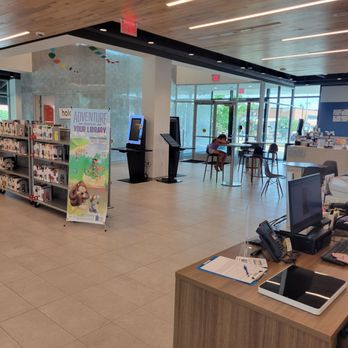

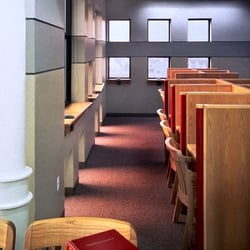
The new library is nice but the layout is odd. Like it was designed just for the modern look, not the full function. Not very handicapped friendly either. Opening day and the elevators aren't even working, I couldn't see any other way for people to get upstairs. It seems like a good space for small meetings or study groups and to take kids for a couple of hours so they can play video games. This place definitely doesn't have a library feel to it (except the 3rd floor) and if that was the goal then they have succeeded! Book selections are small but I have been informed that they are happy to request books from other libraries for you. read more

We loved our visit to the new library! Our city has worked very hard for a long time and it has paid off! There are tons of individual rooms to rent for studying and a teen gaming room (all glass walls so the younger ones can peek in too)! The 3rd floor courtyard is so beautiful! Full of beautiful flowers and ground cover greenery. Great views as well. Also love the cafe area, staffed and run by Sweet Tees. Always a delight to have STs in there! Of course the kids area has quite a few toy options to play with, or space to relax and read. Love it! read more
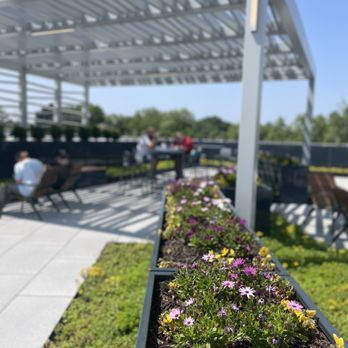
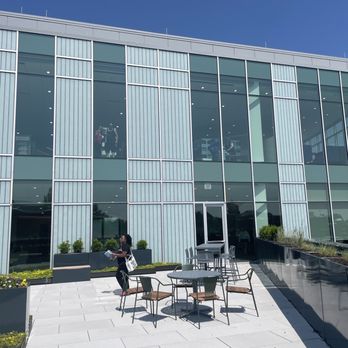
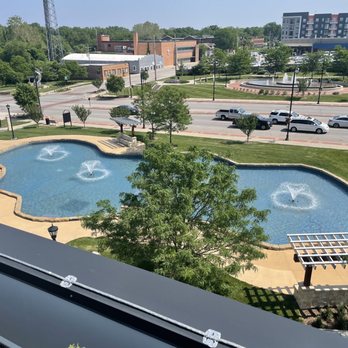

I attended the ribbon cutting and grand opening of the brand new Olathe Downtown Library today. I am so glad Olathe chose to keep a library at the heart of downtown, and it is a beautiful building. Some of the best features of the new library include a large event space - "The Flex Theatre," an outdoor amphitheatre, a locally owned coffee shop, and a rooftop terrace. The building is full of windows with lots of natural light. Some of the downsides seem to be a very choppy layout spread across 4 pretty small floors. There isn't much on each floor, and overall - it really seems to lack a gathering place - a place to feel like you're amongst others at a community library. I was pleased that there seemed to be ample parking - I got a nearby spot despite the high traffic today. The outdoor Michael E. Copeland Civic Center Park on the front side of the library is beautiful, and will certainly be a focal point of the Olathe downtown for years to come. The library opening was absolutely packed, so it was hard to sense what the normal flow will feel like. I'll have to revisit and update my review later. read more





6 months ago

7 months ago

3 years ago
We love libraries and have visited many in Johnson County and other cities... this one is nice and shiny and new but left a lot to be desired. There are a few parking lots and some street parking, which is convenient. On level 1 you'll find a cafe with really reasonable snack and drink prices. You also pick up holds there. The second level has a small area for kids "play" that didn't have many available (yet?) play options, along with a somewhat confusing layout of kids books. Adult books are also on this level. It took us a few minutes to figure out how to access the outdoor area on the third floor--the stairway signs do not specify where to exit to find it, if you aren't already aware of the floor number. Walk through the small periodicals section on the third floor to find it. The outdoor area is beautiful and has plenty of seating and some shade. This (and the green space/fountains outside) was probably the best part of the new location. The employees we encountered were friendly and helpful! Unfortunately, the accessibility is not great. The disabled parking spots on the lowest parking level require you to navigate up a zigzag ramp to get to the first floor entrance. (There is a ground/basement level but the doors were locked and nothing was in there yet, that we could see) Two people stopped me to ask if I knew how to get in when we were walking to and from our car. When I asked inside, they seemed apologetic, however the only suggestion was to park on the upper level if they had accessible parking spots open there. The fountains were also hard to access if wheelchairs or walkers were used. Obviously, they had to meet ADA requirements so I'm hoping this is just a temporary problem. However, overall, I still felt like the layout and sparse collection of books didn't feel inviting. It almost felt like more of a meeting space or shared workspace than a library. If you don't have kids or accessibility needs, this location might be up your alley. read more

2 years ago

3 years ago
3 years ago

7 years ago

I have been coming here for 8 years since I moved down the street. It is strange how this is part of the Johnson County library circuit, but still maintains a separate website and even their own library cards. It is the smaller of the two Olathe libraries. Even though it has the old Olathe downtown charm, many upgrades are continuously made to it. However, it has plenty of the basics of a library. The presence of a cop on the premises for security was a strange addition. I think it is more for keeping the younger crowd inline. As in the summer time and evening it can get to looking like a school house. Staff is helpful and nice when asked. read more


10 years ago
what can u say about a place like this that has books,dvd, computers and magazine, this is the last of it kind and soon they will be no more the staff is friendly did u know u go to there site and download a magazine and keep for awhile I will post information about this,this place is downtown Olathe parking is not as big but plenty of parking in the area, great kids section and adult too read more


9 years ago

9 years ago
12 years ago
9 years ago
More info about Olathe Downtown Library
260 E Santa Fe
Olathe, KS 66061
Directions
(913) 971-6850
Call Now
Visit Website
https://www.olathelibrary.org
Hours
Other Amenities
From the Business
Ask the Community - Olathe Downtown Library
Is this the location of the library that used to be on Blackbob and 127th area?
No they have their own place use to be hyvee
Review Highlights - Olathe Downtown Library












Why does Yelp recommend reviews?
1 review that is not currently recommended
The reviews below are not factored into the business's overall star rating.

3 years ago


