Cancel

    Open app

    Search

    Okeechobee Primitive Baptist Historical Site

    5.0 (1 review)

    Okeechobee Primitive Baptist Historical Site Photos

    More like Okeechobee Primitive Baptist Historical Site

    Recommended Reviews - Okeechobee Primitive Baptist Historical Site

    Your trust is our priority, so businesses can't pay to alter or remove their reviews. Learn more about reviews.
    Yelp app icon
    Browse more easily on the app
    Review Feed Illustration
    Photo of Ariel W.
    4395
    5907
    103710

    2 years ago

    Helpful 29
    Thanks 6
    Love this 20
    Oh no 0

    Verify this business for free

    Get access to customer & competitor insights.

    Verify this business

    The Hurricane of 1928

    The Hurricane of 1928

    5.0(1 review)
    39.5 mi

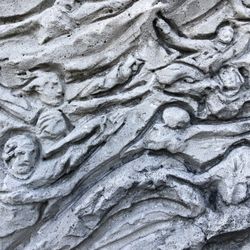
    The Hurricane of 1928 is the name of a 7.5 foot tall statue that is outside of the former library…read morein Belle Glade. It was created by renowned Hungarian sculptor Ferenc Varga as a memorial to the victims of the Hurricane of 1928. The art piece depicts a family trying to flee the hurricane. The father is holding on to his son while the mother clutches a baby to her chest. The base of the sculpture shows the flood waters washing away people and buildings. The 17,000 pound sculpture was commissioned by the Belle Glade Bicentennial Committee and dedicated on May 31, 1976. On Sunday Sept. 16, 1928, a category 5 hurricane came ashore near the Jupiter Inlet Lighthouse and swept across Palm Beach County, traveling west to Lake Okeechobee. If you visit the Jupiter Lighthouse you can still see the crack in the lens caused by the hurricane. The storm destroyed hundreds of buildings and caused millions of dollars in property damage. 2,500 to 3,000 people lost their lives, many of whom were black migrant farm workers and Belle Glades residents. It is the second deadliest hurricane in U.S. History after the 1900 Galveston Hurricane. The hurricane caused the Lake Okeechobee dike to collapse causing flooding at the south end of the lake. People clung to trees as they watched their homes wash away. Uprooted homes traveled through the flood waters for miles while some areas remained underwater for days. As bodies began to decompose it became necessary to bury them quickly and unidentified. 1,600 Glades residents were buried in a mass grave in the Port Mayaca cemetery in Martin County. This is a very powerful piece of art. You can see the terror on the faces of the people as they attempt to flee the storm and you can't help but think of what is what like for them. The hurricane ended the Florida real estate boom of the 1920s. The state was sent into a depression for more than a year and thenin 1929 the stock market crashed thrust the nation into the Great Depression. You can see the legacy of the hurricane all over Broward and Palm Beach county. Even though the Hurricane of 1928 was Floridas deadliest hurricane few people know about it today. It is memorials like this that serve to remind of the lives lost and to stay ever vigilant during hurricane season.
    Photos
    The Hurricane of 1928
    The Hurricane of 1928
    The Hurricane of 1928

    See all

    Pelican Island Wildlife Festival

    Pelican Island Wildlife Festival

    5.0(1 review)
    45.8 mi

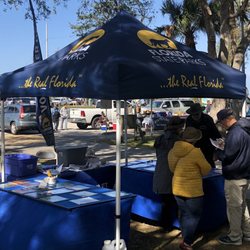
    This year was the 28th annual Pelican Island Wildlife Festival. The festival is held from 10:00 AM…read more- 4:00 PM in Riverview Park in Sebastian to commemorate the birthday of the refuge on March 14, 1903. Pelican National Wildlife refuge was created by one man's determination to protect the birds he loved. Paul Kroegel was a German immigrant and Sebastian resident and conservationist. He arrived in Sebastian in 1881 and homesteaded on the west bank of the Indian River across from Pelican Island. As he watched the birds on the island he fell in love with them and became increasingly disturbed by the hunters killing them. He took to protecting the birds by guarding them with his shotgun during a time when they had no lawful protection. Paul enlisted the help of the American Ornithologists Union and the Florida Audubon Society to help protect the birds. They joined together to pass legislation for protection of non-game birds. The Florida Audubon Society hired Paul Kroegel along with three other wardens to protect the birds from plume hunters and the sports hunters who would shoot at the birds while passing by on boats. During the time Paul served, two of the other wardens were murdered. Naturalist Frank Chapman and his fellow advocate, William Dutcher went to Theodore Roosevelts New York home to plead their case for the protection of the birds. In response President Roosevelt made Pelican Island the first National Wildlife Refuge in 1903. Paul Kroegel was hired as the first national wildlife refuge manager. He passed away in 1948. Since then the land was threatened in the 1960's developers attempted to buy the surrounding wetlands but local citizens stopped them. The Indian River Area Preservation League made up of local citrus growers, commercial fishermen, and sportsmen, joined with the Florida Audubon Society to convince the State to include the islands as a part of the refuge. In 1963, Pelican Island was designated as a National Historic Landmark by the Secretary of the Interior. Since then the refuge has gained over 500 more acres to help protect it from encroachment by development. There is a large parking lot with free parking adjacent to the park. Entrance to the festival is free. The event has live wildlife shows, food, environmental exhibitors, arts & crafts, a rehabilitated pelican release, raffle, amateur photography contest, native plant sale, educational presentations, historical reenactments with President Theodore Rossevelt, and for a fee boat tours to Pelican Island. I specially loved seeing all of the birds brought by the Treasure Coat Wildlife Center. Sadly because of their injuries, these birds can't be released into the wild and I was happy to donate to them. President Roosevelt is the Master of Ceremonies and is portrayed by Theodore Roosevelt interpreter, Joe Wiegand. He gave a wonderful presentation that taught about the history of Pelican Island and his efforts to protect its birds as well as other events in the life of President Roosevelt. The 2020 Pelican Island Wildlife Festival celebrated the 117th anniversary of the Pelican Island National Wildlife Reserve. The event is hosted by the Pelican Island Preservation Society and the City of Sebastian. It is a fantastic way to bring awareness to the refuge. Even though the festival is only held one day a year, you can visit the refuge 365 days a year.

    Photos
    Pelican Island Wildlife Festival
    Pelican Island Wildlife Festival
    Pelican Island Wildlife Festival

    See all

    Okeechobee Battlefield Historic State Park - Okeechobee Battlefield Historic State Park

    Okeechobee Battlefield Historic State Park

    2.7(3 reviews)
    3.0 mi

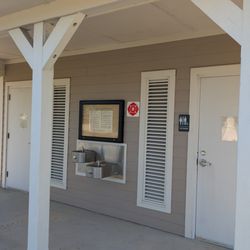
    Named for the battle that took place here in 1837 during the Second Seminole War and it's nice that…read morethey have reserved the space as a park. That said, it is quite basic with very little to see. The park has a nice public restroom, a picnic pavilion that would usually be covered but has lost its thatch and there is a grill. A small parking lot. A display with pamphlets that explain the history is a nice add. Overall? I'd say skip this one unless you specifically want a picnic in the sun where there is open water and wildlife nearby. The caution sign for gators was enough for me to move on swiftly. [Review 443 of 2025 - 2086 in Florida - 24005 overall]

    Okeechobee Battlefield Historic State Park is named for the battle fought here on Christmas Day in…read more1837 during the Second Seminole War. The park is located near Lake Okeechobee, the largest fresh water lake in Florida. The US Army were trying to round up the Seminoles to send them on the Trail of Tears out to Oklahoma. Although they were out numbered, the Seminoles understanding of the land allowed them to elude the government. This battle involved 1,000 volunteers and army soldiers against against several hundred Seminole and Miccosukee warriors along the northern edge of Lake Okeechobee. Troops of the 1st, 4th, and 6th Infantry Regiments were under the command of Colonel Zachary Taylor who after the Mexican-American War would go on to become president. This was the largest and bloodiest battle during the war. The Seminoles had setup on a high hammock that overlooked a dense saw grass swamp. As the troops approached they were able to inflict heavy casualties. Many of commissioned officers and noncommissioned officers were killed during the battle. After taking out about a third of the army, the Seminoles were forced to flee deeper in the the Everglades where they would hide for the next 10 years. During the battle the Seminoles lost only twelve warriors. The government declared themselves the winner of the battle but the Seminole were the only tribe never to sign a peace treaty with the US Government. The Okeechobee Battlefield was listed as a National Historic Landmark in 1961 and it was acquired by the Florida Park Service on November 30, 2006 with funds from the Florida Forever Program. In the 1980's, the National Park Service commissioned archaeological excavation which allowed them to more precisely narrow the battlefield area to 440 acres. The original Battle of Okeechobee marker in the park was erected in 1939 by Descendants of Colonel Richard Gentry, commanding officer of the Missouri militia who was killed by the battle, and the Florida Society of Daughters of the American Revolution. Recently the park added a new chickee hut and a restroom. Every February a recreation of the battle is staged by volunteers. Admission is $10 and they have food, vendors, and demonstrations. That is really the best time to visit because there isn't a lot to see in the park normally. If you do want to visit at another time it is important to note that the park is closed on Monday and Tuesdays. I really enjoyed visiting this historical site and learning about the battle.

    Photos
    Okeechobee Battlefield Historic State Park - Okeechobee Battlefield Historic State Park

    Okeechobee Battlefield Historic State Park

    Okeechobee Battlefield Historic State Park - Okeechobee Battlefield Historic State Park

    Okeechobee Battlefield Historic State Park

    Okeechobee Battlefield Historic State Park - Okeechobee Battlefield Historic State Park

    See all

    Okeechobee Battlefield Historic State Park

    Peter and Louisiana Chandler Raulerson Log Cabin Historic Site

    Peter and Louisiana Chandler Raulerson Log Cabin Historic Site

    5.0(1 review)
    0.1 mi

    The Florida Historical Marker Program is one of the Division of Historical Resources' most popular…read moreand valued public history programs. It raises awareness of Florida's cultural history while enhancing the enjoyment of historic sites for residents and tourists. The blue historic markers tell the stories of the people and places that were important to Florida's history and they can be found in front of churches, schools, roads, archaeological sites, battlefields, and historically important buildings. I discovered this historic marker in front of the Raulerson's former cabin near downtown Okeechobee. Peter Raulerson was born September 1, 1857, in Bartow, Florida. In 1874 when he was 17, his family moved to Basinger where he met and married Louisiana Chandler in 1877. In October 1896 the couple traveled by covered ox cart with their children to a wilderness area three miles north of Lake Okeechobee known called the Bend along Taylor Creek. The area was chosen because it was high and dry, with water nearby and good quality soil. The Raulerson family was the first white settlers in this area where Peter worked as a cattleman. He fenced in 30 miles from Onoshohatchee River all the way to the Kissimmee River. The first building the family erected was a barn to protect there livestock from wild animals and they lived on the second floor for three years. Later friends arrived from Basinger and helped the family build a log home in three days. Peter and Louisiana lived in the cabin with their children. In 1916, the family built a larger house directly east of here where Peter lived until his death in 1947. Elements of the original log cabin are preserved within the structure of this home that was built for a descendants family in the 1920's. Members of the Raulerson family lived in the home until 2016 when the Okeechobee Historical Society purchased it to preserve it as part of their collection of historic buildings that include the Tantie Schoolhouse and the Primitive Baptist Church. The Raulerson family were an integral component of the development of early Okeechobee. In April 1902, the Raulersons helped establish the first post office in a suitcase under a bed. At that time the community was known as Tantie, in honor of Tantie Huckabee, a popular school teacher. The Raulersons daughter, Martha, served as the first postmaster followed by Peter in June 1902. Peter established a Star Route, a privately-contracted mail route, between Tantie and Fort Drum. In October 1911 after the railroad arrived it was decided that Tantie was not a proper name of a town and it was renamed Okeechobee. Peter established the first school in a palmetto shack 1898. In 1909 he helped build the Tantie School, which was School #14 of the St. Lucie County School System. Peter was a trustee of the first brick schoolhouse built in 1916. When the City of Okeechobee was chartered in 1915, he served as the first mayor appointed by Florida Governor Park Trammel. He also served as the first county commissioner from the area in St. Lucie County. He was instrumental in the establishment of Evergreen Cemetery where he and Louisiana are buried and he donated the land for the Primitive Baptist Church. Peter Raulerson passed away in 1947 at the age of 90 and Louisiana died one year later. The couple were survived by their children Lewis, Adline, Harmon, Melville, Faith, Ada, and Cornelius, 22 grandchildren, 48 great grandchildren, and four great-great-grand-children. Many of the historic buildings in Okeechobee have a Raulerson family connection. In 2000, Peter was designated as a Great Floridian with a plaque in his honor placed at the Okeechobee City Hall. Historic Marker F-1028 was erected in 2018 by the Okeechobee County Historical Society, Okeechobee County Board of County Commissioners, City of Okeechobee Descendants of Peter and Louisiana Chandler Raulerson, Generous Community Members and Businesses, and the Florida Department of State.

    Photos
    Peter and Louisiana Chandler Raulerson Log Cabin Historic Site
    Peter and Louisiana Chandler Raulerson Log Cabin Historic Site
    Peter and Louisiana Chandler Raulerson Log Cabin Historic Site

    See all

    Boston House

    Boston House

    5.0(1 review)
    34.5 mi

    In the early 1900's William T. Jones was working as an engineer for Henry Flagler on the Florida…read moreEast Coast Railway. He suffered a knee injury in a railroad accident when a careless worker placed dynamite on the tracks and a train hit it. With the settlement he received he built Cresthaven, known today as The Boston House. He chose to place his home on a high ridge overlooking the Indian River. The 3 story, red brick mansion was designed with Neo Classical and Georgian architecture. It was completed in 1909 at a cost of $6,000. It had 5 bedrooms and 4,3000 square feet. The floors, banisters, and stairs were made of Dade County pine. other building materials used to build the house were brought to Fort Pierce from Georgia by the FEC Railroad because of the friendship Jones shared with Henry Flagler. After he retired from the railroad Jones grew oranges and pineapples and sold real estate. He eventually became the third sheriff of St. Lucie County. During his time in the home two troubling incidents happened concerning Jones's children. His youngest son Clifford accidentally shot and killed a playmate when he was 10 in the living room of the house and his son Fred was involved in a motorcycle accident that killed his fiance's sister. Things did not go well for the other Jones children in the later years, son William dies at the age of 36 from injuries from a motorcycle accident, daughter Margaret dies from a heart attack, and the eldest son Fred took his own life. Jones ultimately lost ownership of the house during a period of financial problems caused by the Great Depression. In 1949 he had borrowed money from a friend, Irving C. Whitney but when Whitney died his sister inherited his estate and called in the note on the loan giving the Jones family a week to vacate their home. Rose Whitney then moved into the house renaming it Boston House because she was from Massachusetts. Upon Rose Whitney's death the McCarty family purchased the house but they chose not to live in it. The house then became an engineering firm and a private residence before it was restored in the mid 1980's and became the law firm of Kendall Phillips. The house was added to the U.S. National Register of Historic Places on April 11, 1985. Today many people believe the Boston House is haunted. There has been paranormal activity associated with house, particularly around the third floor. Indians have been spotted on the lawn. Legend has it that a female spirit haunts the Boston House. She is believed to be Aleacon Perkins. She was vacationing in the home during the time it was an inn and her son and husband drown during a storm in the river. It is said she is still awaiting their return from a third floor window. During my visit it looks like the Boston House is getting some more work done. The inside is ripped apart and new windows have been installed. No word on what the spirits think about that.

    Photos
    Boston House
    Boston House
    Boston House

    See all

    Confusion Corner

    Confusion Corner

    3.8(5 reviews)
    35.6 mi

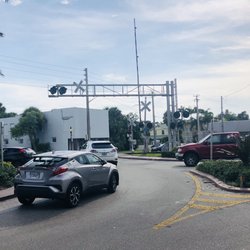
    Yikes! I'm living in Stuart over 2 years & this was the first time I was diverted to this crazy…read moreroundabout due to road closures, & yes - was thoroughly confused & highly intimidated by that railroad track being in the heart of it all! My IMAP stopped talking and if matters weren't bad enough, (when I decided which exit to follow after my brain finally unscrambled) some jerk started honking madly as I carefully drove straight ahead to reach US 1..It was unnerving at first but worth the adrenaline rush once I calmed down & laughed it off. Realistically though- future navigators -- please pay close attention to & avoid that RR track and ignore those nasty honkers!

    What makes Confusion Corner in historic downtown Stuart Florida so confusing? It is the eight…read moreroads! that come together in one intersection. Hold your breath and say a prayer as you attempt to make it safely through Flagler Avenue, East Ocean, West Ocean Blvd, Colorado Avenue, A1A both North & South, and Dixie Highway where they join in a roundabout, creating a Stuart landmark. If that wasn't enough, throw a train track in there too. How do you know you are at Confusion Corner? Stand in front of the April Daze boutique and watch the show. You will know you are in the right spot as you watch the cars swing around and hear the horns honking. If you have driven in downtown Stuart, you have passed through Confusion Corner. This intersection is so famous that the legendary Charles Kuralt came to Stuart in 1979 to film an episode for his popular "On the Road" series. There is even a song about it on You Tube by Clifford Buckosh & Okeechobee Records and if you survive the drive you can purchase a T Shirt to commemorate it at Harbor Wear. Despite all the confusion, the only deadly accident to happen there took place in the 1940's. So buckle up that seatbelt, as you swing yourself around Stuart's Confusion Corner.

    Photos
    Confusion Corner
    Confusion Corner
    Confusion Corner

    See all

    Pelican Island National Wildlife Refuge

    Pelican Island National Wildlife Refuge

    4.1(15 reviews)
    46.5 mi

    The trails to view the island are beautiful! There are binoculars located at some stations to see…read morethe wild life from afar. I am so greatful to have found this place. There are real restrooms near the entrance not just which is great because there are a lot of trails.

    A very nice hike and view inside Pelican Island National Wildlife Refuge…read morePelican Island National WIldlife Refuge is located south of Sebastian inlet on the river, not ocean, side of the island. It has the distinction of being America's first National Wildlife Refuge. It may be a little island in the Indian River Lagoon but it is 5400+ acres of protected waters and lands. There is no fee. The roads to drive to the various places are hard dirt. There are several trails located within the refuge. One of the is Pete's trail. Joe's Overlook is off of that trail and is accessed by a short drive off Jungle trail and parking in the Viewing area and then hiking about 0.8 miles to the overlook. Bicycles are not allowed on Pete's trail but the hike is level and flat and typical Florida grass path through the mangroves until you come to the overlook. It is a very nice walk but I would suggest bringing a hat, water and possible bug spray depending on the time of year. Joe's overlook is a wooden walkway to a shaded viewing platform overlooking a pretty wetland area. It is a very pleasant trail, walk and view that I would recommend for the nature lovers in the crowd.

    Photos
    Pelican Island National Wildlife Refuge - Too many birds to shoot

    Too many birds to shoot

    Pelican Island National Wildlife Refuge - From RI ....yay!!

    From RI ....yay!!

    Pelican Island National Wildlife Refuge - Lake along trail

    See all

    Lake along trail

    Okeechobee Primitive Baptist Historical Site - landmarks - Updated May 2026

    Loading...
    Loading...
    Loading...