Cancel

Open app

Search

Museo de la Mujer

3.8 (5 reviews)
Open 10:00 am - 6:00 pm

Museo de la Mujer Photos

Museo de la Mujer Reviews in Other Languages

Verify this business for free

Get access to customer & competitor insights.

Verify this business

Museo Frida Kahlo - Entrance

Museo Frida Kahlo

4.3(339 reviews)
9.9 kmCoyoacán

This is a top place to visit and is in the more relaxed area in Coyoacán. You have to buy tickets…read moreahead of time online and weeks or months ahead. There is no ticket booth and we saw people come and ask for same day tickets and they were turned away. The house is a nice place with a garden along with Fridas art and memorabilia. I didn't know much about her other than she was an artist. They explain a lot and I learned that she had a German father. Put this on your list when you visit Mexico City. But your tickets directly from the official website they are much cheaper than the third party tickets.

An excellent, educational, understandably crowded monument to a great talent, cut down too soon. I…read moredidn't know much at all about Frida Kahlo until preparing to visit. Tickets are for timed entry and there are many discounts so purchase ahead. There are 2 buildings (house and museum) as well as a courtyard, cafe and shop. Free, well maintained restrooms (bring a coin to tip). Because of the crowds (10:45a ticket on a Thursday), it's a bit difficult to take in everything that is included in each room. Her Art, (as well as some by others about her), diaries, letters, household and art collection as well as some videos are included and well notated. The second building, labeled as Dresses, contained much more. Definitely recommend. Really stars for content but I think it's oversold.

Photos
Museo Frida Kahlo
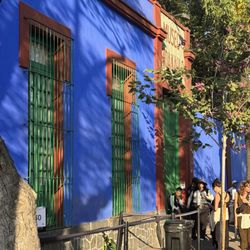
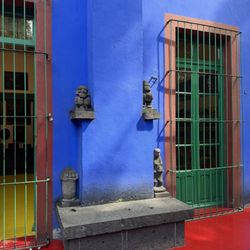
Museo Frida Kahlo - Entering the Casa Azul

Entering the Casa Azul

Museo Frida Kahlo

See all

Templo Mayor - Busto de Cuauhtémoc

Templo Mayor

4.6(78 reviews)
0.5 kmCentro Norte

The history in this part of Mexico City is incredible. If you're visiting, you should absolutely…read moremake time to stop at Templo Mayor--it gives you a completely different understanding of the region. Templo Mayor was the central temple of the Aztec capital, Tenochtitlán, which once stood in the middle of Lake Texcoco. After the Spanish conquest led by Hernán Cortés, the city was destroyed, and much of its stone was reused to build what is now the Metropolitan Cathedral and surrounding colonial structures. What's fascinating is that the ruins remained hidden for centuries. The first parts of the ruins were discovered during construction work in the 1970s and earthquakes in the 1980s revealed more of the remains. Standing here, you really feel the layers of history. Within a short walk, you can see modern Mexico City, Spanish colonial architecture like the cathedral, and the exposed Aztec ruins--all in one place. It's a powerful visual of how this city has evolved over time. If you made the trip to Mexico City, don't skip this stop. Even just walking through the area gives you a sense of history spanning from the Aztec empire, through Spanish colonization, to the present day. It's an experience that really stays with you.
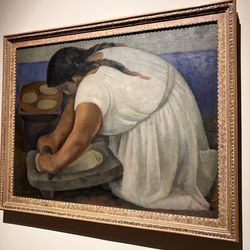
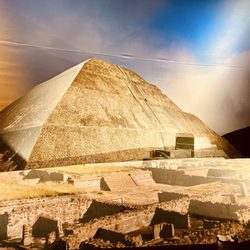
Built initially in the early 14th century, Templo Mayor aka the "Main Temple" sits in the middle of…read morewhat was originally the geographic and religious center of the capital city of Tenōchtitlan, when it was still an island city in the middle of Lake Texcoco. As a sacred site for the Mexica peoples, the structures erected here were dedicated to two deities--Huitzilopochtli, god of war, and Tlaloc, god of rain and agriculture. A shrine was built for each at the top of the temple on the main pyramid. From archaeological analysis, the temple was rebuilt six times, with the largest expansion under Mocteczuma I in 1454, though in 1521 the majority of the building was destroyed by Spanish colonizers when the whole city was razed and rebuilt following Spanish occupation. Notably the Metropolitan Cathedral which stands today adjacent to this site was one of the buildings which were built over it. By the 19th century the exact location and history of this sacred precinct had been lost but toward the end of the 1800s part of the temple corner was uncovered. However there wasn't an official organized effort to excavate and preserve the site until 1978-82. In 1987 the site became listed as an UNESCO world heritage site and a museum was built to house its artifacts and findings. When I was there in January I didn't go into the museum though walked around the edges--they've done an excellent job framing it with walkways along the west side, so it's somewhat of a public park. There are a few small scale models of what the precinct would've looked like in different eras, and a dedicated viewing platform. With entry to the museum you get closer access into the site with some walkways within the site itself. The entrance to the museum is free for Mexican citizens and 95 pesos for foreigners. Three floors with eight main exhibition halls focused on the deities, rituals (including human sacrifice), the role of the temple in economics and trade of the time, and flora and fauna of past Mesoamerica. In excavations more than 7000 objects were found and work continues on the site today.

Photos
Templo Mayor - Busto de Cuauhtémoc

Busto de Cuauhtémoc

Templo Mayor - Busto de Cuauhtémoc

Busto de Cuauhtémoc

Templo Mayor - Tenochtitlan

See all

Tenochtitlan

MUCHO. Museo del Chocolate - The fire under the stone makes the magic happen. Try it both with milk and then with water.

MUCHO. Museo del Chocolate

3.7(24 reviews)
2.8 kmJuárez

Who doesn't love chocolate? When walking around Juarez, Mexico City, we made it a point to make a…read morestop at this museum to learn about chocolate and the cultural importance and relevance of cacao. We got to taste a roasted cacao bean at the entrance. We read quite a bit about cacao in Mexican culture, and I watched some people grind cacao beans into a paste. Staff was friendly and, despite not being able to communicate with us easily, they tried to show things along the way. Most of our experience was with reading what we could at each room. It was cool to see some artifacts that were used to grind cacao. Cost was 85 pesos (~$6), which isn't bad. Wish there could have been more things to taste and beans to grind; however, I feel happy to know a little bit more about chocolate

It is not a huge place. If you have a guide that will help you through the displays if your Spanish…read moreisn't that good. Otherwise, the museum is worth a walk through but to me the main event was to make your own chocolate. I am not sure how to get this set up to be part of your experience since it was prearranged by the person guiding us. Find out in advance, so you will not be disappointed! By using the Metate, the concave curved stone slab used by the Aztecs to grind shelled cacao beans to paste, you take the roasted beans and some sugar through the process of making chocolate. Yes, it is pretty much that simple when it comes to the ingredients. However, the labor needed to make the magic happen might be more than expected. The people there will help guide you in technique, but it really comes down to your time and effort to make it happen. The end result is a paste I would have liked to take home with me. However, the way they had you end the experience there was to mix it with either milk or water to drink it. Yes, the milk, at least for me, is better tasting, but since this is probably something you are ever going to do once in your life, do try it BOTH ways!

Photos
MUCHO. Museo del Chocolate
MUCHO. Museo del Chocolate - Apparently even the dead like to make chocolate.

Apparently even the dead like to make chocolate.

MUCHO. Museo del Chocolate

See all

Museo de la Mujer - museums - Updated May 2026

Loading...
Loading...
Loading...