Mrs Skipper Photos


More like Mrs Skipper
Recommended Reviews - Mrs Skipper
Start your review...


Reviews With Photos


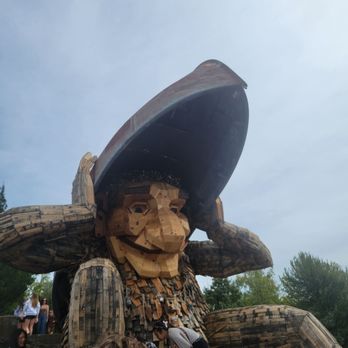
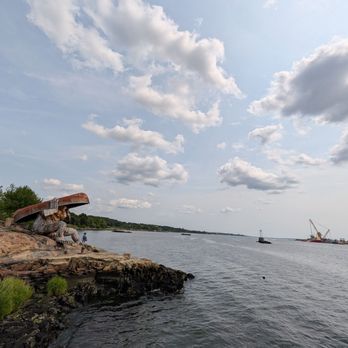
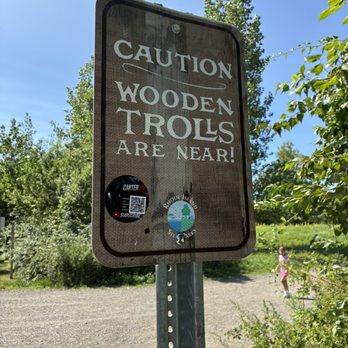
Mrs. Skipper is the newest and last addition to Rhode Island's "Troll Trail." Mrs. Skipper overlooks the Providence River and the industrial frontage across the water towards Allens Avenue in Providence. The massive troll is made from reclaimed bourbon barrels, various odds and ends, and topped with a salvaged rescue boat from Maine. I put ""Mrs. Skipper" Sculpture by Thomas Dambo" into my GPS and it led me to the parking lot of University Orthopedics Kettle Point. I parked my car there and then I continued to follow the GPS on foot which led me to the East Bay Bike Path and I saw a sign that saids wooden trolls are near. I knew I was getting closer! After just a little more, I arrived at Mrs. Skipper. There was a pier to see Mrs. Skipper and an area where they restrict/advise not to step on, however many people do it. It was fine, just need to be careful. Mrs. Skipper was truly an amazing troll to see. The details and the rescue boat was breathtaking. If you have an opportunity to visit Mrs. Skipper, you definitely should.


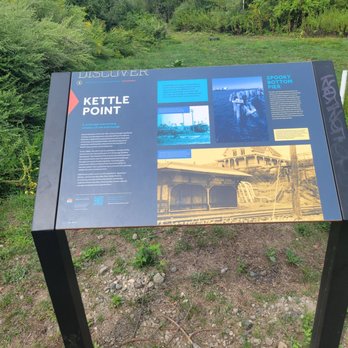
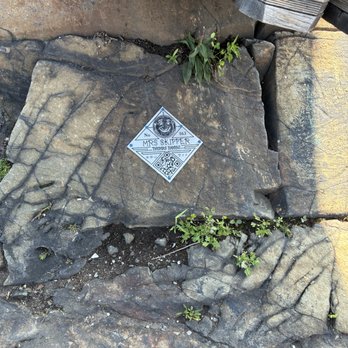
While visiting family in Massachusetts this summer, my wife and I took a detour to search for the Dambo trolls in RI. Our first stop was in East Providence, to see Mrs Skipper. A fun installation watching over the waterfront. She was can be a bit difficult to find. The address we found online brough us to the parking lot for a medical center, but instead, we needed to pull into a driveway before this locations, and go down the hill towards the water front and greenway. She's a little off the beaten path, but a fun design, holding an actual steel boat over her head as she heads to the water. Worth checking out if you're in the area. Though, there is signage saying you're not supposed to walk down on the rocks in front of her, though that is where the actual signage for her is located. I think it's more of a liability thing, there is no one there policing where you do and don't go, just proceed with caution. read more



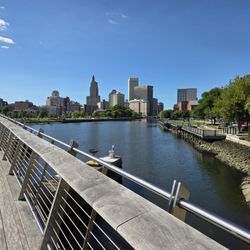
I enjoy the Thomas Dambo's recycled sculptures and they are now on my list of things to see when traveling! Mrs. Skipper is on a small rocky peninsula near a boardwalk over the bay. You are not supposed to walk out on said rocky outcrop and a sign at the entrance says the area is off limits. Still, plenty of intrepid adventurers were out there getting a closer look. There is plenty of parking for the Urban Coastal Greenway behind a huge Orthopedic building. Follow the paved trail down to the main trail, turn left and then take your first right. This part of the path is in a bit of disrepair, but I did see a couple of strollers on the path here so it's passable. Once on the boardwalk, you can look off to the south and see Mrs. Skipper perched on her rock. I am sad it's not easily accessible to the little one's. The details though are all there and it's Mrs. Skipper seems to be enjoying her perch. read more


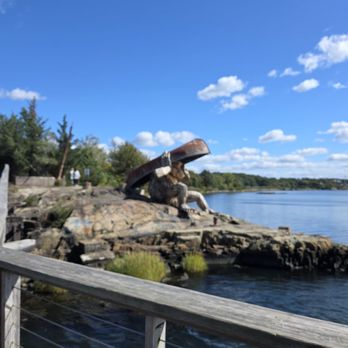


**November 2025: Sunday Morning Visit** My friend and I were starting our Rhode Island Troll Hunt and kicked it off with Mrs. Skipper. She's located right before the University Orthopedic Kettle Point Building and there's a very small circular lower level parking lot to park your car. From that small parking lot to the pier to which you can see Mrs. Skipper is about a 15 minute walk partly on a dirt road and partly on a boardwalk. You can walk on the little peninsula where Mrs. Skipper is located; however, there were signs that said "at your own risk and since it was 22 degrees I did not want to risk slipping on the rock and accidentally falling into the icy cold bay. There is a pier where you can view her from her side profile which looked beautiful with the sunrise, but I just wished it wasn't so dangerous to see her upclose (hence the removal of one star). read more


1 year ago
Mrs. Skipper is the newest and last addition to Rhode Island's "Troll Trail." Mrs. Skipper overlooks the Providence River and the industrial frontage across the water towards Allens Avenue in Providence. The massive troll is made from reclaimed bourbon barrels, various odds and ends, and topped with a salvaged rescue boat from Maine. I put ""Mrs. Skipper" Sculpture by Thomas Dambo" into my GPS and it led me to the parking lot of University Orthopedics Kettle Point. I parked my car there and then I continued to follow the GPS on foot which led me to the East Bay Bike Path and I saw a sign that saids wooden trolls are near. I knew I was getting closer! After just a little more, I arrived at Mrs. Skipper. There was a pier to see Mrs. Skipper and an area where they restrict/advise not to step on, however many people do it. It was fine, just need to be careful. Mrs. Skipper was truly an amazing troll to see. The details and the rescue boat was breathtaking. If you have an opportunity to visit Mrs. Skipper, you definitely should. read more


The newest edition to East Providence's waterfront, Mrs. Skipper the troll. Thomas Dambo's latest creation overlooks the waterfront with her canoe and is quite the sight. Off the East Bay Bike path, this is one of the easier trolls to get to. I parked in the University Orthopedics parking lot. But today was a holiday, so I don't know how well that would work during the week, when the offices are operational, but this parking lot is probably the easiest way to get to her. Just go to the bike path, hang a left and go to you see the chain link fence on your right. Go through that and right before the pier you will see a small path to the left, take the path right to her. You can also see Mrs. Skipper from the pier to if you don't want to walk down that path. read more