Cancel

    Open app

    Search

    Milestones Museum

    4.3 (4 reviews)
    Closed 10:00 am - 4:30 pm

    Milestones Museum Photos
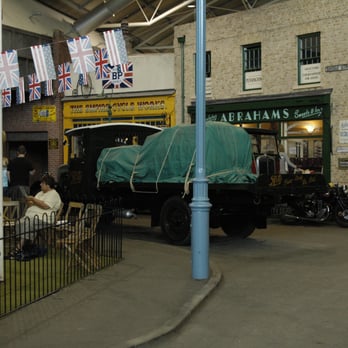
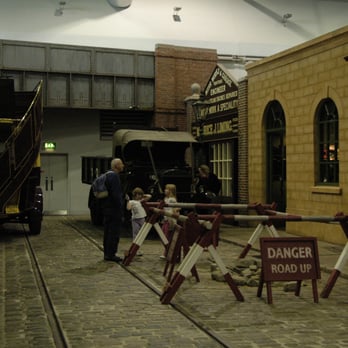
    Recommended Reviews - Milestones Museum

    Your trust is our priority, so businesses can't pay to alter or remove their reviews. Learn more about reviews.
    Yelp app icon
    Browse more easily on the app
    Review Feed Illustration
    Photo of Paul S.
    0
    36
    21

    18 years ago

    Helpful 0
    Thanks 0
    Love this 0
    Oh no 0

    17 years ago

    Helpful 0
    Thanks 0
    Love this 0
    Oh no 0

    16 years ago

    Helpful 0
    Thanks 0
    Love this 0
    Oh no 0

    17 years ago

    Helpful 0
    Thanks 0
    Love this 0
    Oh no 0

    Verify this business for free

    Get access to customer & competitor insights.

    Verify this business

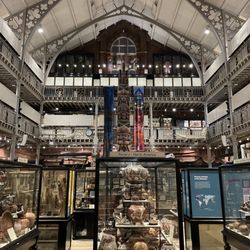
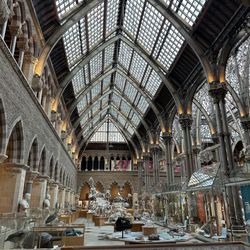
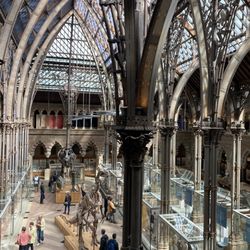
    Pitt Rivers Museum - Museum looking up from the ground floor.  So much to see!

    Pitt Rivers Museum

    4.8(53 reviews)
    34.5 mi
    £

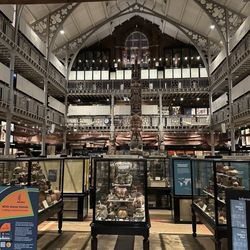
    We had a great time exploring the Pitt Rivers Museum! There is SO much on display it's almost hard…read moreto take it all in. If you're an anthropology buff, this is your place. So many neat things to see and everything you can imagine, too many to list. From clothing to masks to weapons to toys all from different cultures and different times. We even saw a Totem Pole! Overall a fascinating place to visit, just wish we'd had more time to explore!

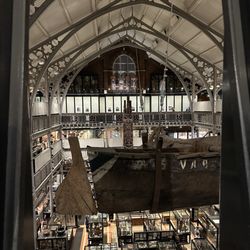
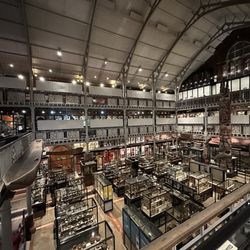
    What you think of Oxford's Pitt Rivers Museum likely depends on how you like your museums. With…read moremore than 500,000 objects on display, Pitt Rivers is ripe for exploration. There's multi-level display cases everywhere, each seemingly containing more than the last. And don't get me started on the drawers; they're everywhere too, and when you pull them out you'll find hundreds more items in each. So if you like your museums with a few paintings on each wall this might not be your jam but you'll still probably be happy you went. You've likely never seen anything like this. A young woman in a shop mentioned, several days before my visit, that she particularly liked this museum and the way she described the entrance intrigued me. As it should: the entrance to this museum is found when you're already inside another museum (The Museum of Natural History; both are free of charge). Officially, the Pitt Rivers Museum displays both the archeological and anthropological collections of the University of Oxford. But unofficially, it's like entering someone's giant garage, very well organized but also packed to the rafters. One could spend months in here and only skim the surface.

    Photos
    Pitt Rivers Museum
    Pitt Rivers Museum
    Pitt Rivers Museum - Totem Pole!

    See all

    Totem Pole!

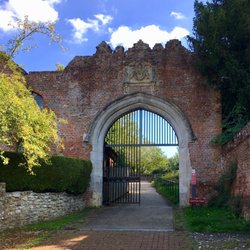
    Basing House Ruins - Basing House - main entrance

    Basing House Ruins

    4.0(1 review)
    2.3 mi

    Once a rival to Hampton Court, in the 16th Century Basing House was one of the grandest houses in…read moreEngland, and hosted all of the Tudor monarchs from Henry VIII to Elizabeth I. Besieged three times in the Civil War, it was stormed by Cromwell and destroyed. The ruins are extensive but fragmentary, and a good imagination is needed to understand the site. Basing started life as a Norman motte-and-bailey castle in the 11th Century, when it was chief of the 55 manors granted to Hugh de Port by William the Conquerer. Unusually the motte was low but over 300ft wide. The estate was passed through inheritance to the Paulet family, and it was Sir William Paulet (1483-1572), 1st Marquess of Winchester, who developed the famous great house. He held a range of high offices during his long career, and amassed a considerable fortune, which he spent on the remodelling and extending the house. He first developed the original castle into a more comfortable residence in the classic Tudor style, using locally made bricks. He built a great gatehouse as the main accommodation, leading to a separate great hall, with other buildings arranged around the inside of the walls. However, this was insufficient to host the monarchs and their large retinues on their Royal progresses, so he built an enormous new palace of some 360 rooms, adjacent to the original castle, to provide additional accommodation. This took the form of a large square stately house, with a central range and two oblong courtyards, again in red brick with classical decoration. The two houses were linked by a short bridge and gateway through the original defences. The Royal visits, however, exhausted the family fortunes. Elizabeth I visited several times; most notably, on one visit she hosted the new French ambassador. She brought a retinue of 1,500 people in her court - and he brought 400. They stayed for two weeks, enjoying banquets, hunts and spectacles. In modern terms, the visit cost millions of pounds. As a result, the 5th Marquess mothballed the new house when he inherited the estate in 1629. His plan was to save enough funds to restore part of the house, but the intervention of the Civil War saw him refortify both houses. A Royalist supporter, the house - on the main road to the south west - was a key strategic location, and it was besieged three times. The final siege began in August 1645; the defenders withstood the Parliamentary forced until October, but the arrival of Cromwell with substantial reinforcements made defeat inevitable: first the new house was overcome, and then the defences of the Old were breached. As well as substantial damage from canon fire, fires were set which destroyed much of both buildings. Cromwell asked parliament to agree that locals be given the right to remove building materials - which led to the dismantling of most of the ruins. The red bricks now form many of the lovely 17th Century cottages in the village. The site today comprises Grange Farm (now the Visitor Centre), where the magnificent Great Barn is the most substantial reminder of Paulet's achievements. A short walk away along a lane, you enter through one of the original gates to the estate, over a bridge over the disused Basingstoke canal, and up towards the motte and bailey. Here you can walk around the scant remains of the old house - primarily basements and cellars, with elements of the main walls. Virtually nothing survives of the new house, but there are interpretation boards at key points, and a viewing platform provides s good perspective over the site. Of interest are the partially restored walled garden, and the 17th Century earthwork defences thrown up during the Civil War: these are rare survivors. There's a small but disappointing museum on the site and an entrance building containing, bizarrely, a model of both houses - in lego. Tickets are bought at the visitor centre at Grange Farm, but car parking is a further five minute walk along the River Loddon near the Barton Mills pub. Walking around the site, and to and from the car park, is around a two miles. Access for those of limited mobility is a challenge. The main site is fairly hilly, mostly grass, and the viewing platform is reached by an outdoor staircase. There are toilets at the Visitor Centre and at the entrance to the main site.

    Photos
    Basing House Ruins - The partially restored formal walled garden.

    The partially restored formal walled garden.

    Basing House Ruins - The Great Barn, completed in 1534.

    The Great Barn, completed in 1534.

    Basing House Ruins - Cannon on the Civil War emplacement

    See all

    Cannon on the Civil War emplacement

    The British Museum - At British Museum

    The British Museum

    4.6(1.3k reviews)
    45.9 miBloomsbury

    Huge crowds and it wasn't even a weekend. Reason: free…read more This is equivalent to Natural History ones in US. However, there are historical contexts with british roman empires and other inclusions that makes this place distinct in a variety of ways. There are also kid packet activities- ask front desk. Some areas have uneven heating and cooling so you may be prone to fainting / esp if the ennui alone is not enough to get you there- ha! Place is great for history buffs, though, as it is free- do not expect high end bathrooms and overall exceptional service. Otherwise, 5 stars for being free and for a very elaborate set up.

    British Museum, London, April 5…read more Our family of four with kids ages 9 and 10 spent part of the afternoon at the British Museum as an easy cultural stop during our London stay. Entry to the permanent collection is free and straightforward, with no reservation required, which made it simple to drop in. There are paid special exhibitions, but the main museum itself is open access. Arrival and First Impressions Entry to the building was very easy, and once inside the scale is immediate. The Great Court sets the tone right away, and everything feels larger and more layered than expected. Even just orienting yourself takes a moment because of how expansive the space is. Getting in was smooth and flexible, and the museum handles steady crowds well without ever feeling restrictive, which helped a lot with kids in tow. The Highlights The Egyptian galleries are one of the first moments where the scale really lands. The large stone sculptures and statues are far bigger in person than photos suggest, and they create a dramatic backdrop as you move through the space. The Rosetta Stone was another key highlight. Seeing it in person adds a different level of context, especially knowing its role in unlocking ancient Egyptian writing. It is not large or flashy compared to some of the other artifacts in the room, but it carries a quiet importance that draws attention naturally. The Samurai exhibition was a standout and required a paid entry ticket. It was absolutely worth it. The display of full armor sets, helmets, weapons, and artwork created a complete and visually rich picture of samurai life. The craftsmanship in the armor in particular held everyone's attention far longer than expected, and it felt more immersive than a typical museum exhibit. We also spent time in the hands-on style learning stations, which were a strong break in pace. These included real artifacts like a flint knife that was thousands of years old and a Roman cosmetic jar believed to have been used for eye makeup. Seeing objects like that up close made history feel very tangible for the kids in a way that glass cases alone do not. There is also a family area tucked away downstairs that worked well as a short reset point. It felt quieter and more relaxed, and it gave the kids a chance to decompress before continuing, which made the overall visit more sustainable. The museum works best as a series of short, flexible stops rather than a structured route, and we naturally moved based on interest and energy levels. The Challenges The main challenge is scale. It is very easy to underestimate how large the British Museum is, and even with breaks built in, pacing becomes the key factor in how enjoyable the visit feels. Trying to cover too much quickly would likely be overwhelming, especially for kids. Would We Return Yes, but with a more focused plan and specific sections chosen in advance rather than trying to see everything broadly again. Final Thoughts The British Museum is best experienced in segments rather than as a single continuous visit. The Egyptian galleries, the Rosetta Stone, the Samurai exhibition, and the hands-on artifact stations all offered very different but equally strong experiences. It is free, accessible, and incredibly rich, but the real value comes from slowing down and treating it like a collection of smaller discoveries, with breaks built in, rather than a single museum to "finish."

    Photos
    The British Museum - At British Museum

    At British Museum

    The British Museum - British Museum_Yelp_Sanju-1

    British Museum_Yelp_Sanju-1

    The British Museum - Easter Island head

    See all

    Easter Island head

    Milestones Museum - museums - Updated May 2026

    Loading...
    Loading...
    Loading...