Middleham Castle Photos


Recommended Reviews - Middleham Castle
Start your review...



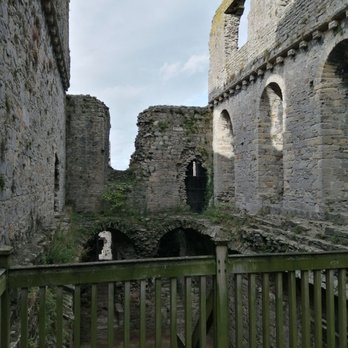
Once the Northern home of Richard III. The keep is enormous. Its surrounded by a complex square of supporting buildings. As a ruin its well worth a visit. As someone who loves castles I didn't need any interpretation boards but this is why I haven't given five stars simply there was very little information provided what was there was heavily damaged. English Heritage must do better. read more


18 years ago

14 years ago
I have a soft spot for Middleham Castle situated behind the main street of Middleham and having a decent amount of free parking available.;Once again £4.40 per person is over my budget so I had to stop going there. It's quite an impressive ruin with the shell of the Keep still standing to 3 storeysalthougfh as I sad a shell apart from one tower and a viewing platform. Middleham Castle is situated in the upper reaches of Wensleydale, at the edge of the village of Middleham in North Yorkshire. A castle is known to have existed in the area from the time of Alan the Red, a major supporter of William I, and has been tentatively dated to 1068. The more impressive fortifications to be seen in the custody of English Heritage were first constructed in perhaps 1170-80 and subsequently altered as necessity or fashion dictated. Much alteration of the castle including the construction of an upper storey occurred during the ownership of Richard Neville (Warwick the Kingmaker) or that of Richard III. The castle at Middleham has a pertinent history in the period of the wars of the Roses. In 1461 after the battle of Towton Edward IV was the guest of Warwick at Middleham. His brother Richard (later Richard III) spent much of his youth at the castle, from 1465 to 1468 learning the noble arts of war and courtliness appropriate for his position. One year later Warwick, the previously staunch supporter of Edward IV, defeated the king at the battle of Edgecote and had the king imprisoned in the castle for some months while he tried to rule as regent. With the defeat of Warwick at the Battle of Barnet in 1471 and the marriage of Richard of Gloucester to Anne Neville in 1472, the castle and much of the Neville estates passed to Richard by inheritance and royal gift from his brother Edward IV. Upon his accession to the throne on the death of Edward IV, the much maligned monarch Richard III is recorded as having favoured his estate at Middleham above all of the others in his possession. His son Edward, who died in childhood, is known to have been born and lived his brief life here, and is suggested by some to have been buried here as well. Somewhat of a mystery surrounds the young Edward for he is kept in the castle and not farmed out to another great house, as was the custom of the day. Neither is he seen at state affairs, which considering that his deceased uncle Edmund was considered adult and murdered after being captured at the battle of Wakefield at the age of 14, suggests that there was perhaps something amiss with the ten or eleven year old Edward. Following the battle of Bosworth Field on 22 August 1485, Henry VII confiscated the castle at Middleham, from this period onwards it was largely ignored. By 1899 the castle had deteriorated to a ruinous and dangerous condition, but being somewhat restored by the Ministry of works in the 1920's it is today in the care of English Heritage. Spent a lot of time here investigating the paranormal here in the 1990s read more