Cancel

    Open app

    Search

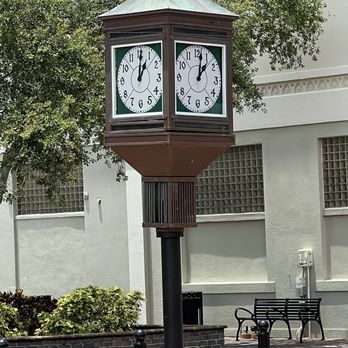
    Magnolia Square Clock Photos

    Recommended Reviews - Magnolia Square Clock
    Your trust is our priority, so businesses can't pay to alter or remove their reviews. Learn more about reviews.
    Yelp app icon
    Browse more easily on the app
    Review Feed Illustration
    Photo of Ariel W.
    4395
    5920
    104020

    10 months ago

    Helpful 25
    Thanks 5
    Love this 26
    Oh no 0

    Verify this business for free

    People searched for Landmarks & Historical Buildings 121 times last month within 5 miles of this business.

    Verify this business

    PICO Building

    PICO Building

    5.0(1 review)
    0.1 mi

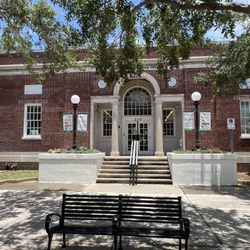
    As a fan of both architecture and history, I will sometimes come across a jewel like this two…read morestory, red brick building located at 209 North Oak Avenue on the corner of West Commercial Street, in Sanford. It is in Sanford's historic commercial district. The PICO Building is a historic two story redbrick building built in 1886-1887 for the Henry B. Plant of Plant Investment Co. Henry Plant was a prominent 19th-century businessman, entrepreneur, and investor who played a crucial role in developing Florida's transportation infrastructure and economy. He is best known for building a vast network of railroads and steamship lines, collectively known as the Plant System, that connected Florida to the rest of the United States and the Caribbean. He also built several hotels including the former Tampa Bay Hotel which is now home to the Henry B. Plant Museum and the University of Tampa. The Turkish style of the PICO Building resembles Plant's Tampa Bay Hotel. The purpose of the PICO building was to serve travelers arriving in Sanford on the Plant railroad and steamship lines. President Calvin Coolidge stayed at the Pico Hotel when he came to Seminole County in 1929. The building was designed by local architect William T. Cotter who drew inspiration from the Romanesque Revival and Moorish Revival styles of architecture. It was built by the H. M. Papworth Construction Company. You can see the Moorish influence in the intricate geometric patterns, including stars, polygons, and arabesques. The first floor of the hotel had a restaurant, a store, a reception area, and a guest's lounge. Guest's rooms were located on the second floor. On the right side of the building there is an entry to second floor with beautiful original door. The building is characterized by high ceilings, original wooden floors, and 9 fireplaces throughout the interior. The windows have horseshoe and ogee arches. Originally the PICO building was adorned with an onion shape dome on the right corner on top of a decorative bartizan tower but sometime in the 1950's it sustained significant storm damage and was ordered to be removed by the city. In 1906, the building was remodeled and sold to the Takach family, Hungarian immigrants who operated the restaurant next door. Mr. Plant was a fan of their food so he let them take over the PICO building for their restaurant which operated for the next 50 years. After that the building was used for law offices. On June 15, 1976 the PICO Building was added to the National Register of Historic Places. The building is currently for sale for $1,645,999 and it comes with an osprey nesting in the chimney! The property is fitted for office space but it could it also be turned back into a hotel or even a museum.

    Photos
    PICO Building - Osprey nesting in the chimney and keeping watch over the building until the new owners come.

    Osprey nesting in the chimney and keeping watch over the building until the new owners come.

    PICO Building
    PICO Building

    See all

    BIG MTV Moon Man

    BIG MTV Moon Man

    3.0(2 reviews)
    3.8 mi

    Is this really MTV's Moon Man?…read more Yes, this giant, silver astronaut made of Styrofoam and holding an American flag was built for MTV and is safely locked inside the backlot at Acme Industrial Surplus in Sanford. The 15-foot styrofoam astronaut has been towering over this business's fence for several years and has been providing photo-ops for roadside attraction seekers or those by happenstance catch a glimpse of him. He first appeared at the 2004 MTV Video Music Awards in Miami this event was notable because it was the first time the ceremony was held outside of New York City and Los Angeles and just to make you feel old, OutKast took home Video of the Year for "Hey Ya". MTV was launched on August 1, 1981, the original purpose of the channel was to play music videos guided by television personalities known as "video jockeys," (VJs) it's oblivious this format was abandoned about the same time "Moon Man" was given a life sentence to rot and decay in this company's bone-yard..... but not to worry you have plenty of time to get here and check it out, although Styrofoam breaks into pieces easily, it takes about 500 years for one styrofoam cup to dissolve, so Moon Man isn't going anywhere soon, that's unless the current owner decides to take him to a landfill, that's some responsibility now since the whole world is watching.

    This "attraction" was a humorous adventure to say the least. I kind of felt like I was in an…read moreepisode of Dexter and was being lured to discrete location to be robbed and murdered. This is not something you need to see while in Sanford. It's located in an unidentified metal yard. And once you actually locate the Moon Man there is no place to park and admire him. The best view of him is from a round about off the highway that you can't park or stop in. Overall, disappointing and a little terrifying. Even at 1 in the afternoon.

    Photos
    BIG MTV Moon Man
    BIG MTV Moon Man
    BIG MTV Moon Man

    See all

    DeBary Hall Historic Site

    DeBary Hall Historic Site

    4.8(11 reviews)
    4.7 mi

    I recently had the opportunity to tour the historic 19th century DeBary Hall. The 20 room,…read moreItalianate style hunting lodge was located a mile from the St. John's River. The property was listed on the National Registry of Historic Places on July 24, 1972. DeBary Hall is the oldest intact building in southwest Volusia County. This historic site sits over 10 acres and includes the 8,000 square foot main home, stables, ice house, equipment shed, and tenant house. DeBary Hall was built in 1871 as the winter hunting retreat of Samuel Frederick DeBary (1815-1898), a European-born wine merchant for Mumms Champagne. He chose Florida to help ease his daughters asthma and to indulge in his love of hunting. This was the smallest of his six homes. While this may have been a vacation retreat, he still used it to make money. While in residence he operated a 600 acre citrus grove. He built a packing house beside the lake pier and was one of the first citrus growers to sort oranges by size by rolling them down an inclined trough with variously sized holes. He also developed the DeBary Merchants Line which ran a commercial steamboats for trade up the St. John's River to Jacksonville. German born Samuel Frederick DeBary was one of the wealthiest men of his day. His estate was a center of sport hunting and hospitality. In the late 1800's and early 1900's DeBary entertained Presidents Ulysses S. Grant and Grover Cleveland; the Astors, Goulds, and Vanderbilts, General William Tecumseh Sherman, and the Prince of Wales before he became King Edward VII. Popular activities included swimming in the local springs, fishing, and hunting quail, deer, and alligator. The DeBary's used the hall as their family winter retreat until 1941, when the last American ancestor, Leonie DeBary Lyon Brewster, died without an heir at the age of 31 in a plane crash with her husband. Her brother Adolphe met a tragic end at the age of 23 in New York while saving a young lady from being hit by a taxi. After Leonie's death there were plans was to create a grand subdivision in the 1950's and land was parceled out in 1/2 acre plots to begin Debary Village but it went bankrupt a few years into the project. After that DeBary Hall passed through various hands as the house was left to decay and the furnishings lost. The State of Florida purchased DeBary Hall in 1967. After years of abandonment, people came together in the 1990's to restore the home to its former glory. The State of Florida now leases the historic site to the County of Volusia as a historic house museum. The home has few original pieces but there are other period furnishings representative of what would have been accurate for the time. Unique advanced features of the house for the time include an elevator for guests' luggage, running water through a 500-gallon tank in the ceiling, wall fed electricity made onsite by natural gas, a wired call system throughout the entire house, and a lightning protection system that covered the roof. The house had Florida's first spring-fed swimming pool which used a pump to fill and drain the pool each day. Mr. DeBary also had the bathroom moved indoors which was not common for the time. Later on family members added indoor plumbing. The house also has an almost unheard of feature in Florida, a basement! My admission was only $5. I came late in the day and was lucky to receive a private tour from Ed who was so kind and knowledgeable. I learned do much about the DeBary family and the history of this area. A visit starts with a 15 minute movie about the history of the St. John's River during which you take a simulated steamboat ride. After the movie I was given an informative tour of both floors of DeBary Hall. In February they have an annual Living History Day that I would love to come back for next year. I highly recommend a visit DeBary Hall if you are in the area. A big thanks to the community for saving this historical gem for everyone to enjoy. DeBary Hall is a stop on the Lake Monroe-Gemini Springs-DeBary Hall trail. The Spring to Spring Trail is so named because the 6.6 mile trail links a number of state and county parks that contain springs. Be sure and check out some of the beautiful springs if you visit the area.

    Excellent tour and walk back in time of Florida history. Well worth the stop. Nice park & picnic…read morearea with restrooms adjacent to the home. Use Google maps for directions, Waze was off.

    Photos
    DeBary Hall Historic Site
    DeBary Hall Historic Site
    DeBary Hall Historic Site

    See all

    Historic Sanford Welcome Center

    Historic Sanford Welcome Center

    4.9(7 reviews)
    0.0 mi

    The Sanford Welcome Center is located in the building that was the first U.S. Post Office in the…read moreCity of Sanford. The red brick Classical Revival building was built in 1917 by Algernon Blair of Montgomery. James Wetmore served as the supervising architect. The building is typical of government buildings of the time and it is trimmed in Georgia sandstone and white sandstone pillars. The original exterior is still intact. After a new post office was built two blocks away in 1962 it became the city library and in 1975 part of the Seminole County library system. It is listed on the National Register of Historic Places. I love the architecture of this building and today it is looking better than ever as the Sanford Welcome Center. Their mission is to provide education and information as they market Sanford as "an arts, culture, recreation, and historic destination." I popped in during my visit to town and was warmly greeted by Rosie. I had a great chat with her. Inside the welcome center you will find public restrooms, cheap snacks and drinks, attraction brochures, maps, and places to stay and dining recommendations. The Chamber of Commerce has an office. Downtown historic Sanford is experiencing a renaissance. Check in here to learn about events, food and drink, and one of a kind experiences in this charming town.

    The Sanford historic center is now back open it is located on 1st Street in Sanford Florida…read more Inside you will find some brochures about things to do in the area there is also a gift shop with lots of fun stuff to buy. Most of the time they have an art gallery in the back containing art from local residence. There's always someone there to help you if you need to get advice of where to eat or things to do. They also have bathrooms and a small place to sit if you want to rest and get out of the heat and check out the Sanford newspaper. I come here at least once a week there is always something different to see each week. Walking distance to many restaurants, shops and the beautiful Lake Monroe lakefront.

    Photos
    Historic Sanford Welcome Center
    Historic Sanford Welcome Center
    Historic Sanford Welcome Center

    See all

    Rollins College Historical Marker

    Rollins College Historical Marker

    4.0(3 reviews)
    0.0 mi

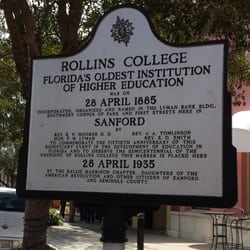
    It is always fun to find a historic marker and learn something new and interesting. Having visited…read moreWinter Park many times I was well acquainted with Rollins College, the alma matter of beloved children's television host, Mr. Rogers. While walking in downtown Sanford I learned that it also has a connection to Sanford too. Next to the First National Bank No. 1 building constructed in 1883 is a historic marker for Rollins College. On April 28, 1885, Rev. E.P. Hooker, Rev. J.A. Tomlinson, Hon. F.W. Lyman and Rev. S.D. Smith met in the Lyman Bank Building on this corner and incorporated the college. In 1924, Rollins College was the first home of WDBO, the first radio station in Central Florida and, for a long time, the only one that could be picked up on radios in Sanford. In the pre-television days, broadcast entertainment and information for Sanford residents, including special programming produced for Sanford, came from the Winter Park school that had its roots here in Sanford. The marker is different from the typical blue Florida State and Seminole County historic markers. The marker itself is actually quite old. It was erected in 1935 by the Sallie Harrison Chapter, Daughters of the American Revolution and other citizens of Sanford and Seminole County.

    If you're in the area this is a fun historic marker to snap a quick photo. Right at the…read moreintersection this location is easy to get to. We love historic things and I'm a a Rollins' grad, so this was a fun pit stop while waiting for a table at Willow Tree! Overall:A Well kept historic sign in the heart of historic Sanfird!

    Photos
    Rollins College Historical Marker - The building Rollins College was incorporated in.

    The building Rollins College was incorporated in.

    Rollins College Historical Marker
    Rollins College Historical Marker - Rollins College Historical Marker in Sanford

    See all

    Rollins College Historical Marker in Sanford

    Lake Jesup Bridge

    Lake Jesup Bridge

    5.0(6 reviews)
    7.4 mi

    Lake Jesus is the largest lake in Seminole County. It is 13 miles in length and consists of 16,000…read moreacres of open water and floodplains. The lake is roughly 8,000 acres and is part of the St. Johns River waterway. It connects to the St. Johns River at the north end by a narrow strait. Lake Jesup is notable for having the concentration of alligators in Florida. Lake Jesup is believed to have been named for General Thomas Jesup who served as the Commander of the Army of the South during the Second Seminole War from 1835-1842. The lake was discovered during the time the army was exploring the St. Johns River for transportation for troop and supplies lines. Long before the army found the lake however it had a rich Native American history. The southern shore of Lake Jesup is called Kitchen Middens. Middens are a kind of ancient garbage dump that can tell you a lot about the people who lived there. Early Native American inhabitants processed food and disposed of the waste in this area. Pottery shards and pieces along with animal bones have been discovered here. In the middle of Lake Jesup is a 30 acre island called Bird Island. The island was owned by Forest Michaels, who had a tomato farm on part of the island in the 1960s. Today the island is a nesting site for many birds including cattle egrets, white ibises, great egrets, glossy ibises, snowy egrets, eagles, and blue herons. SR 417 crosses Lake Jesup on a 1.5 mile bridge built in 1993. The bridge is part of the Seminole Expressway section of the 417 tollway which begins at the Seminole County line. This section run by Florida's Turnpike Enterprise is 17-mile-long and extends to an interchange with I-4 in Sanford at the end of the beltway. Driving across the Lake Jesup Bridge is very enjoyable. The view of the lake is spectacular and if you have the chance to look up there is a number of birds nesting on top of the light poles. I highly recommend a visit to Overlook Park at the southern end of the bridge for a close up view of Lake Jesup and its wildlife.

    Lake Jesup Bridge spans Lake Jesup as you drive along Highway 417. It has been said that Lake Jesup…read moreis the most alligator infested lake in the world and you can often see alligators out there in Lake Jesup. Lake Jesup Bridge is a bridge that I would always associate with the thought that I was almost home whenever I would be traveling from some long-distance destination and heading home and I would cross Lake Jesup Bridge. Lake Jesup Bridge is a cool part of the highways of Florida and Lake Jesup Bridge will always be a part of my memories. I will give Lake Jesup Bridge five stars.

    Photos
    Lake Jesup Bridge
    Lake Jesup Bridge
    Lake Jesup Bridge - View from an Airplane

    See all

    View from an Airplane

    Fort Reid Historical Marker

    Fort Reid Historical Marker

    3.5(2 reviews)
    1.3 mi

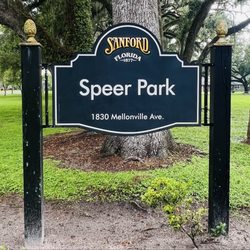
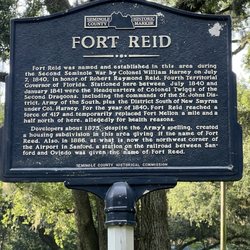
    There is so much history in this little corner of Sanford. In Speer Park I found this Seminole…read moreCounty historic marker. Historical markers are a great way to learn about the formative people, buildings, and events in Florida's history. This historical marker highlights the history of Fort Reid which once stood on this spot. Where the charming Speer Grove Park now stands was once the site of a fort during the Second Seminole War. When the government enacted the Indian Removal Act in 1830, the army was sent to drive all of the Native Americans out west on the Trail of Tears. The Seminoles resisted and the Second Seminole War broke out. Forts like this one in what is now Sanford were set up all across Florida to aid the US Army in their mission. The fort here was established on July 7, 1840 by Colonel William Harney. It was named after the fourth territorial governor of Florida, Robert Reid. Between July 1840 and January 1841 the fort was the headquarters of Colonel Twiggs of the Second Dragoons and included the commands of the St. Johns District, Army of the South, and the District South of New Smyrna under Colonel Harney. In 1840, Fort Reid had a force of 417 soldiers. It temporarily replaced Fort Mellon a mile and a half north for health reasons. The army abandoned the fort in 1842. After that it was occupied on and off by area settlers until it was re-garrisoned briefly in November 1849 before being permanently abandoned for the final time the next month. Today the spot where the fort once stood has become destination for family community gatherings, play, and fitness.

    Very little going on here and nothing other than the sign to remember the Fort as it's now a big…read moregreen space with some playground stuff. The marker reads: Fort Reid was named and established in this area during the Second Seminole War by Colonel William Harney on July 7, 1840, in honor of Robert Raymond Reid, Fourth Territorial Governor of Florida. Stationed here between July 1840 and January 1841 were the Headquarters of Colonel Twiggs of the Second Dragoons, including the commands of the St. Johns District, Army of the South, plus the District South of New Smyrna under Col. Harney. For the year of 1840, Fort Reid reached a force of 417 and temporarily replaced Fort Mellon a mile and a half north of here, allegedly for health reasons. Developers about 1875, despite the Army's spelling, created a housing subdivision in this area giving it the name of Fort Reed. Also, in 1886, at what is now the northwest corner of the Airport in Sanford, a station on the railroad between Sanford and Oviedo was given the name of Fort Reed.

    Photos
    Fort Reid Historical Marker
    Fort Reid Historical Marker
    Fort Reid Historical Marker

    See all

    Hedy Lemarr Historical Marker

    Hedy Lemarr Historical Marker

    5.0(2 reviews)
    11.4 mi

    While I am very familiar with the blue markers of the state wide Florida Historical Marker Program,…read moreoccasionally I will come across a county or city historic marker. On a recent walk through Red Bug Lake Park, I discovered that Seminole County has their own historic marker program. Historic markers are a great way to learn about the formative people, buildings, and events in Florida's history. This marker was erected in 2023 by The Jewish American Society for Historic Preservation with support from the Casselberry Historical Society and the Seminole County Historical Society. It recounts the important WWII contributions made by the actress Hedy Lamarr who passed away in Casselberry at the age of 85 on January 19, 2000. According to this marker, famed Golden Age of Hollywood actress and inventor Hedy Lemarr had a home near Red Bug Lake Park in the later years of her life. Hedy was born Hedwig Eva Marie Kiesler on November 9, 1914, in Austria to Emil and Gertrude Kiesler and she was raised in the Jewish faith. In 1938 she came to the U.S. and became a naturalized citizen in 1953. She went on to star in two dozen movies, including the notable Samson and Delilah directed by Cecil B. DeMille. During WWII, Hedy and George Antheil received U.S. patent number No. 2,292,387 for their Secret Communication System. Hedy explored potential military applications for radio technology. She theorized that varying radio frequencies at irregular intervals would prevent interception or jamming of transmissions, thereby creating an innovative communication system. Together she and Antheil designed a way to help the U.S. Navy against Nazi Germany by allowing spread spectrum and frequency jumping of radio waves in torpedo guidance systems. This technology was later used to make Wi-Fi, GPS, and Bluetooth technology possible. The National Inventor's Hall of Fame posthumously inducted Lemarr and Anthiel in 2014. Her invention has led Heddy Lamar to be known as the mother of Wi-Fi.

    Who knew that Hedy Lemarr had a connection to Oviedo, Florida? I certainly did not until today as I…read morewas walking around Red Bug Lake Park and came across this historical marker. Hedy Lamarr was n incredibly popular actress back in the golden age of film making. She starred in over two dozen movies including the Cecil B. DeMille classic "Sampson and Delilah." What many do not realize is that in addition to her beauty, Hedy Lamarr was not only incredibly intelligent, but she was also the co-onventor of a "secret communication system," which allowed frequency jumping in radio waves. This later was beneficial with WiFi and cellular phone technology possible. It appears that Lamarr relocated to the Oviedo, Florida area and this is where she passed away back in 2000. I love finding these historical markers that connect us to a community's past.

    Photos
    Hedy Lemarr Historical Marker
    Hedy Lemarr Historical Marker - Hedy Lamarr

    Hedy Lamarr

    Hedy Lemarr Historical Marker

    See all

    Magnolia Square Clock - landmarks - Updated May 2026

    Loading...
    Loading...
    Loading...