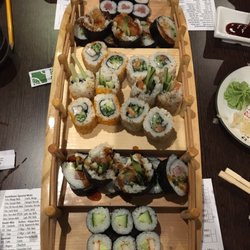
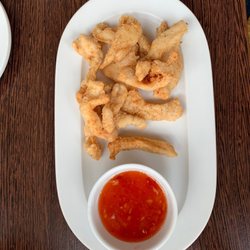
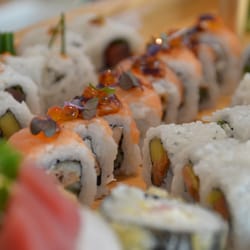
A later night meal because I was just not filled up enough with a mid-afternoon meal of traditional…read moreGerman food. Hey Mitchell, wish you were here, you'd have like this. I ate the following, which all were quite good, and reminded me of Takumi back home in Madison:
Maguro | Bluefin tuna | 95/100
Sake | Salmon | 90/100
Hirame | Flounder | 95/100
Saba | Mackerel | not scoring, it wouldn't be fair, I just don't care enough for mackerel
Hokkigai | Clam | 90/100
Ika | Squid/Calamari | 95/100
Tako | Octopus | 100/100
Tobbiko | flying fish roe | 95, almost as good as real beluga caviar
Ebi | Shrimp | 90/100
Amaebi | Shrimp | 90/100
Tomago egg with minced fish - not rated, this is basic stuff, hard to mess up
Inari tofu - not rated, this is basic stuff, hard to mess up
Overall score came to 93-and-a-third - pretty good, I enjoyed it very much. Sake, rice wine, that is, doesn't seem to be as available in Germany as in the US. I drank the Junmai. For my German-reading readers, here's the information on their Sake, in German, I'll try to get it into English for the majority of readers of my reviews. If I've committed any typos, please tell me kindly. German is NOT my first or second language, and it is hard. I've tried to put all diacritical marks that belong, in the right places. Okay, deutsch comes in second place, the English version is now, first:
Yamadanishiki no sato Jitsuraku / Tokubetsu Junmai
Clear, dry and at the same time strong-tasting from 100% Yamadanishiki rice and natural spring water from the Rokko mountains. Due to the particularly gentle and elaborate brewing tradition, this Shochu has its own special taste.
Honjozo Namazake
Elegant sake with a rounded and at the same time flavor-intensive bouquet. The special feature of this wholesome sake is its wonderfully volatile flavor. Due to the special production this sake tastes as it would fresh from the brewery.
Tokubetsuhonjozo / Yamada-Nishiki
This sake is made from the Yamada-Nishiki rice field in the Hyogo Prefecture on Honshu. This type of rice contains very little protein and therefore gives a delightfully refreshing taste. The Kyusui spring water used comes from Nishinomiya; also in the Hyogo Prefecture. This sake has a very elegant and exclusive taste, a real Honjozo sake.
A trilingual glossary:
Japanese | German | English
Sake | Lachs | Salmon
Maguro | Thunfisch | Bluefin or Bigeye Tuna
Ebi | Großgarnele | boiled or raw shrimp
Ama Ebi | Süsse Grönlandgarnele | Northern Prawns / Spot Shrimp
Kani | Krebsfleisch | crabmeat
Hamachi | Gelbschwanz | Yellowtail tuna
Ikura | Lachs Rogen | Salmon Roe
Unagi | Eingelegter Aal | Freshwater Eel pickled or preserved
Suzuki | Zander | Sea Bass
Hotata Gai | Jakobsmuscheln | scallop
Ika | Sepia | cuttlefish or squid
tako | Pulpo | Octopus
Saba | Makrele | mackerel
tamago | Japanisches Omlett | egg omelet, may contain minced fish
Kani Kama | Krebs Fleisch Imitat | imitation crab
Inari | Sojabohnen Taschen | Soybean/Tofu
_______________ deutsch _________________
Yamadanishiki no sato Jitsuraku/Tokubetsu Junmai
Klarer, trockener und gleichzeitig geschrnacksintensiver aus 100% Yamadanishiki-Reis und natürlichem Quellvasser aus den Rokko-Bergen. Durch die besonders schonende und aufwendige Brauart traditionelle Art erhält dieser Shochu seinen ganz besonderen Geschmack.
Honjozo Namazake
Eleganter Sake mit einem abgerundeten und gleichzeitig Geschmacksintensiven Bouquet. Das besondere Kennzeichen dieses bekömmlichen Sake ist sein herrlich fluchtiges Aroma. Durch die spezielle Herstellung schmeckt dieser Sake wie frisch aus der Brauerei.
Tokubetsuhonjozo/Yamada-Nishiki
Dieser Sake wird aus der Reissorte Yamada-Nishiki aus der Hyogo-Präfektur hergestellt. Diese Reissorte enthält wenige Eiweiße und bekommt dadurch einen herrlich erfrischenden Geschmack. Das für die Herstellung verwendete Kyusui Quellwasser stammt aus Nishinomiya, ebenfalls der Hyogo-Präfektur auf Honshu. Dieser Sake hat einen sehr eleganten und exklusiven Geschmack, eben einen Honjozo-Sake.