Cancel

Open app

Search

Knockagh Monument Photos
Recommended Reviews - Knockagh Monument

Your trust is our priority, so businesses can't pay to alter or remove their reviews. Learn more about reviews.
Yelp app icon
Browse more easily on the app
Review Feed Illustration
Photo of Lynne M.
36
426
478

16 years ago
Helpful 0
Thanks 0
Love this 1
Oh no 0

16 years ago
Helpful 0
Thanks 0
Love this 0
Oh no 0

14 years ago

Helpful 0
Thanks 0
Love this 0
Oh no 0

10 years ago
Helpful 0
Thanks 0
Love this 0
Oh no 0

14 years ago

Helpful 0
Thanks 0
Love this 0
Oh no 0

Verify this business for free

Get access to customer & competitor insights.

Verify this business

Jaffe Fountain - Jaffe Fountain, Belfast

Jaffe Fountain

(2 reviews)

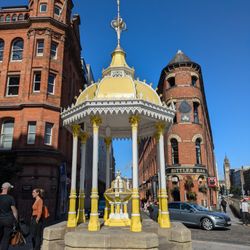
It looks like a jewelry box but it's actually the Jaffe Memorial Fountain. Striking and brightly…read morecolorful it was originally erected in 1874 by Sir Otto Jaffe to honor his father, Daniel Jaffe. It was initially placed in Victoria Square but was later moved to the Botanic Gardens, where it remained until 2008 It is intricate and elegant, made of Portland stone with each of the smaller columns featuring a female figure that represents each of the four seasons. It stands at the Victoria Street entrance to the Victoria Square shopping center. The original yellow and white were apparently selected to reflect the aesthetic preferences of the Victorian era, as these were popular colors to symbolize purity and light and optimism. It is indeed a fountain but in September it was dry. I'm not sure if it is ever filled with water. [Review 1883 of 2024 - 866 in United Kingdom - 22905 overall]

I bet you've walked past this wee gem hundreds of times but never given it a second look, I'm right…read morearen't I? Well now it's time to be enlightened. This is the Jaffa Fountain, not named after everyone's favourite cake/biscuit but actually named after Belfast's first Lord Mayor Otto Jaffa. The fountain itself was actually built in 1879 and it was erected in its current location, but here's the strange part. As industrial and commercial Belfast grew it was moved out to Botanic Gardens - mature students might recognise it from those days. Once Victoria Square was commissioned the decision was made to bring the old fellow back to its rightful place. I for one am glad they did as I think it provides a welcome nod to Belfast's past in the centre of its current commercial renaissance.

The Priory

The Priory

(2 reviews)

When you live in Newtownards you will pass the building a million and one times but not really…read morenotice it - which is a real shame as this is a historical building and part of the history and heritage of Newtownards. These are the remains of a Dominican Priory founded in 1244. Hugh Montgomery established a newtown within the grounds of the old priory and this flourished and was used as a central area for the new market town. The restoration of the building began in 1609 by Montgomery and this can be seen within the building on a carved stone. The ruins of the old tower and part of this old building can still be seen. If you look closely you can see Montgomery's monogram ad some bible references etched into the stone. In 1988 part of the old door was restored by the Ulster Heritage Center and the door will be opened on request, it is worth a look as this is a fine example of our ulster-Scot heritage and was, at one time, a big tourist attraction.

As other reviewers have said The Priory is slap bang in the middle of Newtownards yet you could…read morepass it without even registering as an important part of our culture and heritage. Although the budget is tight down at the old Tourist board they could do with digging into their pockets and forking out for a few signs to properly promote this place. The reason I say this is that The Priory is actually a really interesting place, I did not realise the significance of this place until I paid it a long overdue visit. The Priory is an example of a Dominican (Black) Piory and is one of the only remaining examples in Northern Ireland. The Priory is worth a visit if only for the convenience of the place, whether you are a day-tripper or a local The priory will at very least give you an insight into the regions culture.

King John's Castle - Historic 12th Century Carlingford Castle.

King John's Castle

(2 reviews)

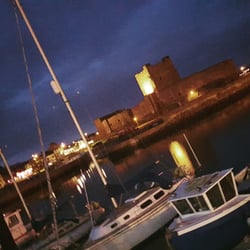
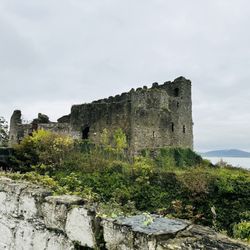
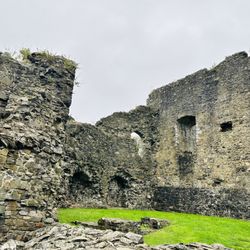
Carlingford is currently the home of President Joe Biden's Irish cousins. Great people. Just 8…read moremiles away. Carlingford is also a fine example of a medieval walled town, built at the time of the Normans in the 12th century. The Vikings had invaded Ireland in the 9th Century and historical records establish that they occupied Carlingford Lough. The name Carlingford is Scandinavian translating into 'Fjord of Carlinn'. The Normans arrived in Ireland in 1169 as allies of Irish King Dermot MacMurrough. By 1184 they had reached Carlingford. A Norman Knight, Sir John de Courcy claimed this part of Louth for himself. Sir John was a busy beggar. He arrived in Ireland in 1176 and by the time of his expulsion in 1204, he had conquered considerable territory, endowed religious establishments, built abbeys for the Benedictines (yes the monks that created champagne and benedictine), the Cistercians and he also built strongholds at Dundrum Castle in County Down and at Carrickfergus Castle in County Antrim. The very first historical reference to Carlingford dates to 1184 when Sir John gave the rights of the ferry at Carlingford to the Abbot of Downpatrick indicating that the harbour was in use as a ferry point. However, the town of Carlingford only developed after the castle known as King John's Castle was built. The castle today is a ruin, but it's still obvious what it was nearly a thousand years ago - a place of defence. As for its creator Sir John De Courcy, well he returned to Ireland, sailing across the Irish sea from the Isle of Man in July 1205 with Norse soldiers and a hundred boats. John and his army landed at Strangford and laid siege to Dundrum Castle in vain, because the defences he himself had made were too strong. King John then had John de Courcy imprisoned and he spent the rest of his life in poverty so the clerics he was so generous toward left him broke. He was subsequently released when he "crossed himself" to go on a pilgrimage to the Holy Land. De Courcy died in obscurity just outside what is now Craigavon - I suppose anyone who dies there still departs in obscurity as the best thing about Craigavon, even a thousand years later, is still the road out of it.

As you drive into Carlingford King John's Castle sets the scene for the magnificent historical…read morevalue of this town. The views from the ledge are amazing and worth the bit of climbing to get up to it! Transports you back in time as you see all the way over to Warrenpoint and soak up the atmosphere from days gone by. Look out for the plaques dotted around to learn more!

Templeton Mausoleum

Templeton Mausoleum

(1 review)

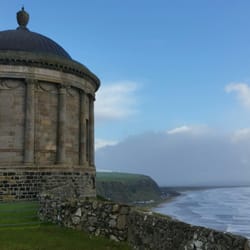
Generally people think it's a bit weird that I like graveyards, I guess it's hard to describe, but…read morethere's something about them that totally captivates and intrigues me. I wouldn't go as far as saying discovering this place made my day but finding this ancient piece of history right on my doorstep certainly added to the experience of being here. It's not just an old graveyard either; it's the site of an ancient mausoleum. It was absolutely fascinating seeing first hand all this history right in front of my eyes. I've never been in a mausoleum before, not that I'd make a habit of it admittedly, but I was captivated by the history held within (and under!) its walls. There were some incredibly old gravestones (some more than three hundred years old!) as well as a few important historical figures buried under the ground (most notably William Orr, a member of the United Irishmen who was executed in 1797) The mausoleum was built in 1789, suggested by Clotworthy Upton (what a name!) to commemorate his late brother. It was designed by Robert Adams, one of the many Adams family architects. It features some impressive classic urns, sarcophagi and intricate leaf detail. You'd need to see it yourself and feel the eerie atmosphere within to understand how I feel about this place. Spooky! In 1965 the mausoleum was donated to the National Trust who carried out extensive repairs to restore its original condition. It certainly is an eye opening and wonderful experience. Bonus: it's free. Note: Don't go in high heels!!

Standing Stone

Standing Stone

(2 reviews)

I have driven past this stone to many times to count but it was not until today that I thought I…read morewould go and have a look at it. Located on the shore between Millisle and Donaghadee this is North Downs very own Stonehenge, the only difference being it was erected probably by machinery in the 20th century. But that's just small print. It is actually a memorial to the late Major Richard Gustavus Heyn, who was owner of the once famous Ulster Steamship Company and a member of the flying corps during the first World War. The inscription has now been eroded by the Irish Sea Salt water. The land around the monument is owned by a local farmer but you can walk right up to the monument if you do not mind cows and cow pat. This is also be an ideal place to view Scotland across the Irish Sea on a clear day.

So I'd heard about the big stone before from my future father-in-law who is a member of the Ards…read morehistorical society. He knows I'm interested in the establishment of the churches in Ireland and that I have a particular love of the big green man himself - Sir Saint Patrick, bringer of St. Patrick's day and all the drinking that goes with it! Yee Haa! Anyways, i'm going off track, I decided to go out and have a look at the big rock thing and was put off immediately by how hard it is to access. I had to park my car in a nursing home, pet some cows so they knew I ment them no harm, climb a fence and walk through nettles - St Patrick himself didn't have as much bother as me getting over to Millisle I can bet. So, I though that the rock was a symbol to mark an area where St. Patrick was supposed to have handed when he was coming over to do his thing but it turns out the rock has nout to do with the green man at all and in fact was made and put there by human hands to remember a major and the owner of the Ulster Steamship Company. Some other historical stuff went on with this mayor man - I fell asleep listening to it to be honest - the rock was a let down. Took me a while to get to it, the land is wild and harsh and played havoc with my stilettos. It's an anti-climax, I returned to my car disappointed. I met a lovely cow though. She licked my face.

Knockagh Monument - landmarks - Updated May 2026

Loading...
Loading...
Loading...