Kanrin Maru Monument Photos


You might also consider

More like Kanrin Maru Monument
Recommended Reviews - Kanrin Maru Monument
Start your review...


Reviews With Photos


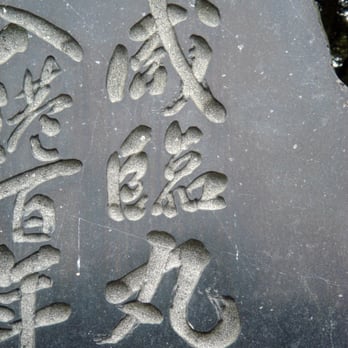
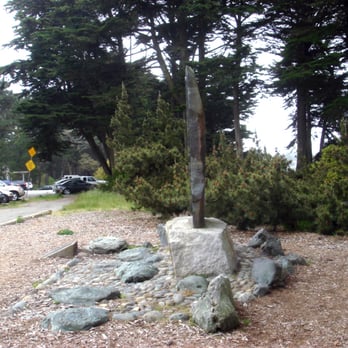
Depending on how much (in)attention you're paying to the map and how much you know about the installments surrounding the Legion of Honor, you might think this is the artwork in the parking lot. It isn't. This monument is on a rather unannounced patch of roadside to the right (if you're facing the Legion of Honor and your back is to the parking lot) or to the left (if you're facing the parking lot and your back is to the Legion of Honor). Even if you're looking in its general direction, you might not spot it initially. Since it's about a groundbreaking part of naval history between Japan and the United States, one might think the monument would be located closer to water or where the Kanrin Maru warship sailed into SF. I don't think it docked at the adjacent golf courses. On the other hand, since the Legion of Honor itself is in memoriam to soldiers with the purpose of "honor[ing] the dead while serving the living", I suppose the monument's location makes as much sense as any other suitable candidate. To honorable enlisted forces and allies past, present, and future: Thank you. Arigatou.


4 years ago
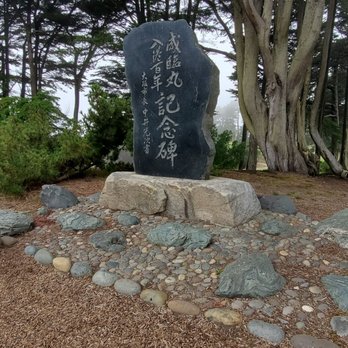
Located across from the Legion of Honor, this monument honors the arrival of the first Japanese naval ship in SF in 1860, an event leading to the first Japanese embassy in the U.S. It symbolizes friendship between the U.S. and Japan, and is definitely a thing of beauty, even in its simplicity. The plaques, especially on the ground and on the back side of the sculpture, are hard to read due to dirt and wear and tear. But otherwise, it has a really nice setup surrounded by various stones and tall trees in the background. It doesn't take long to pay a visit and check it out, and there's free parking right along the street as well as at the Legion of Honor (if the lot is not full). read more




10 years ago
November 24, 2016: The Karin Maru Monument via Legion Of Honor seems like it is a new monument added to the Presidio recently; this monument wasn't here when I was a child growing up in San Francisco. Furthermore, this monument's installation is in a prime location affording stunning background scenery of the Golden Gate Bridge. read more


Depending on how much (in)attention you're paying to the map and how much you know about the installments surrounding the Legion of Honor, you might think this is the artwork in the parking lot. It isn't. This monument is on a rather unannounced patch of roadside to the right (if you're facing the Legion of Honor and your back is to the parking lot) or to the left (if you're facing the parking lot and your back is to the Legion of Honor). Even if you're looking in its general direction, you might not spot it initially. Since it's about a groundbreaking part of naval history between Japan and the United States, one might think the monument would be located closer to water or where the Kanrin Maru warship sailed into SF. I don't think it docked at the adjacent golf courses. On the other hand, since the Legion of Honor itself is in memoriam to soldiers with the purpose of "honor[ing] the dead while serving the living", I suppose the monument's location makes as much sense as any other suitable candidate. To honorable enlisted forces and allies past, present, and future: Thank you. Arigatou. read more






14 years ago

13 years ago

13 years ago
Simple and serene. This memorial is a gift from Osaka, Japan, San Francisco's sister city to commemorate the arrival of the first warship (Kanrin Maru) sent from Japan to the United States as a friendly gesture at the start of diplomatic relations. It is located in Lincoln Park outside of the Legion of Honor Museum. The location is lovely, overlooking the Pacific Ocean with the Golden Gate Bridge in the background. I enjoy stopping by on my frequent visits to the museum. read more