To the three medical practices whose combined concern, expertise, and amazing speed excised and…read morecovered my surprise scalp cancer 14 days after its biopsy findings arrived, and just 7 days before my wife's long-scheduled shoulder replacement, thank you.
A year ago, concerned about one small area on my scalp, David Foster of
Perlmutter Dermatology froze it with liquid nitrogen. Not liking what re-grew, in early May he sent a surface biopsy whose alarming analysis he received on Thursday May 28: "...morphologic and immunophenotypic findings... consistent with an atypical fibroxanthoma. However, a pleomorphic dermal sarcoma cannot be excluded... Final diagnosis will rest upon examination of the completely excised specimen."
David referred us to Dr. Daniel Lee at the Williams Center, whose receptionist Paula called early Friday. Incredibly, she scheduled us to see Dr. Lee early on the next workday, June 1. This initial conversation, and every subsequent contact we had with Dr. Lee and his administrative and professional staff, showed their grasp of the threat we faced and the fears we felt, and we quickly learned that, professionally and personally, they would always respond generously, at a level far beyond our hopes.
Our sole priority had become excision of my scalp lesion. But on Monday morning, Dr. Lee proposed making a wide excision the following afternoon, because this quick, thorough resolution would also preserve my wife's planned June 17h surgery date. At 9:30 that evening, however, still considering our situation, he called to present another possibility. Warning us that in this area the average wait for a Mohs procedure was a month, and some Mohs surgeons did not work on sarcomas at all, he suggested that next morning his staff might explore whether a Mohs practitioner who did treat sarcomas might have an opening before Anne's surgery. If we heard nothing, we were to proceed to his office for that afternoon's already-scheduled excision.
On Tuesday, minutes before we were to head up the Northway for that procedure, Dr. Lee's office called to say that Mohs surgeon Dr. Steven Altmayer would remove my lesion the morning of June 10. A Mohs surgeon is both a dermatologist and pathologist, so minutes after removing each layer of a lesion, he can determine precisely what he is dealing with and whether further excision is required. In that time his nurse Kendra brought Anne back in to be with me.
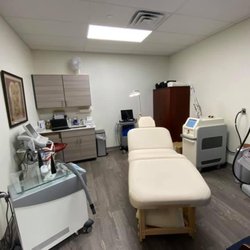
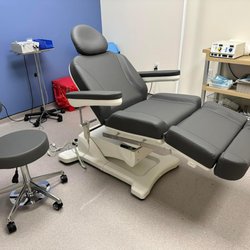
Fortunately, my malignancy turned out to be superficial, and Dr. Altmayer removed it in just two installments. With a pressure dressing on the open wound to minimize bleeding and prevent infection, my wife and I drove up the Northway to Dr. Lee's office for coverage of the defect in my scalp left behind. While we waited my scalp bled a little, and nurses reinforced the dressing. My wife made me eat lunch.
After finishing up with another patient, Dr. Lee spent two hours painstakingly creating this magnificent rotation flap. The attached photo was taken just seventeen days later; clearly, his work will soon be invisible.
Since both procedures were done under local anesthetic, I could hear fascinating comments throughout, even ask questions. During the Mohs procedure the nurse let Anne join me each time removed tissue was being analyzed. At the end, Dr. Altmayer told us that the growth was all shallow, never near the skull, completely removed with clean margins, and that I was in good shape. To my quip that at 81, I would be dying soon anyway, Dr. Altmayer replied, chuckling, "Not from this, and not on my watch."
Dr. Lee warned us beforehand that skin on the skull typically does not stretch much but, luckily, in my case it did - enough to permit that local tissue to cover the Mohs wound. He separated an area of skin larger than that defect, with thickness precisely equal to its depth, so that, once stretched into place, the whole area was level. I experienced no pain during either operation, only a sensation of pressure not usually present and, during creation of the flap, an awareness of skin being stretched. The days following the two procedures remained pain-free, though the sensation of the scalp being stretched faded over a day or two.
Dr, Lee removed my stitches on June16, one day sooner than usual, to accommodate my wife's June 17th surgery. We are both grateful to Dr. Lee, Dr. Altman, and all who worked to remove my scalp cancer in the short time between its diagnosis and the 17th. You freed us from worry about my possible sarcoma, and that freed us both to focus on her recovery.
For your expertise, willingness to see your patient's situation from their perspective, incredible speed, and kindness, we are both grateful.