John Dickinson Plantation Photos



More like John Dickinson Plantation
Recommended Reviews - John Dickinson Plantation
Start your review...


Reviews With Photos
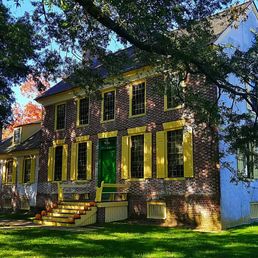

Been there twice. Once with school and the other time with my fiancée. It is free and they do accept donations. It is beautiful. Mostly all the info is correct. They do events.


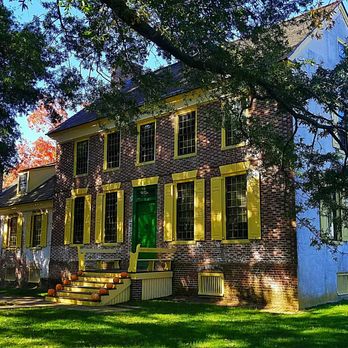
Backstory: The Dickinson Plantation house (also known as Poplar Hall) was built in 1740 by John's father Samuel who was a wealthy merchant and tobacco planter. John eventually inherited the house where he lived for short stretches until his death in 1808 especially during the Revolutionary War when one of the family's other homes in Philadelphia was confiscated and turned into a hospital. The house stayed in the Dickinson family until the 1950's when it was purchased by a non-profit group who then turned it over to the state of Delaware who spent three years restoring everything and eventually the house was opened as a museum in 1956. Dickinson actually was a central figure in the Revolutionary War even though for the most part you won't hear much about him since he was overshadowed by Adams, Washington, Franklin and Jefferson and even overshadowed in Delaware's own history of the time by Caesar Rodney. From US History.org: "Dickinson joined politics as a member of the Pennsylvania assembly in 1764, proceeded with the Stamp Act Congress in 1765 where he drafted the Resolutions of the Stamp Act Congress. It was also during this he wrote an important series of essays, Letters of a Pennsylvania Farmer, regarding the non-importation and non-exportation agreements against Gr. Britain. These essays were published in London in 1768 by Benjamin Franklin, and later translated to French and published in Paris. In 1774 he attended the first Continental Congress and wrote an Address to the Inhabitants of the Province of Quebec. There also, in 1775, and in combination with Jefferson, he wrote a Declaration of the Causes and Necessity of Taking Up Arms. Dickinson was opposed to a separation from Gr. Britain and worked very hard to temper the language and action of the Congress, in an effort to maintain the possibility of reconciliation. It was for this reason that he abstained from voting on and signing the Declaration of Independence. In what may have been a rather cruel joke, Thomas M'Kean (a signer of the Declaration), then president of Delaware, appointed Dickinson a Brigadier-General in the Continental Army. His Military career is said to have been brief. Dickinson was elected again to the Continental Congress in 1779, then to the Delaware Assembly in 1780. He was elected Governor of Pennsylvania in 1782 and served there until October, 1785. He joined the Constitutional Convention in Philadelphia in 1787 and afterward joined the chorus of writers promoting the new constitution, in a series of nine essays, using the pen name of Fabius. In 1792 he assisted in forming a new constitution for Delaware." With all of that writing it's easy to see why he earned the nickname of the "Penman of the Revolution". In addition to the above Dickinson earned a degree in law, was named at different times President of Delaware and Governor of Pennsylvania. He also donated over 500 acres of land in what is today Carlisle Pennsylvania which became the site for Dickinson College. If you go: You first go to the visitor center/barn to watch a short movie about the life of Dickinson and then you walk to the house where you are met by a guide in period dress who leads you through the basement, 1st and 2nd floors of the house. The house has two different halves in that the original part which was built by Samuel Dickinson is very plain but the later addition and post-fire renovation that John had added on show more more wealth by adding on more closets (closets were taxed in the 18th century), a very large kitchen area and expensive for the day paint colors. The visitor center and house are open from Tuesday-Saturday 10 a.m.-4:30 p.m. year round with Sundays from 1:30-4:30 p.m. added on from April 1 - Sept. 30. Total movie and tour time was an hour and change plus this can very easily be done with the nearby Air Mobility Command Museum which is less than five minutes away. The parking lot is large enough that I couldn't imagine there ever being a space issue and the cost is lovingly picked up by the fine taxpayers of Delaware so in other words, it's free.


2 years ago
Nice and free historic site of a childhood home for one of the nation's founding fathers. It's off the beaten path, but it's a big property. The visitor center has a small exhibit and an introductory film which is nice but the guide prefaces by saying it "focuses too much on John Dickinson" (?) The exhibit focuses more on the family and the enslaved/servants who lived there, which really rounded out the property, but we did come here because we wanted to learn more about John Dickinson. No gift shop, which was disappointing. The tour itself was very informative, and there was a big crowd visiting when I did. Again, the tour seemed to want to downplay Dickinson and his role in the American Revolution. Likely because he thought the colonies weren't prepared to go to war, he abstained from voting for independence, he is less remembered than other Founding Fathers, but I came to learn about him, and the guide wasn't all that interested in talking about him and what he did accomplish. Still, the furnishings were nice, and we got to learn about Dickinson's father, his wife and family, and his brother who all lived there with a focus on the lesser-known residents. I think that could have all been balanced better. The view of the river is lovely, and there are some out buildings and a garden to stroll through. It's a nice outdoor site, and for free, it's still a good site to visit to see history being preserved. read more
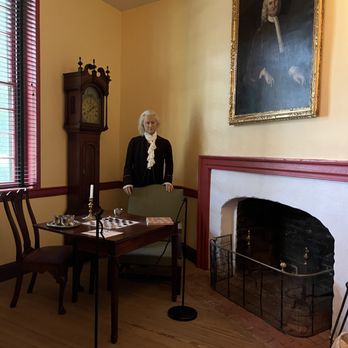

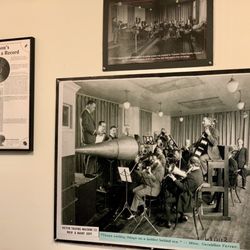
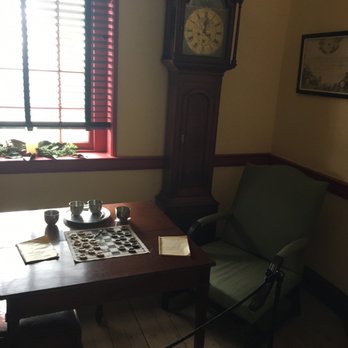
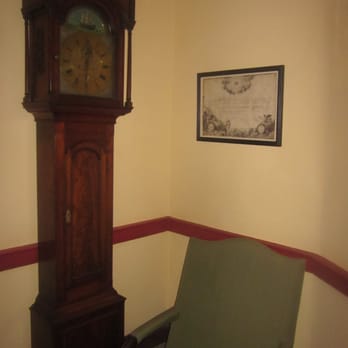
I like to go in old buildings, look at old furniture, but I am not much of a history person. The house was interesting to see, and there were a few pieces of furniture that I loved- such as the rope beds, the chair that was oversized, the large loom, and the travel clock that one of the Dickinsons took with him when he traveled. The guide was nice and interesting. That is saying a lot, because I can get bored very easily. She spent an adequate amount of time in each room. Before we took the tour, we had to see a movie, that was about 15 minutes long, mostly about history. We were the only people there, and I got up during the movie and looked at the other exhibits in the room. I would say travel here if you like history or old houses/furniture. read more




3 years ago

7 years ago
Been there twice. Once with school and the other time with my fiancée. It is free and they do accept donations. It is beautiful. Mostly all the info is correct. They do events. read more


11 years ago
Backstory: The Dickinson Plantation house (also known as Poplar Hall) was built in 1740 by John's father Samuel who was a wealthy merchant and tobacco planter. John eventually inherited the house where he lived for short stretches until his death in 1808 especially during the Revolutionary War when one of the family's other homes in Philadelphia was confiscated and turned into a hospital. The house stayed in the Dickinson family until the 1950's when it was purchased by a non-profit group who then turned it over to the state of Delaware who spent three years restoring everything and eventually the house was opened as a museum in 1956. Dickinson actually was a central figure in the Revolutionary War even though for the most part you won't hear much about him since he was overshadowed by Adams, Washington, Franklin and Jefferson and even overshadowed in Delaware's own history of the time by Caesar Rodney. From US History.org: "Dickinson joined politics as a member of the Pennsylvania assembly in 1764, proceeded with the Stamp Act Congress in 1765 where he drafted the Resolutions of the Stamp Act Congress. It was also during this he wrote an important series of essays, Letters of a Pennsylvania Farmer, regarding the non-importation and non-exportation agreements against Gr. Britain. These essays were published in London in 1768 by Benjamin Franklin, and later translated to French and published in Paris. In 1774 he attended the first Continental Congress and wrote an Address to the Inhabitants of the Province of Quebec. There also, in 1775, and in combination with Jefferson, he wrote a Declaration of the Causes and Necessity of Taking Up Arms. Dickinson was opposed to a separation from Gr. Britain and worked very hard to temper the language and action of the Congress, in an effort to maintain the possibility of reconciliation. It was for this reason that he abstained from voting on and signing the Declaration of Independence. In what may have been a rather cruel joke, Thomas M'Kean (a signer of the Declaration), then president of Delaware, appointed Dickinson a Brigadier-General in the Continental Army. His Military career is said to have been brief. Dickinson was elected again to the Continental Congress in 1779, then to the Delaware Assembly in 1780. He was elected Governor of Pennsylvania in 1782 and served there until October, 1785. He joined the Constitutional Convention in Philadelphia in 1787 and afterward joined the chorus of writers promoting the new constitution, in a series of nine essays, using the pen name of Fabius. In 1792 he assisted in forming a new constitution for Delaware." With all of that writing it's easy to see why he earned the nickname of the "Penman of the Revolution". In addition to the above Dickinson earned a degree in law, was named at different times President of Delaware and Governor of Pennsylvania. He also donated over 500 acres of land in what is today Carlisle Pennsylvania which became the site for Dickinson College. If you go: You first go to the visitor center/barn to watch a short movie about the life of Dickinson and then you walk to the house where you are met by a guide in period dress who leads you through the basement, 1st and 2nd floors of the house. The house has two different halves in that the original part which was built by Samuel Dickinson is very plain but the later addition and post-fire renovation that John had added on show more more wealth by adding on more closets (closets were taxed in the 18th century), a very large kitchen area and expensive for the day paint colors. The visitor center and house are open from Tuesday-Saturday 10 a.m.-4:30 p.m. year round with Sundays from 1:30-4:30 p.m. added on from April 1 - Sept. 30. Total movie and tour time was an hour and change plus this can very easily be done with the nearby Air Mobility Command Museum which is less than five minutes away. The parking lot is large enough that I couldn't imagine there ever being a space issue and the cost is lovingly picked up by the fine taxpayers of Delaware so in other words, it's free. read more






9 years ago

10 years ago
The John Dickinson Plantation is run by the state of Delaware. Historians are on hand to talk to you about the history of the mansion built by John's father, Samuel Dickinson. The house is not stuffed with antiques but rather sparse offerings. Still, it is a noteworthy house that belonged to a founding father and you will learn a good bit about life in 18th century America when the British monarchy was considered a menace rather than tabloid fodder to entertain the masses. If you're driving by Dover, Delaware, stop for a tour. The tours are free. The visitor's center is still a bit raw and in its infant stages but they do have a very clean bathroom. Stop in, say hello, and watch the ten minute film. I hope some day that they expand to have a gift shop and small museum for education but right now it's more like a house tour plus a small barn that still has freshly cut wood smell with benches to sit on and watch a short film about John Dickinson's contributions to early America. read more


11 years ago