Cancel

    Open app

    Search

    Indian Tower Photos

    Recommended Reviews - Indian Tower

    Your trust is our priority, so businesses can't pay to alter or remove their reviews. Learn more about reviews.
    Yelp app icon
    Browse more easily on the app
    Review Feed Illustration

    1 month ago

    Helpful 0
    Thanks 0
    Love this 0
    Oh no 0

    1 year ago

    Helpful 0
    Thanks 0
    Love this 0
    Oh no 0

    Verify this business for free

    Get access to customer & competitor insights.

    Verify this business

    The Highlands Mansion and Gardens - Highlands Mansion and Gardens

    The Highlands Mansion and Gardens

    4.8(4 reviews)
    42.6 mi

    An old library book, Gardens of Philadelphia, made me aware of Highlands Mansion, and…read morecoincidentally friends wanted to have a play date at Kids Castle, so on our way home we checked out Highlands. The mansion is apparently under restoration so I did not tour it, but I did see the gardens. While these gardens are nothing compared to the scale of the Brandywine DuPont estates, they are impressive for a former private residence. The most remarkable thing about them, to me, is their use of dramatic tall freestanding walls. Designers seem to agree that the best tool for success in landscaping is creating outdoor "rooms" or dedicated areas with hedged/fenced/walled/etc. boundaries to delineate and discern one outdoor space from another. I've toured many gardens domestic and abroad and I've never seen such a liberal use of wall structures that were apparently built solely for ornamental landscaping purposes (as opposed to ruins or retaining walls). Yes, you see decorative walls employed at Longwood and Chanticleer, but none so gigantic as these. Highlands was working with flat plain meadow and the goal seemed to be to create multiple garden-framed large lawn spaces, free of tree debris or too much shade to affect the grass. The walls are designed to tower as high as ornamental trees, but without the maintenance, root issues, leaf drop, etc. and they green-ify these walls with ivy trained all over them. Voila, vertical garden, architectural interest, height, and allowance for terrain diversification. I grew up adjacent to the trove of magnificent DuPont estates in the Brandywine Valley. I'm now fortunate to live 2 1/2 mi from Chanticleer and 7 1/2mi from Tyler Arboretum (Jenkins is closer but it doesn't appeal to me). I would recommend the destinations closer to me for full day visits, while Highlands gardens would only take a half hour for the formal area, and more if you choose to hike a trail or tour the manse. Still, it may be a half-day visit at most. While not a day trip destination on its own, it is a worthy stop if in the area, and I do recommend it to anyone interested in garden design who's already toured the others I mentioned. This is also an event venue, and the formal space is certainly made for such use, so it's lovely people can enjoy the space as it was intended when conceived.

    While the mansion is still undergoing renovations so we were not able to include that and so my…read morereview may change in the future. Don't expect to take even a full afternoon visiting but it is a lovely preserved estate around the city. There's some goats, and the grounds are enjoyable to take an hour or so to walk with nice historical signs for context. There is some parking but it likely gets packed in high traffic times. I can't put it in my top gardens available for Philadelphia, it's good to have treasures like these to keep the sense of history and love of horticulture the area has long held.

    Photos
    The Highlands Mansion and Gardens - Highlands Mansion and Gardens

    Highlands Mansion and Gardens

    The Highlands Mansion and Gardens - Highlands Mansion and Gardens

    Highlands Mansion and Gardens

    The Highlands Mansion and Gardens - Highlands Mansion and Gardens

    See all

    Highlands Mansion and Gardens

    Nazareth Borough Administration - Main Street Nazareth, PA.

    Nazareth Borough Administration

    1.5(2 reviews)
    0.7 mi

    The Boro of Nazareth just completed extensive work on Belvidere Street between Broad St and Main…read moreSt. now that the work is complete someone has cut a new hole in the new just replaced asphalt ? And politicians wonder why the general public is pissed. I'll bet if the money to do all the work came out of their pocket whatever is being done now ! I know I would make sure work being done last week would have included whatever they are doing now! What a waste!

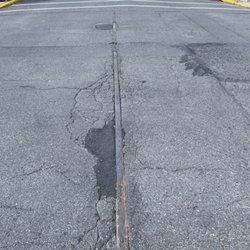
    This review addresses a public street safety concern in Nazareth, PA…read more At the Main and Mauch Chunk Streets intersection, at the very center of town, there is a 15-foot rut of exposed trolley track protruding through the road surface. This track, left since 1932, poses hazards for motorcycles, bicycles, strollers, wheelchairs, and pedestrians. Many individuals, especially those with mobility challenges, struggle to navigate this area; they get stuck in the groove and find it hard to steer out. This intersection is busy due to corner establishments such as an ice cream shop and a daycare, which attract families and seniors. Additionally, the Nazareth Borough Municipal Building is only a block away, making it a common route for police and local officials. While nearly all of Pennsylvania's roads have issues, this specific area is particularly risky. This review aims to raise awareness rather than criticize the Nazareth Borough Municipality, urging caution when using this intersection.

    Photos
    Nazareth Borough Administration - Nazareth Municipal Offices

    Nazareth Municipal Offices

    Nazareth Borough Administration

    See all

    Saylor Park

    Saylor Park

    4.5(2 reviews)
    10.4 mi

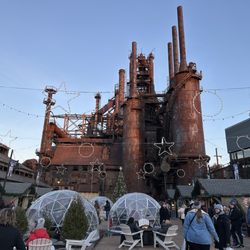
    First some history from the Internet about the site…read more "Coplay Cement Company Kilns, also known as the Saylor Park Industrial Museum, is an open-air historic site located at Coplay, Lehigh County, Pennsylvania. The nine kilns were built in 1892-1893, and used for the production of Portland cement. They are constructed of locally produced red brick, and are known as Schoefer vertical kilns. They were shut down in 1904. The Coplay Cement Company donated the kilns and surrounding land to Lehigh County in 1975, for a cement industry museum. It is operated as a partnership between the County of Lehigh, which owns and maintains the site, and the Lehigh County Historical Society, which provides educational services. It was added to the National Register of Historic Places in 1980. The Saylor Cement Museum honors David Saylor (1827-1884), the father of the American Portland cement industry, and the people who built this industry into one of the most important in the Lehigh Valley and the nation. Lehigh County was a natural spot for cement production. Cement is made from rocks containing lime, silica, and alumina; Lehigh County limestone "cement rock" contains all three ingredients. In 1866 David O. Saylor helped found Coplay Cement Company. In 1871, he received the first American patent for Portland cement, which is much stronger than the natural cement that had previously been produced in this country. Saylor's Portland cement built bridges, docks, jetties, roads, aqueducts, subways, and skyscrapers. By 1900 the Lehigh Valley made 72% of Portland cement produced in this country. The first kiln at the Coplay Cement Company was a dome kiln. Dome kilns were inefficient; they had to shut down often. In 1893 Coplay Cement built Mill B, containing the Schoefer kilns standing today. Originally enclosed in a large building, Schoefer kilns could run continuously. Soon, however, the even more efficient rotary kilns came into use. Mill B's outdated Schoefer kilns shut down in 1904, and Coplay Cement later used Mill B's buildings for storage." The four main things at Saylor Park would the remnants of the kilns, the playground, the community pool and it's a spot where you can pick up the Ironton Rail Trail. The key to this site at this point in time is trying to save the kilns. Lehigh County is trying to obtain the money needed to save the old furnaces which appear to be the last Aalborg style kilns left in the world. The current work being done at the site is due to a $200,000 federal grant with Lehigh County kicking in an equal amount to finish the work on Kiln #1. While nice, a full restoration of all the kilns is estimated at somewhere around $5 million dollars which is money that right now does not exist. Hopefully over time some type of public-private partnership can be formed to get the rest of the work done but in the meantime the site can be enjoyed at a distance and the Rail Trail that cuts thru the park is a fantastic repurposing of an old rail line that would never have been used again. If you go: The outdoor historic site, playground and Rail Trail are open daily year-round from sunrise to sunset and the Coplay Community Pool is open seasonally. Plenty of free parking is on site.

    This place is fantastic. Has a park and a bike trail that goes on for ever and a day. The old kilns…read moreor so fantastic. I felt like I was standing back in time. I recommend this place for anyone who want to get out and live. The history and modern meets here

    Photos
    Saylor Park
    Saylor Park
    Saylor Park

    See all

    Tomb Of The  Unknown Solider

    Tomb Of The Unknown Solider

    5.0(3 reviews)
    9.4 mi

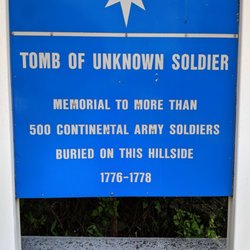
    It is truly a gem to stumble upon a tomb of an unknown solider. My husband found this location on…read moreroadsideamerica.com, nestled in a residential area in the town of Bethlehem, Pa, found between 1st Ave & Market St. It is believed that the soldiers buried here fought during the Revolutionary War. The American Revolution took place between 1775-1783. It occurred between the 13 North American colonies and colonial government (who supported the British Crown) and the fight for independence from Britain. A lot of history worthy things occurred from this timeline which included the congress vote to adopt the Declaration of Independence in 1776, Battle of Saratoga (in NY) and the Treaty of Paris. Obviously there was a whole lot more going on during this time period and highly recommend that you do your research and do this war justice in learning the history. After the Declaration of Independence was established, General George Washington (yes that Washington) and his army were driven out of New York by the British, and across New Jersey, into Pennsylvania. Because of that, numerous of hospitals were established in New Jersey and Philadelphia. General Washington moved north to the Lehigh Valley, and so other hospitals had to be established, including a hospital in Bethlehem, which became the main hospital in this area (which now is part of the Moravian College). Bethlehem was the perfect place to set up camp and a hospital as it was far enough from the front lines that was beyond the reach of the British. Unfortunately as wounded soldiers were kept in such close quarters, illness spread. Unfortunately there were many soldiers that did not make it back to Philadelphia and were eventually buried here in Bethlehem. In 1932, a single set of remains was placed here at this site. And then in 1996, three more unknown soldiers were added, as you can imagine that over time, homeowners may discover unknown soldiers when they accidentally dig up remains. On the tomb, a plaque reads "Within this crypt rest the bones of an unknown soldier in the War for Independence. He was one of more than five hundred men who died in the Continental Hospital here at Bethlehem and were buried on this hillside." May the remains of four Revolutionary War soldiers lie in peace.

    This reminded me of the stories my grandpa used to tell of when he fought in the civil war. When I…read moreentered the tomb I couldn't help, but start to cry. I felt the dark spirit of the unknown soldier enter my body and take over my soul and mind. I can still feel him with me today, he guides me. Highly Recommended, great for the kids

    Photos
    Tomb Of The  Unknown Solider
    Tomb Of The  Unknown Solider
    Tomb Of The  Unknown Solider

    See all

    Indian Tower - landmarks - Updated September 2026

    Loading...
    Loading...
    Loading...