Cancel

Open app

Search

Hove Methodist Church

3.0 (1 review)

Hove Methodist Church Photos

Recommended Reviews - Hove Methodist Church

Your trust is our priority, so businesses can't pay to alter or remove their reviews. Learn more about reviews.
Yelp app icon
Browse more easily on the app
Review Feed Illustration

11 years ago

Helpful 1
Thanks 0
Love this 0
Oh no 0

Verify this business for free

Get access to customer & competitor insights.

Verify this business

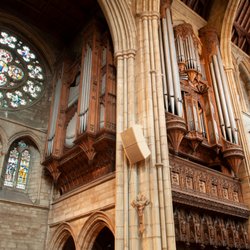
All Saints Hove - Double-fronted organ case, design by the church architect's son

All Saints Hove

5.0(1 review)
0.6 mi

The church's website describes All Saints as 'one of the finest churches of the nineteenth century…read moreGothic Revival'. Possessed of an extraordinary interior, it was much admired by the eminent architectural historians Pesvner and Sir John Summerson, and is well worth seeking out. The church was the vision of Thomas Peacey, the first Vicar of Hove when it was made a parish in its own right in 1879. He rebuilt the old church (St Andrew's) and erected another (St Barnabas), before turning his attention to providing a new and spacious Parish church. The architect chosen was John Loughborough Pearson, viewed by many as the greatest architect of the Victorian Gothic revival. Amonst other things, he was responsible for the new cathedrals of Truro and Brisbane, as well as many churches in London. All Saints was to become the largest and costliest of his parish churches. Work began in 1889 and was largely completed by 1901, although the base of the tower was not finished until 1922 (and the remainder of the tower has, unfortunately, never been completed). Pearson chose a French C13th Early Decorated Gothic style for the new church, which is built of Sussex sandstone, and roofed with Sussex oak. The outside is attractive enough, with strong pinnacles around the south transept and chancel, although the tower base looks forlorn with its humble pyramidal cap. But the interior is breathtaking. For a start, the scale and proportions are those of a cathedral: the nave is 40ft wide, and flanked by generous aisles. And the walls are entirely faced with ashlar stone - clear evidence of no expense having been spared. The plan is conventional, with an aisled nave, short transepts, south chapel and chancel. The nave is particularly impressive: five bays of clustered piers rise through large clerestoreys towards transverse roof arches. These provide a repetitive pattern against the dark wooden roof, emphasising the height and leading the eye towards the chancel. Only the south chapel and sanctuary have stone vaults. The windows are equally impressive, and the church carries an almost complete scheme of stained glass by the famous company of Clayton and Bell. The north transept has three twin-light windows with a rose window above, whereas the south transept has a magnificent five-light window. The furnishings are equally impressive and lavish: pride of place goes to a stunning high-Victorian stone reredos, of Pearson's design and carved by Nathanial Hitch. There is elaborate wooden carving everywhere, most notably the screens of the South Chapel, the choir stalls and the amazing organ case, the latter designed by Pearson's son, Frank Pearson. The marble font is a later addition, dating from 1928, and carries a large ornate wooden cover. Although the pews have been removed, the replacement chairs are reasonably sympathetic, and the interior is very well maintained. The church takes advantage of the splendid setting to stage a wonderful Sung Eucharist, every Sunday at 10h. During the summer, they also host classical music concerts every Thursday, May to September (free to enter but donations requested), and lay on tea, coffee and biscuits. The church also has an active programme of children's groups, as well as other outreach and support groups. Details of other services and events can be found on the website.


From the owner: All Saints Hove is an inclusive catholic parish in the Church of England. We believe that there is…read morea place for everyone to receive the unconditional welcome of God, and we are a member of the Inclusive Church network. We seek to give to give a voice to those on the margins in our society and use our facilities to support the homeless and vulnerable and champion the outcast and poor. Whether you are looking for a grand period event space or a casual, cost-effective location to run classes or meetings, we make various spaces available for hire, for the purpose of offering community services and strengthening community spirit and bringing residents together.

Photos
All Saints Hove - The chancel façade of the William Hill & Sons pipe organ

The chancel façade of the William Hill & Sons pipe organ

All Saints Hove - Nave, looking east

Nave, looking east

All Saints Hove - High altar, viewed from the choir stalls

See all

High altar, viewed from the choir stalls

St Andrews Old Church Hove

St Andrews Old Church Hove

4.0(1 review)
0.5 mi

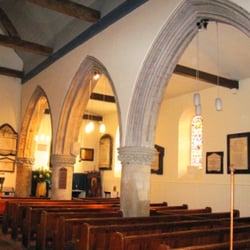
St Andrew's 'Old Church' is so-called to distinguish it from the newer St Andrew's church built in…read moreWaterloo Street in Hove in 1828. As a settlement, Hove dates back at least to Roman times, although the first historical references appear during the Saxon period, when Earl Godwin held 'How' as part of his lands before the Norman conquest. We don't know if there was a church here in Saxon times, but in the 12th century there was certainly a simple church here with a nave and tower, probably in the Transitional style, to which a chancel was added in the 13th century. The parish was merged with that of Preston in 1531, and it continued as the parish church until the 19th century, although by that stage it was pretty ruinous: a fire in the 16th century started things off, the nave was partially roofless by 1780 and in 1801 what was left of the tower collapsed. However, the growth of Hove as a resort changed its fortunes: although the 'new' St Andrews was opened in 1828, it was recognised that the original parish church would need to be restored to house swelling congregations. The restoration was carried out by George Basevi (1794-1845), architect of the FitzWilliam Museum at Cambridge, during 1833-36. Some of the fabric, most notably the early gothic arcades and the 14th century king-post roof were retained, as well as the remains of the Early English Gothic chancel. However, the exterior (including the tower) and aisles were rebuilt in flint with stone dressings in the 'neo-Norman' style: Pevsner's Buildings of England describes it as 'uninspired' but, compared with many of its surroundings today, I think it is a rather handsome addition to this part of Hove: certainly much more so than the shed-like Tesco superstore plonked next door. The churchyard - although reduced in size over the years - is also still attractive and retains a number of interesting tombs and family vaults. The main interest inside the church today - besides the impressive kingpost roof - is its interesting range of memorials: these include: - Admiral Westphal, who died in 1875 at the age of ninety: he was the last surviving officer who fought on board the Victory, under Nelson, at the battle of Trafalgar. When he was wounded, his head was placed on Nelson's rolled up jacket; - the Latin tablet over the pulpit to Joseph Pecchio (d. 1835), an Italian political exile and an early exponent of economics; - the family of the architect, George Basevi (he himself is buried in Ely Cathedral, where he died falling from one of the towers); - the watercolour artist Copley Fielding (d. 1855). There are several other attractive memorials - an unusally large number of which seemto relate to members of the military. Outside the church is the grave of Sir George Everest (1790-1866), whose major contribution to the trigonometric survey of India resulted in the eponymous peak being named after him. The interior also has some pretty Victorian and Edwardian glass. The church ceased to be the parish church when Pearson's huge All Saints was completed in 1892 a mile away, but a smaller parish was carved out for St Andrew's in 1957. It is now a very active and busy church, full of families and children at its Sunday services.

Photos
St Andrews Old Church Hove

See all

St Philip C Of E Church

St Philip C Of E Church

4.5(2 reviews)
0.5 mi

St Leonard's is an ancient foundation, now much rebuilt and in a firmly suburban setting, and…read moreeffectively in Portslade. The main offices of the Diocese of Chichester sit alongside. History Originally an Anglo-Saxon settlement, Aldrington is mentioned in the Domesday Book as Eldretune but there is no mention of a church. The predecessor of the present building was erected in the 13th century, but a gradual decline of the settlement hastened by severe storms in 1703 and 1705 meant that by 1800 there were just two people in the parish and the church was largely ruinous (the roof having collapsed in 1738). 18th century drawings show it as a single celled building with lancets and a tower. The arrival of the railway in nearby Portslade in 1840 stimulated a slow process of suburban development, and the church was rebuilt in 1876-8 by Richard Herbert Carpenter (1841-93). He largely followed the pattern of the original building, although the roundel above the two east lancets was replaced by a sexfoil. Further suburban development necessitated another expansion, consisting of a nave and baptistery to the north (1931) with a new chancel (1936), both by Milburn Pett. This effectively relegated the original church to form a large south aisle, with an arcade of square piers between. A planned north aisle was never built, and the 'temporary' brick facings on the north wall contrast with the knapped flints elsewhere. The arcade has, in recent times, been partitioned so the nave and south aisle now form two separate spaces. The church The church sits in a pretty and overgrown churchyard (the noticeboard explains that this is intended to foster a wildlife reserve). The carefully knapped flint walls give away its relatively modern origins, but the shingled broach spire, lancets and pretty carved porch give it a rural air. The interior is something of a surprise after this introduction, as the nave and chancel are wide and bright and contrast sharply with the original church. Pevsner didn't like Pett's work at all, describing it in the Sussex volume of the 'Buildings of England' as very horrible. Furnishings are all modern, with some Clayton and Bell glass in the south aisle (the original church).

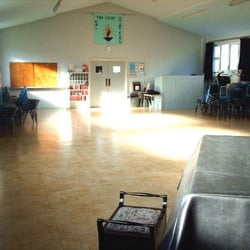
The Church Hall at St Phil's on Church Road is a useful amenity that plenty of Hove people don't…read moreknow about. It's available for hire and represents great value for money. I used it recently as the venue for a meeting of local people and thought it good value and very well maintained. You could use the hall for parties or other events too.

Photos
St Philip C Of E Church

See all

Hove Methodist Church - churches - Updated May 2026

Loading...
Loading...
Loading...