Herculaneum
Herculaneum Photos


Recommended Reviews - Herculaneum
Start your review...


Reviews With Photos


"Herculaneum was buried under volcanic ash and pumice in the eruption of Mount Vesuvius in AD 79." - Wikipedia The question many people have is Herculaneum or Pompeii? The answer is both because they're different, but if you really only have time for one, then it's Pompeii for sure because of its vastness, popularity, and history. While Herculaneum is less known and smaller, it's worth a visit because many of the homes/paintings are more well preserved. Also, as far as craziness goes, you can see old real human bones at Herculaneum whereas you cannot in Pompeii. Note that Herculaneum has its own parking lot so you don't need to park on the street.


I really wanted to like Herculaneum because people told me it was better because it's more well preserved than Pompeii. While it is more preserved, my experience was not very enjoyable. I didn't do this with a tour (it was expensive), and it felt very meaningless doing a self-guided tour. There was very little written information next to each building, so I just had to guess the story behind each one. I listened to some tour guides from a distance, though, and the stories were interesting.


Leisure travel is luring us (huge sighs). While we can't travel abroad just yet, we can always daydream about it. Let's take you to some ancient ruins in Southern Italy. The modern day city of Ercolano is in the presence of ancient Ercolano, also called Herculaneum. While smaller than Pompei, Ercolano had more wealth. Even with more wealth, it hadn't stopped the destruction of the town, by fuming ashes from Mount Vesuvio's eruption. Below the city's surface are large closet areas where women and children hid to "try" and stay safe. Little did they know about their demise. The lava seaped its way through. After excavations, you can find an amazing preservation of the intricate mosaic floor with the movement of the land beneath!!! If this sparks your interest, remember there are multitudes of video tours on the internet or streaming apps. You may also check out my reviews and photography on Scavi di Pompei, Scavi di Ercolano and Mount Vesuvius in Naples, Italy. Whatever keeps your sanity sane! ; )


We went to this place on our way to Almafi coast. It is also recommended by several Italian friends o er Pompei since it is well reserved and smaller than Pompei. The entrance is opened at 830 AM, 11 euro per person. They do take credit card or cash. It takes us about 1-2 hour to explore the ruin on our own. We got here at 10 AM and were able to escape the crowd. The ruin is interesting with many old house and decors well-preserved. Make sure to wear flat and support shoes since the pavement is uneven.


I would rec this site as opposed to Pompeii. Though research shows that Herculaneum is smaller, the ruins are more visible. The crowd here wasn't that bad as how Pompeii might get since it's more widely famous. Admissions was 11 euros per person. There are guides speaking various languages hanging around who you can additionally hire. Or, you can grab the info booklet and guide yourself. There's also an audio tour you can rent as well. When you first enter, you get an overview of the whole area as the city is somewhat sunken below the modern city surrounding it. Which in truth was impressive to see but wasn't wowing at first. It wasn't until the hubs and I got down amongst the rubble and stones that I became amazed that people lived here ages ago. This was their lives until it all ended. Traveling thru the various cities of Italy, visiting Herculaneum was my most fav and most educational. Psst. There are skeleton corpses to be seen, but they are at the very bottom area near the entrance with the tunnel leading to the small lake with all the loud frogs. It looks like a small marshland area. Also, there are (free) restrooms to use. I would advise using it beforehand as you traverse the maze-like ruins. You can expect to spend a good half day here. We walked thru about half of it, and it took a couple of hours with stops here and there for pictures and reading the info booklet.


Located in the shadow of Mount Vesuvius, Herculaneum was an ancient Roman town destroyed by volcanic pyroclastic flows in 79 AD. Herculaneum is one of the few ancient cities to be preserved more or less intact, with no later accretions or modifications. Like its sister city, Pompeii, Herculaneum is famous for having been buried in ash, but unlike Pompeii, the pyroclastic material that covered Herculaneum carbonized and thereby preserved wood in objects such as roofs, beds and doors as well as other organic-based materials such as food. Although it was smaller than Pompeii, Herculaneum was a wealthier town, possessing an extraordinary density of fine houses with, for example, far more lavish use of colored marble cladding.


Herculean is a smaller city than Pompei and lesser known. Unlike Pompei which takes hours to get around you can get around Herculean in about 2 hours. It's very interesting as you can see what life was life before 79 DC when the volcano Vesuvius erupted. There are some bones, most likely casts depicting how people rushed to the shoreline before succumbing to the ash and heat. Only issue would be that they should have more information posters around and the only way only way to find out more is to hire a tour guide. They're quite expensive although they do have audio guides
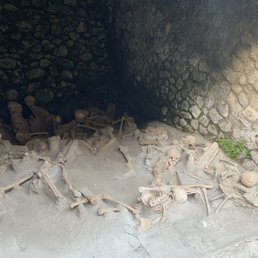

This place is definitely on my top ten places. I love Hercvlanevm, it's so cool, and I liked it better than Pompeii! The staff is so friendly, there's less people, you get to see more rooms and get a more closer experience than in Pompeii. You also get to see human skulls that you don't see at Pompeii. I took the audio tour and it was very easy, you just push in the number of the site that your at and you get a 1-3 minute history of it and go at your own pace. I would recommend this to anyone visiting Naples


Herculaneum is the lesser-known but equally-amazing cousin of Pompeii. When somebody talks about the eruption of Mount Vesuvius, Pompeii is the first thing that came to mind but Herculaneum does not get the same recognition. At the small hostel we stayed in Napoli, the owner talked to us about the importance of both Pompeii and Herculaneum and said that we should definitely visit both, as we would have a completely different experience at each. He was definitely right. Herculaneum was a town much smaller than Pompeii. During the eruption of Vesuvius, this site was his by the pyroclastic flow (instead of the ash that covered Pompeii). For this reason, most of the structures here are still in great condition and a lot of the frescos can also be seen in their original state. Because of its compact size, visiting Herculaneum is not a daunting task. Unlike Pompeii, a 2-hour visit would be sufficient to fully experience this historic site. Getting to this site is not difficult. Frequent trains operate between Napoli and the town of Ercolano (Italian name of Herculaneum). A-10 minute walk from the train station through the town center will get you to the doors of the historic site. There are souvenir shops, a small café, and bathrooms on site for visitors to use. I definitely recommend visiting this site!
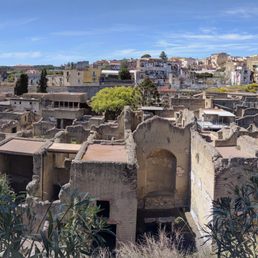

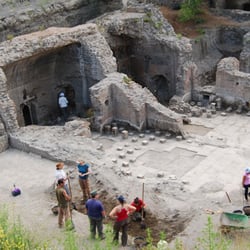
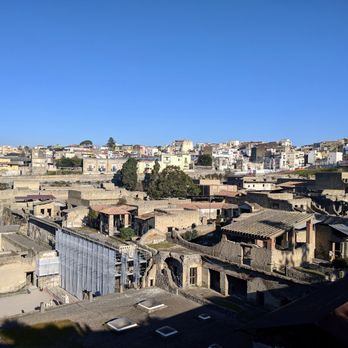
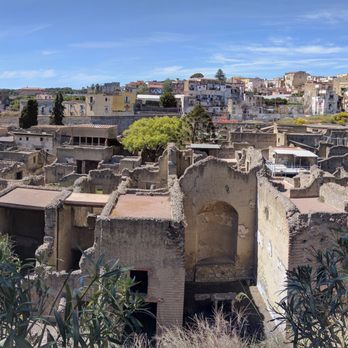
Much smaller than Pompeii, but it is much better preserved. It is truly amazing to see this city inside of a pit that is basically beneath the modern city of Ercolano. Not only can you go down and visit everything up close, but it is great that you can walk around most of the perimeter of the pit to get a good look at the ruins from above as well. Even if you don't do the tour you can walk along the entrance and get a good look at the ruins of the town for free. It is amazing to see how advanced the ancient Romans were.

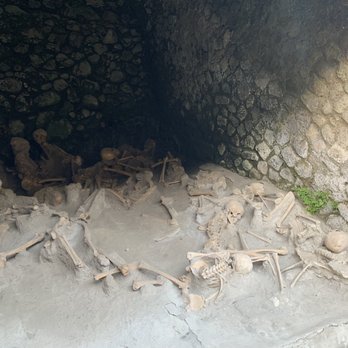
A prime reason to not live near an active volcano, Herculaneum is not as famous as Pompeii, nor is it as large a site. It's approx 1/4th the size but stunningly well preserved. Many of the building retain their respective second stories, and the mosaics are beautiful. The skeletal remains in the boat houses are plaster casts ( the originals are too fragile to remain exposed to the elements). The site closes at different times throughout the year-when we visited in January the last entrance was at 15:30 and the site closed 2 hours later. We just made it and could have spent longer; however, we saw most of the site in that time. Conversely, Pompeii takes several hours to fully explore. You can see Vesuvius looming nearby (unfortunately, it's often encumbered by poor visibility during the winter) Be careful when taking the local trains to both sites: there are stops for Ercolano and Pompei but the stop you want is Scavi (which takes you to the excavation site) Consider a visit to the national archeological museum should you have time. It's a large museum that houses many of the artifacts from both sites and it's worth a visit (closed on Tuesday's)
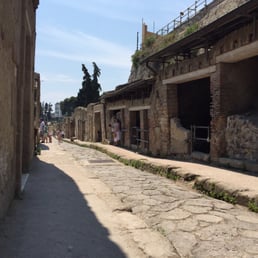

If you have a short amount of time when visiting Napoli (Naples) and want to see ancient Romans, then Herculaneum is a great option. Highlights/Tips: + Can be reached by public transportation; however, there is a bit of a walk from the stop + Extremely well preserved + While smaller than Pompeii, there are less crowds and you can easily see all structures and key sites with a 2.5 hour visit depending upon how long you stand and look. + If you really want a more in depth understanding of the site, I'd go with a guide. While you can do a self guided tour, I feel that a guide can provide much more context and clue you in on additional things + Accessibility- some may find the experience a bit strenuous; however, the roads/ paths into the structures are much easier to navigate than Pompeii. They seem to be much flatter and not as steep. If you are a wheelchair user, I would highly recommend seeking recommendations from other individuals as I can't speak to this. +Shade- This is especially important during the summer months. There are more shady spots to be found in the Herculaneum. I would recommend going in the Gymnasium cave like area if you really need to cool down. ***Watch your step, especially if it has rained and/or just in general. Some of the areas for walking are uneven stones and I saw quite a few older individuals slip and cause themselves potentially ending vacation injuries on the day I went. read more


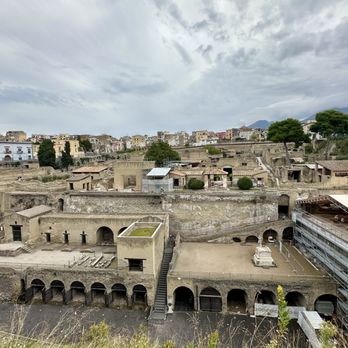


We wanted to tour some Vesuvius ruins, and like most people assumed Pompeii was the place to go. But luckily while researching I found Herculaneum...the much smaller and closer option for our brief stay in Naples. The train station was a short walk away. They provide (and require) free lockers for large backpacks. The grounds are fairly small and therefore quite manageable to wander in a couple hours. Everything was neat and clean, signed well, and easy to tour on your own...although there are guided tours of course. read more


2 years ago
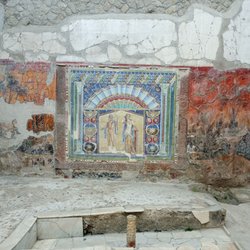
I've had never been to either Herculaneum or Pompeii so I cannot give advice as to which is better than the other. I have now been to Herculaneum so maybe one day I'll have that opinion but not now. I will say that I did enjoy myself at Herculaneum. It was so well preserved that part of my brain really had a hard time believing that all of this was buried under ash and pumice for over 1500 years. And come to find out that it had been in disrepair for the last 200 years until the very early 2000's, seeing these structures was incredible. I had absolutely no idea what to expect, as I had no knowledge of this place when I got there. I assumed there would be more information on site but there really wasn't. I would highly recommend hiring a guide or getting the audio guides. I have a little regret over not doing that. Afterwards, since it was so interesting, I did some online research of the history of the place and wish I had this knowledge while I was there. Don't be like me. And if you are, at least open up the Wikipedia while you are onsite to get some reference to what you are looking at. I will say though, my intuition was fairly right and visiting this place was special because you can tell right off the bat that rich people lived in this town. Because of that, there are a lot of pretty things to look at, like the marble and mosaics. Also, the preserved wood is absolutely incredible and I seriously still have a hard time believing some of it's original and not placed there by our modern society. read more


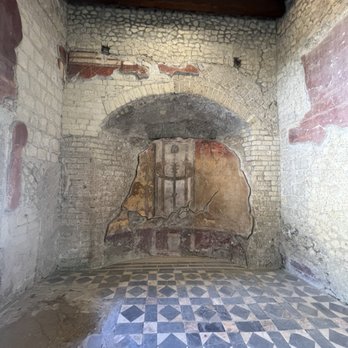
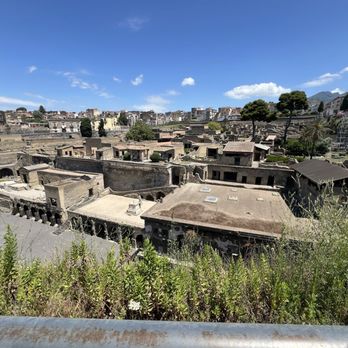


"Herculaneum was buried under volcanic ash and pumice in the eruption of Mount Vesuvius in AD 79." - Wikipedia The question many people have is Herculaneum or Pompeii? The answer is both because they're different, but if you really only have time for one, then it's Pompeii for sure because of its vastness, popularity, and history. While Herculaneum is less known and smaller, it's worth a visit because many of the homes/paintings are more well preserved. Also, as far as craziness goes, you can see old real human bones at Herculaneum whereas you cannot in Pompeii. Note that Herculaneum has its own parking lot so you don't need to park on the street. read more


I really wanted to like Herculaneum because people told me it was better because it's more well preserved than Pompeii. While it is more preserved, my experience was not very enjoyable. I didn't do this with a tour (it was expensive), and it felt very meaningless doing a self-guided tour. There was very little written information next to each building, so I just had to guess the story behind each one. I listened to some tour guides from a distance, though, and the stories were interesting. read more


Leisure travel is luring us (huge sighs). While we can't travel abroad just yet, we can always daydream about it. Let's take you to some ancient ruins in Southern Italy. The modern day city of Ercolano is in the presence of ancient Ercolano, also called Herculaneum. While smaller than Pompei, Ercolano had more wealth. Even with more wealth, it hadn't stopped the destruction of the town, by fuming ashes from Mount Vesuvio's eruption. Below the city's surface are large closet areas where women and children hid to "try" and stay safe. Little did they know about their demise. The lava seaped its way through. After excavations, you can find an amazing preservation of the intricate mosaic floor with the movement of the land beneath!!! If this sparks your interest, remember there are multitudes of video tours on the internet or streaming apps. You may also check out my reviews and photography on Scavi di Pompei, Scavi di Ercolano and Mount Vesuvius in Naples, Italy. Whatever keeps your sanity sane! ; ) read more


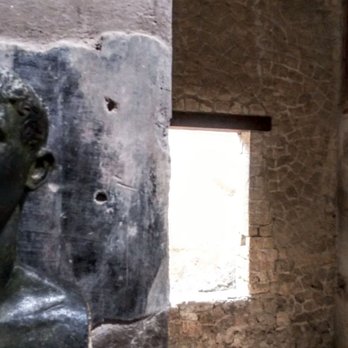


We went to this place on our way to Almafi coast. It is also recommended by several Italian friends o er Pompei since it is well reserved and smaller than Pompei. The entrance is opened at 830 AM, 11 euro per person. They do take credit card or cash. It takes us about 1-2 hour to explore the ruin on our own. We got here at 10 AM and were able to escape the crowd. The ruin is interesting with many old house and decors well-preserved. Make sure to wear flat and support shoes since the pavement is uneven. read more

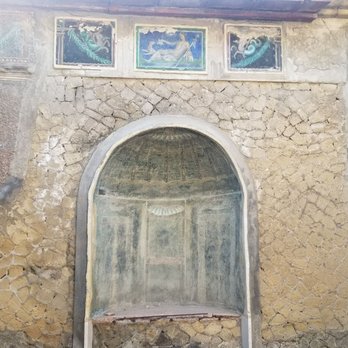


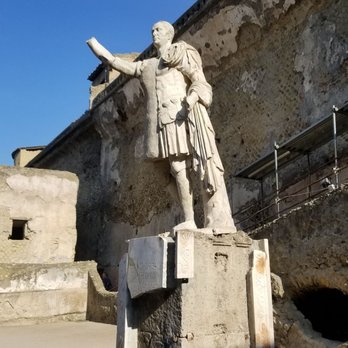

I would rec this site as opposed to Pompeii. Though research shows that Herculaneum is smaller, the ruins are more visible. The crowd here wasn't that bad as how Pompeii might get since it's more widely famous. Admissions was 11 euros per person. There are guides speaking various languages hanging around who you can additionally hire. Or, you can grab the info booklet and guide yourself. There's also an audio tour you can rent as well. When you first enter, you get an overview of the whole area as the city is somewhat sunken below the modern city surrounding it. Which in truth was impressive to see but wasn't wowing at first. It wasn't until the hubs and I got down amongst the rubble and stones that I became amazed that people lived here ages ago. This was their lives until it all ended. Traveling thru the various cities of Italy, visiting Herculaneum was my most fav and most educational. Psst. There are skeleton corpses to be seen, but they are at the very bottom area near the entrance with the tunnel leading to the small lake with all the loud frogs. It looks like a small marshland area. Also, there are (free) restrooms to use. I would advise using it beforehand as you traverse the maze-like ruins. You can expect to spend a good half day here. We walked thru about half of it, and it took a couple of hours with stops here and there for pictures and reading the info booklet. read more


7 years ago
Located in the shadow of Mount Vesuvius, Herculaneum was an ancient Roman town destroyed by volcanic pyroclastic flows in 79 AD. Herculaneum is one of the few ancient cities to be preserved more or less intact, with no later accretions or modifications. Like its sister city, Pompeii, Herculaneum is famous for having been buried in ash, but unlike Pompeii, the pyroclastic material that covered Herculaneum carbonized and thereby preserved wood in objects such as roofs, beds and doors as well as other organic-based materials such as food. Although it was smaller than Pompeii, Herculaneum was a wealthier town, possessing an extraordinary density of fine houses with, for example, far more lavish use of colored marble cladding. read more



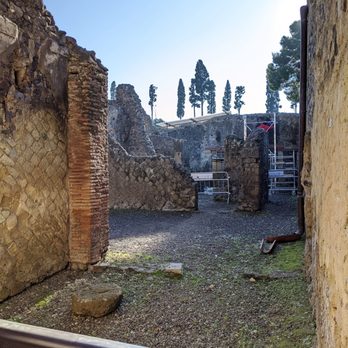

Herculean is a smaller city than Pompei and lesser known. Unlike Pompei which takes hours to get around you can get around Herculean in about 2 hours. It's very interesting as you can see what life was life before 79 DC when the volcano Vesuvius erupted. There are some bones, most likely casts depicting how people rushed to the shoreline before succumbing to the ash and heat. Only issue would be that they should have more information posters around and the only way only way to find out more is to hire a tour guide. They're quite expensive although they do have audio guides read more


7 years ago
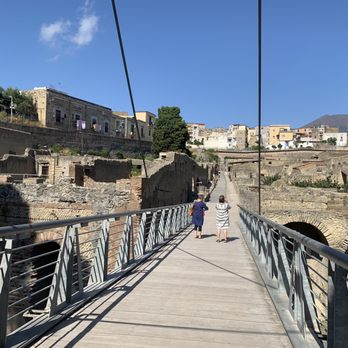
This place is definitely on my top ten places. I love Hercvlanevm, it's so cool, and I liked it better than Pompeii! The staff is so friendly, there's less people, you get to see more rooms and get a more closer experience than in Pompeii. You also get to see human skulls that you don't see at Pompeii. I took the audio tour and it was very easy, you just push in the number of the site that your at and you get a 1-3 minute history of it and go at your own pace. I would recommend this to anyone visiting Naples read more





4 years ago

Herculaneum is the lesser-known but equally-amazing cousin of Pompeii. When somebody talks about the eruption of Mount Vesuvius, Pompeii is the first thing that came to mind but Herculaneum does not get the same recognition. At the small hostel we stayed in Napoli, the owner talked to us about the importance of both Pompeii and Herculaneum and said that we should definitely visit both, as we would have a completely different experience at each. He was definitely right. Herculaneum was a town much smaller than Pompeii. During the eruption of Vesuvius, this site was his by the pyroclastic flow (instead of the ash that covered Pompeii). For this reason, most of the structures here are still in great condition and a lot of the frescos can also be seen in their original state. Because of its compact size, visiting Herculaneum is not a daunting task. Unlike Pompeii, a 2-hour visit would be sufficient to fully experience this historic site. Getting to this site is not difficult. Frequent trains operate between Napoli and the town of Ercolano (Italian name of Herculaneum). A-10 minute walk from the train station through the town center will get you to the doors of the historic site. There are souvenir shops, a small café, and bathrooms on site for visitors to use. I definitely recommend visiting this site! read more


Much smaller than Pompeii, but it is much better preserved. It is truly amazing to see this city inside of a pit that is basically beneath the modern city of Ercolano. Not only can you go down and visit everything up close, but it is great that you can walk around most of the perimeter of the pit to get a good look at the ruins from above as well. Even if you don't do the tour you can walk along the entrance and get a good look at the ruins of the town for free. It is amazing to see how advanced the ancient Romans were. read more


9 years ago
A prime reason to not live near an active volcano, Herculaneum is not as famous as Pompeii, nor is it as large a site. It's approx 1/4th the size but stunningly well preserved. Many of the building retain their respective second stories, and the mosaics are beautiful. The skeletal remains in the boat houses are plaster casts ( the originals are too fragile to remain exposed to the elements). The site closes at different times throughout the year-when we visited in January the last entrance was at 15:30 and the site closed 2 hours later. We just made it and could have spent longer; however, we saw most of the site in that time. Conversely, Pompeii takes several hours to fully explore. You can see Vesuvius looming nearby (unfortunately, it's often encumbered by poor visibility during the winter) Be careful when taking the local trains to both sites: there are stops for Ercolano and Pompei but the stop you want is Scavi (which takes you to the excavation site) Consider a visit to the national archeological museum should you have time. It's a large museum that houses many of the artifacts from both sites and it's worth a visit (closed on Tuesday's) read more


7 years ago

7 years ago
5 years ago

9 years ago
11 years ago
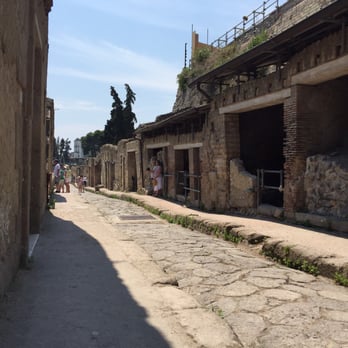
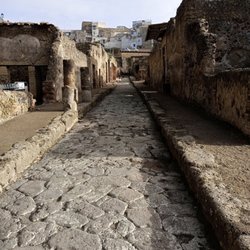
I've been to Herculaneum a couple of times. It is better in the winter when there are no tour groups clogging the streets. Still, it's great. Narrow streets lined with the buildings of everyday life. It's not hard to imagine what life was like for average citizens back in the day, which I find more interesting than the monumental architecture of imperial Rome. read more