Guadalupe City Photos


More like Guadalupe City
Recommended Reviews - Guadalupe City
Start your review...



Mission La Purisima was established in this area in 1787. Guadalupe California was incorporated as a city in May 1946. The tight cluster of buildings is surrounded by agricultural land. I love walking through downtown and seeing the historic buildings. The Dunes Center is my favorite museum in town and has an excellent exhibit on the dunes. https://www.hungryones.com/2023/09/dunes-center-2/ El Padrecito's Ice Cream Shop has refreshing treats. https://www.hungryones.com/2023/09/el-padrecitos/ They are making good progress on restoring the movie theatre. Should open later this year. Maggie loves eating at 2 Brother's pizza. https://www.hungryones.com/2018/07/the-brothers-guadalupe/ The drive to Guadalupe City winds through various farms and there are roadside stands where you can buy produce. When I was a kid there were many of them in San Diego but now they are hard to find. I noticed one stand was selling mango, watermelon, and cantaloupe. I stopped and was given a sample of watermelon and cantaloupe. Watermelon was sweet and juicy with a firm texture. It was bursting with sweet watermelon flavor and one of the best tasting watermelons I've ever had. I bought one for $10 and it was huge and delicious just like the sample. Cantaloupe was firm, juicy, and full of delicious flavor. I love buying from roadside stands as you typically get perfectly ripe produce. I'm not a fan of grocery stores as fruit is picked before it's ripe and left to ripen at the store and it doesn't taste that good. In San Diego multi-level housing and office buildings are replacing the old neighborhoods. Visiting Guadalupe it's refreshing viewing the original buildings. There is a sense of time standing still. I wish I could have seen this town when it was new. "I am going to look at the stars. They are so far away, and their light takes so long to reach us. All we ever see of stars are their old photographs." Alan Moore - The Watchmen read more


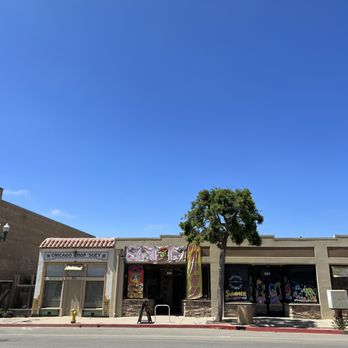


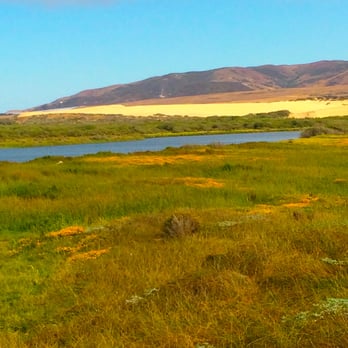
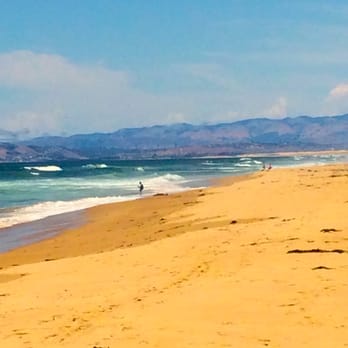
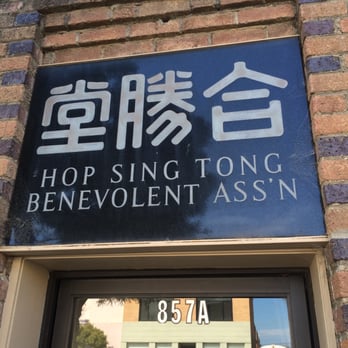
This little town has a very interesting history & makes a nice stop on Hwy #1. I am adding this Yelp basic entry for now quoting the net: From Dunes Center: "Our mission is to promote the conservation and restoration of the Guadalupe-Nipomo Dunes ecosystem through education, research, and the support of cooperative stewardship."... http://dunescenter.org/visit-the-dunes/dunes-center/exhibits-and-activities-research/the-lost-city-of-demille/ "The Lost City of Demille, In 1923, pioneer filmmaker Cecil. B. DeMille built the largest set in movie history in the dunes near Guadalupe, CA, for his silent (and early Technicolor) epic, The Ten Commandments. It was called "The City of the Pharaoh." After filming was complete, DeMille ordered that the entire set be dismantled... and secretly buried in the dunes. And there it lay, forgotten, for the next 60 years and it still sits there, buried in the sand, known as the "Lost City of Cecil B. DeMille." From Wikipedia: History: "The first European land exploration of Alta California, the Spanish Portolà expedition, camped near today's Guadalupe on September 1, 1769. Franciscan missionary and expedition member Juan Crespi noted in his diary that they found "a very large lake". The lake has since mostly filled in, leaving a low-lying plain traversed by the Santa Maria River and several tributaries.[9] When Mission La Purisima was established in 1787, the area became part of the mission's pasture land. In 1840, following secularization of the mission, the area became part of the Rancho Guadalupe land grant. Rancho Guadalupe was settled by pioneers of many unique backgrounds, such as European, Chinese, Filipino, Japanese, and Mexican. The small town was incorporated as the city of Guadalupe on May 19, 1946. The city name honors Our Lady of Guadalupe, the title given to the Virgin Mary."..... Geography: "West of town, both in Santa Barbara County and north in adjacent San Luis Obispo County, is the Guadalupe-Nipomo Dunes, a large region of dune habitat along the Pacific Ocean shore. Filmmakers have used this region as a setting for several films, including Cecil B. DeMille's 1923 Ten Commandments and in 1998 The Odd Couple II. Scenes from Pirates of the Caribbean: At World's End and Hidalgo have also been filmed here. The Guadalupe-Nipomo Dunes Center serves as the education and research facility for the natural area." Parks & Recreation: "There is a beach near Guadalupe at the end of Main St. that is part of the Guadalupe-Nipomo Dunes. Oso Flaco Lake in Nipomo (San Luis Obispo County) is also a part of this dunes complex and is a few miles north of Guadalupe; it features a boardwalk that goes over the lake and leads to the beach." Even more history that still lives on can be found at: http://californiajapantowns.org/guadalupe.html " Guadalupe Located nine miles west of Santa Maria on historic Highway 1 in Santa Barbara County is the small town of Guadalupe with a dramatic Nikkei history. Gradually replacing the Chinese in the sugar beet fields, the Japanese labor force grew to nearly 600 with the expansion of the Union Sugar Mill Company of Betteravia in the early 1900s. By the 1910s, a cooperative, renamed the Guadalupe Japanese Association, supporting Japanese farm operations, included branches in Santa Maria, Oceano, Pismo and San Luis Obispo; and the Japantowns of Santa Maria and Guadalupe became commercial centers...... From the early 1900s, the Masatani family operated a store at Main Street, selling clothing and groceries, with produce stands on the sidewalk to attract the customers, but often tempting the neighborhood children to grab a snack and run..... Although Mr. Masatani never returned to Guadalupe after WW II, his son Harry continued the family business by opening Masatani Market at its current location on Main Street. Today, third generation Steve Masatani runs the business, while Harry remains the consummate guide for Guadalupe's Japantown history." read more





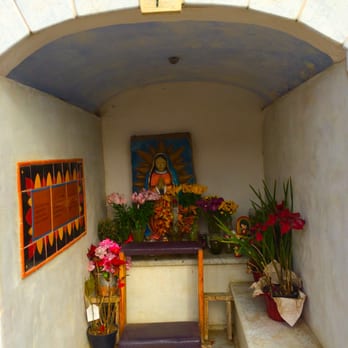


More info about Guadalupe City


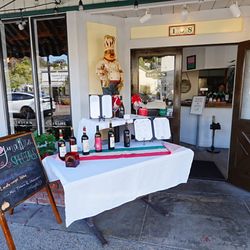






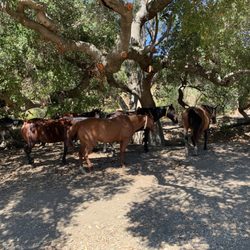
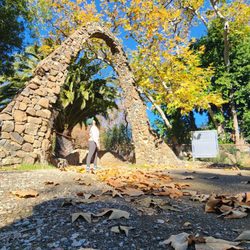









Guadalupe City - localflavor - Updated May 2026
Best of Guadalupe
People found Guadalupe City by searching for…
Browse Nearby
BEST of Guadalupe, California Restaurants near Guadalupe City
BEST of Guadalupe, California Things to Do near Guadalupe City
BEST of Guadalupe, California Coffee near Guadalupe City
BEST of Guadalupe, California Arts & Entertainment near Guadalupe City
BEST of Guadalupe, California Breakfast near Guadalupe City
BEST of Guadalupe, California Campgrounds near Guadalupe City
Browse Brands
Trending Searches in Guadalupe, CA
Boat Rental near Guadalupe City
Botanical Gardens near Guadalupe City
Bounce House Rentals near Guadalupe City
Campgrounds near Guadalupe City
Cherry Picking near Guadalupe City
Flower Shop near Guadalupe City
Garage Sales near Guadalupe City
Nurseries & Gardening near Guadalupe City
Outdoor Furniture Stores near Guadalupe City
Party Equipment Rentals near Guadalupe City
Pick Your Own Farms near Guadalupe City


