1. Funicolare di Chiaia

0

Naples, NA

Cancel

Open app

Search

Funicolare di Chiaia

4.1 (7 reviews)

Funicolare di Chiaia Photos

Funicolare di Chiaia Reviews in Other Languages

Verify this business for free

Get access to customer & competitor insights.

Verify this business

Maschio Angioino - Castel Nuovo - Palatine Chapel

Maschio Angioino - Castel Nuovo

4.5(29 reviews)
1.9 km•Plebiscito/Centro

You're greeted with beautifully carved pillars and arches with details that tell you stories. The…read moremassive doors are dramatic! Do some neck and shoulder stretches before visiting because looking up and around is required. It's a castle on the outside and a Civic Museum inside. For €6 entry, you get a lot for your visit. An audio guide is optional for €4 more. Note that you're able to get a brochure with a map in English. After entry, you step into a huge courtyard. It appeared an event was being set up the day of my visit. I headed to the left toward the stone steps to start my self-paced tour into the: BARON'S HALL - it looks like a courtroom. Awesome ceiling architecture! Tried to follow the map; forget about going in alphabetical order. On the ground level you'll find the: PALATINE CHAPEL - closed doors for preserving artwork; so full of emotion. No flash photography. Place your camera glass to glass against the doors. Up more stairs to the: 1st FLOOR - find a bronze door with a cannon ball stuck in it. This floor has a lovely collection of religious paintings from 15th-18th centuries. 2nd FLOOR - you'll see more of paintings with war stories and lifestyles from 18th-20th centuries. 3rd FLOOR - modern day collections. Note that these floor exhibits are not directly above each other. Refer to the map and legend on the brochure for your preferred route. Art lovers and appreciators can take their time. Definitely a recommended visit for tourists. Don't forget to catch a breeze and take in views of the Tyrrhenian sea.

Constructed in 1279, and for centuries the Royal residence of Naples' kings into the 16th century,…read morethe gothic exterior of this massive fortress with five towers is a magnificent reminder of Napoli's medieval history and maritime prowess, with an entrance over the largest man-made moat I've seen. Arriving at 5pm on a weekday afternoon, I scrambled (ie. speed walked for half a mile) to make it before their assigned last entry time, which I thought was 5pm for a 6pm closing time, though apparently it's last entry at 5:30pm. Well...I got an extra workout. There's a small ticket window to the left inside the main doors, which takes cash or card, and can also validate your city/museum pass (I had a Naples Pass). Regular admission is €15, tickets for local residents €10, free for children under 18. However because of ongoing renovations to major sections, they were offering reduced admissions of €10 and €6 respectively. Inside what's available to view as of mid-April 2026 are several components. To me each stands alone and feels a bit disjointed to the others, though given its lengthy history and different functions over time perhaps the range of spaces truly embodies the story of the castle, one embued with varied relevance and purpose. - Palatine Chapel: an austere chapel with stone block floors, inset with ledger stones.* - Archaeological route and former Armory room: this is where the ruins can be viewed below a glass floor--of what's believed to be past of a lavish Roman villa from 1st century BCE beneath the castle. Tours need to be pre-booked in advance if you want to descend to the underground level to visit these. - Hall of the Barons: this is the kind of grand hall I'd imagine medieval royalty to preside over, with a massive octagonal star-shaped arched stone ceiling and central round skylight, though it was actually a later construction in the 15th century. The layout includes a U-shaped wooden seating arrangement where the current Napoli city council meets. - Chapel of the Souls of Purgatory: single room with entrance off the courtyard to the right of the entrance to the Palantine Chapel, the frescos are colorful though space is small. - First floor Civic Museum - Art Gallery: this is up a flight of steps (aka the second floor for those of us across the pond), a gallery of about 50 works ranging from 15-18th century religious Neapolitan art, transferred here from other historic buildings that are no longer in use. - terrace on second floor with partial view of the port: I was a little disappointed since I thought the roof of the castle would be accessible though I'm glad I didn't rush here on my first day in Naples and instead went to Monte Echia nearby where the views were much better, more panoramic. It took about 30 minutes to walk around the parts that were open, there are more extensive galleries on the upper stories that were under renovation. I felt it made sense to reduce the price since some portions were closed. For more info: https://www.comune.napoli.it/vivere-il-comune/luoghi/castel-nuovo-maschio-angioino/#orari_apertura https://www.naplesinsider.com/en/e/castel-nuovo-maschio-angioino *an inscribed stone slab usually laid into the floor of a church to commemorate or mark the place of the burial of a deceased person. (as per Wikipedia)

Photos
Maschio Angioino - Castel Nuovo - Construction underway

Construction underway

Maschio Angioino - Castel Nuovo - Upstairs on the 2nd floor is a small gallery

Upstairs on the 2nd floor is a small gallery

Maschio Angioino - Castel Nuovo - "Natura merta con pesci" by Giuseppe Reco

See all

"Natura merta con pesci" by Giuseppe Reco

Piazza del Plebiscito - Piazza del Plebiscito

Piazza del Plebiscito

4.5(27 reviews)
1.6 km•Plebiscito/Centro

We stopped by Piazza del Plebiscito for a quick look while exploring Naples. The square is huge and…read moresurrounded by some of the city's most recognizable landmarks, making it a great place to pause and take in the architecture. Originally completed in the early 1800s, the piazza is named after the 1860 plebiscite that voted for Naples to join a unified Italy. On one side sits the Royal Palace of Naples, while the Basilica of San Francesco di Paola anchors the other with its impressive domed church and curved colonnades. We didn't spend a lot of time here, but it was an easy stop between other sights and gave us a chance to appreciate a different side of Naples. If you're already in the historic center or heading toward the waterfront, it's well worth adding to your itinerary.

Naple's most iconic square is framed by Prefettura di Napoli a government office on the north, on…read morethe south by Palazzo Salerno (Sede del Comando Territoriale Sud - currently military offices), by the royal palace on the east, and Basilica of San Francesco di Paola to the west. The last two are open for visitors and pretty quiet on an April evening. The port area and waterfront public park Giardini del Molosiglio are nearby within walking distance to the southeast. As magnificent and grand as these surrounding buildings and others nearby are, this piazza also very much a piece of the local cloth. Where school groups and tourists frequent during the day, is open space in the evening for kids riding bikes and playing soccer, for families taking walks with strollers and dogs. While I was there it was fun to see a group of students singing along to a couple musicians on a guitar and mic, a few kids flying kites, the sun setting to the west casting a warm glow onto the structures in the square. Fun facts: - named after a plebiscite (aka referendum or survey) which united Naples with the rest of Italy. - Joachim Murat, bro-in-law of Napoleon had planned to dedicate the square to the emperor though when the Bourbon rulers were restored to the throne plans changed. Hence today the two statues in from of the church are Bourbon kings Charles III and his son Ferdinand I. They also instructed the completion of the neoclassical basilica along this square. - there's a local game/tradition of attempting to cross the square blindfolded starting from the center of the main entrance of the royal palace with the goal of walking directly in the middle of the two statues. Legend is that it's an impossible feat, due to the irregular shape of the square, uneven cobblestones and slight slope. - the square became a parking lot in 1963 to deal with the overflow of cars in the city, then reconfigured back to pedestrian only in 1994.

Photos
Piazza del Plebiscito - Piazza del Plebiscito

Piazza del Plebiscito

Piazza del Plebiscito - Piazza del Plebiscito

Piazza del Plebiscito

Piazza del Plebiscito

See all

Catacombe di San Gaudioso

Catacombe di San Gaudioso

4.8(25 reviews)
2.4 km•Centro Storico

Quite different from San Gennaro, these catacombs have a claustrophobic space. We entered to the…read moreright side of the original catacomb entrance. It's inside the church. The church was built around and over the catacombs to protect it. Another history lesson you'll have to hear about on this tour. You'll find the church's interior really beautiful and grand with gates that guard the original entrance. Put away or secure all your loose belongings like cellphones, cameras, sunglasses or hats cuz you're gonna need to hold on to the sides making your narrow way downstairs to the underground. You can take pictures once you're safely flat on two feet. Oh and hopefully you ladies are wearing flats or tennies cuz it is not the kind of platform to walk pretty. The stone paths further in are just right for one person, cozy for two. Making your way through, there are more turns. There's an area we stopped to learn about how the rich back in those times, were the only ones who can afford the service where their loved ones whom have passed away were "treated" in the section that drains body fluids into a container placed beneath the corpse. When the flesh deteriorated the skeleton's skull would often fall. And so the skull would be placed on a stone shelf just above their bones; lined up across. (A scene you may find familiar in many Latin cultures especially during Dia de Muertos.) It wasn't a sanitary practice, but we're talking history, and change came with time. Giovanni Balducci was a Tuscan artist who was hired to be the only one that painted skeletons at San Gaudisio catacombs. These are the only catacombs known to have placed the skulls of the dead in the concrete (see photos)... again, for the rich who were able to afford the service. Along the shorter gallery (in comparison to San Gennaro's larger expanse), the painted skeleton of the men are on left; women are on the right painted with skirts. P.S. your entrance ticket to San Gennaro gets you into these catacombs for free - two for one.

Breathtaking glimpse into the world that will be our final destination ... one day …read more.. Sanità is one of the poorest communities (if not THE poorest) of Naples with a high rate of unemployment among young people. So it was totally exciting to discover such a unique historical gem underneath this troubled district`s parish church Santa Maria della Sanità. Coming here on foot was not easy since traffic in Naples is crazy like hell and pavements blocked or nonexistent. Be prepared to be a meandering river and go with the flow ;O). But it is more than worth coming here and spending 9 € - the same ticket is valid for Catacombe di San Gennaro (12 months onward from day of purchase!! - keep the ticket!!). Monday to Sunday there are guided tours on the hour between 10 am and 1 pm - one in Italian and one in English language. Very nice and knowledgeable people will take you on a journey back in time when this place was a medieval necropolis, a Christian cemetery from the 4th century until the Late Middle Ages. Then relics of the saints got retrieved and buried within the city wall. Abandoned till the 17th century, it then became a burial place for nobles and the clergy. The dead would be placed in a cavity with broken arms and legs and a vessel underneath. Then their bodies would get cut multiple times to let all liquids flow into the vessel. This method got called "the draining" performed by the "schiattamuorto". Finally, skull and bones got cleaned and laid to rest ... or ... the skulls would get fixed on the wall and the "bodies" painted fresco-style. Ladies would get a skirt (no naked female pelvis allowed even after death!) and judges their black robes. Simply amazing to see what is left of the skulls and the frescos nowadays ... hundreds of years later ... pretty close to immortality ...

Photos
Catacombe di San Gaudioso

See all

Museo di Capodimonte - Alberto Burro grande centro nero

Museo di Capodimonte

4.5(15 reviews)
3.2 km•Capodimonte

Look to spend at least four hours walking through and reading up on some of the most eye catching…read moredisplays. If your smartphone has the space and your cell network has the reception, I suggest downloading their museum app guide. On the business side, it's a great idea that they offer this instead of providing headsets and hand carry narratives. So, good luck if you're a foreigner with an outside network ;) The exhibits during my visits were awesome. I enjoyed the sculptures and contemporary art most. There are thousands of paintings and they were beautiful as well. I found the stitch work the most impressive. They look like rugs... These are ginormous and span an entire wall with high ceilings. Each of them tell a story. But the details are what captured me most. Strong reccomendation anyway, to take time for any museum and learn something you never knew. Plus in this museum, you gotta check out the outside view from the second level!

This is worth the travel to get to it. Allow a full day and why not take a picnic for the gardens?…read moreNaples is quite unique in that it hasn't actually been part of Italy that long (historically speaking) and has been an independent principality a number of times and has been under the 'control' of both Christians and Muslims at different times. The Capodimonte family are one of the great families of Naples and the house and gardens are tributes to their vision. The décor inside the house is exquisite.

Photos
Museo di Capodimonte - Museo di Capodimonte, Napoli, Italia

Museo di Capodimonte, Napoli, Italia

Museo di Capodimonte - Carved stone

Carved stone

Museo di Capodimonte - Stanza di porcellana.

See all

Stanza di porcellana.

Limone' - Limonè, Napoli

Limone'

4.7(7 reviews)
2.4 km•Centro Storico

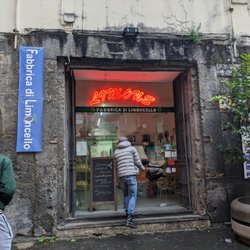
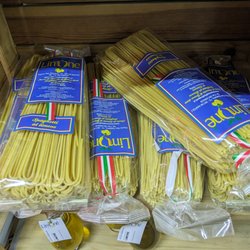
Thanks to social media, we found this shop. We put this on the itinerary to try the Sorbetto di…read moreLimone. When we arrived, we discovered that they sold all things inspired by lemon from lemon-flavored oils to lemon-infused pasta and many lemon-centered items in between. The overall ambiance was fresh, bright and surprisingly quite interesting. When we arrived, one of the staff members offered samples of Limoncello in two flavors. Since it was all about the experience, we tried both; however, we were eager to get to the main attraction. We also sampled the lemon-flavored chocolate covered almonds. To be such a small store, it was quite crowded. After finally reaching the counter, we observed a variety of lemon-flavored sorbet and gelato options. I selected the lemon basil and lemon cheesecake. The Amalfi lemon was filled with a scoop of each and served with the lemon top for presentation. The lemon basil was my favorite. It was so lemony and refreshing with basil for a little kick. The cheesecake flavor was underwhelming in my opinion. I would have preferred two scoops of the lemon basil. Once I got to the bottom of the lemon, I observed that they had not fully removed the interior of the lemon. By leaving the pulp in the inside, it took up space for the sorbet, which gave the illusion that you were getting more than was actually inside the lemon shell. Additionally, a lot of the sorbet was trapped at the bottom. At first we thought that there was only one location, but as we navigated throughout Rome, we discovered quite a few locations along with other shops selling the same item. On other visits during our trip, we purchased the lemon granita, Limoncello to take home, a variety of oils and pasta and some of the best lemon-flavored chocolate covered almonds. Overall, it was a great experience.

Woo hoo! Limoncello is made here. We got to meet the (distiller? brewer?) and taste this amazing…read morestuff. A fantastic stop on our food tour and I returned later to purchase a 100ml bottle to bring home, since that's the limit for carry-on. They have other lemon stuff, even pasta! [Review 19210 overall - 361 in Italy - 180 of 2023.]

Photos
Limone' - Limonè, Napoli

Limonè, Napoli

Limone' - Lemon pasta at Limonè, Napoli

Lemon pasta at Limonè, Napoli

Limone' - Sorbet filled with lemon

See all

Sorbet filled with lemon

Funicolare di Chiaia - localflavor - Updated October 2026

Loading...
Loading...
Loading...