Cancel

    Open app

    Search

    Frances Goodrich Photos

    Recommended Reviews - Frances Goodrich
    Your trust is our priority, so businesses can't pay to alter or remove their reviews. Learn more about reviews.
    Yelp app icon
    Browse more easily on the app
    Review Feed Illustration

    3 years ago

    Helpful 8
    Thanks 2
    Love this 9
    Oh no 0

    Verify this business for free

    Get access to customer & competitor insights.

    Verify this business

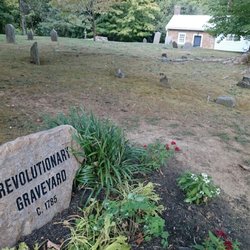
    Revolutionary War Graveyard - Revolutionary War Graveyard, Dandridge

    Revolutionary War Graveyard

    5.0(2 reviews)
    37.0 mi

    There's a very helpful brochure at the entrance and if they're out of stock, I've added a picture…read more The brochure tells the story of this cemetery that dates back to 1785 when the oldest church in the county was organized by Scots-Irish in a log building that stood at the north side of the graveyard called Francis Dean's or Robert Henderson's Lower Meeting House. Dean owned the land and Henderson was the first pastor of the church. The brochure continues, "When the church was founded in 1785, Dandridge was just a small western outpost nestled along the French Broad River in Caswell County, State of Franklin, where most people were living in scattered log cabins. The ace of cession by North Carolina paved the way for the formation of the State of Franklin which almost became the nation's 14th state and survived for four years under its own government even though North Carolina would never officially recognize the Franklinites." It was peaceful and interesting and quite historic. If you're heading to Dandridge, stop in and visit the final resting place of these pioneers. [Review 20105 overall - 461 in Tennessee - 1081 of 2023.]

    So old. Yeah, this is pretty neat. Dating back to around 1785, interred here are the graves of…read moreRevolutionary War veterans and early citizens of Dandridge. The are only a handful of headstones and they are all unmarked and weathered - in a really cool historic way. There are several stone benches and the grounds are well maintained. The local attendant at the visitor center told me much more oral history; apparently you may never guess it by the size of this little hill mound but approximately 200 unknown graves lie underneath. Oh my.

    Photos
    Revolutionary War Graveyard - Revolutionary War Graveyard, Dandridge

    Revolutionary War Graveyard, Dandridge

    Revolutionary War Graveyard - Revolutionary War Graveyard, Dandridge

    Revolutionary War Graveyard, Dandridge

    Revolutionary War Graveyard

    See all

    Shelton Laurel Massacre Historical Marker - Shelton Laurel Massacre Historical Marker, Marshall

    Shelton Laurel Massacre Historical Marker

    2.0(1 review)
    2.2 mi

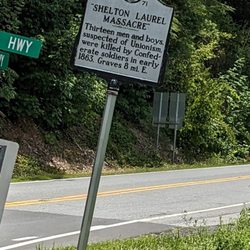
    North Carolina seceded from the Union and joined up with the Confederacy as part of the Civil War…read more And if you were driving through the mountains today, you'd think they were still there. I saw not a small number of homes with Confederate battle flags flying as I drove along US-25. And this marker points out a dark spot of that history. The marker reads, "Thirteen men and boys, suspected of Unionism, were killed by Confederate soldiers in early 1863. Graves 8 miles east." There is more information online. "The deaths of thirteen men and boys at the hands of Confederate soldiers in the Shelton Laurel area of Madison County in January 1863 constitute one of the most tragic events in North Carolina history. Within days of the killings, Governor Zebulon B. Vance wrote that the affair was "shocking and outrageous in the extreme." Writer Wilma Dykeman in 1955 observed that "nowhere is there a microcosm more chill and revealing than this episode of war at its heart and core." Parallels have been drawn with the My Lai incident in Vietnam." "The incident grew out of a series of raids on the town of Marshall by fifty to sixty Unionists claiming that Confederate authorities had denied them salt and other provisions. Brig. Gen. Harry Heth at Knoxville was commander of forces at the scene. With retribution in mind Lieut. Col. James A. Keith and his men went into the Shelton Laurel area and marched three boys, ages thirteen and seventeen, and ten men, twenty to fifty-six, out from their homes and into the woods. They were ordered to kneel. Hesitating on Keith's first command to shoot the thirteen, the troops complied with the second. In addition, "several women were severely whipped and ropes were tied around their necks." Most of what we know of the affair comes from a report prepared for Governor Vance by A. S. Merrimon. No one was ever prosecuted for the killings." The marker is at an intersection, so there is room to stop and contemplate. I did not have time to drive the 8 miles east to the graves. Maybe on a future trip. [Review 20135 overall - 3484 in North Carolina - 1111 of 2023.]

    Andrew Johnson National Historic Site - Another house in town he lived at

    Andrew Johnson National Historic Site

    4.9(17 reviews)
    14.3 mi

    Very nice historical landmark in a quaint, beautiful town. On our way from NC to Knoxville we…read moredecided to stop and are glad we did. Like others, I didn't know much about President Johnson. I knew he had some difficulties, but his life is interesting. He went from being a tailor to the President. Life was hard back then, and he made the most of it. Very tumultuous time in our country. Nice gift shop and a lot of interesing things to see. We were there on a Sunday so most of the town was closed up. Great place to walk and enjoy the natural beauty.

    As presidents go, the one who took over for Abraham Lincoln is generally held in low regard…read more History is interesting regardless of whether it's good or bad, so a diversion to this Eastern Tennessee town to catch this museum turned out to be a worthwhile effort. There is a museum and a couple of historic sites, as well as a statue. A charming stream traverses the site, and while not free of trash, it did have some nice greenery and a crayfish. Free tours were offered of the family home. I noted with some amusement that Andrew Johnson opposed the expansion of the federal government and thus probably would not have approved of his house becoming part of a large national park system. The content about the role and constraints of government is historically interesting but certainly is relevant contemporaneously. A variety of interesting health information also popped up; apparently his family was wracked by tuberculosis, which was incurable at the time. One might argue that the diseases afflicting the country during Reconstruction were likewise impossible to cure at the time, but we'll never know. Even his own museum doesn't think that President Johnson was successful in that effort. I doubt anyone will find a lovelier spring day than I did to visit, but the history won't change, and I've visited several presidential sites for presidents who are either obscure or not well regarded, and they have all been interesting.

    Photos
    Andrew Johnson National Historic Site
    Andrew Johnson National Historic Site
    Andrew Johnson National Historic Site - Exterior view of the Visitor Center.

    See all

    Exterior view of the Visitor Center.

    Elkmont Ghost Town - Elkmont Club Cabin #7A - Levi Trentham

    Elkmont Ghost Town

    4.5(2 reviews)
    51.0 mi

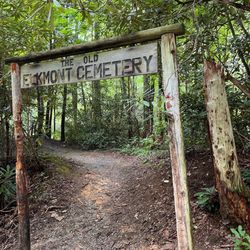
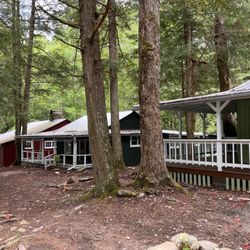
    Thanks to Google Maps (and my thorough trip itinerary planning), I had discovered the historic…read more(once a) "ghost town" of Elkmont. For America's most visited national park, it can be difficult to escape the crowds within the Great Smoky Mountains--yet Elkmont is one place to do just that! This Little River Valley was once home to a pioneer Appalachian community, a logging town, and later a resort community. To this day, old relics and abandoned buildings from the past remain--awaiting to be explored. The area was settled in the 1840s as the town of Little River when a logging company was formed. A railroad was later constructed to transport timber for the Little River Lumber Company. This eventually allowed the wealthy from Knoxville to visit what eventually became a resort town. When the Great Smoky Mountains National Park was was established in 1934, residents were given the option to sell their homes at full price and relocate, or sell to the National Park Service (NPS) for a discounted price allowing them to live there until they become deceased. By 1992, most of the homes remained vacant or with expired leases leading 70+ historic buildings into a state of deterioration. Thankfully the NPS decided to renovate and preserve 19 buildings in Elkmont for public visitation. You can now find the Elkmont Historic District with cabins along Jakes Creek Road that were completed around 1997. They attempted to keep the buildings in the closest original condition--even their exterior paint colors! Each cabin has information about the tenants and any unique features. Unfortunately, the cabins cannot be brought up to code for renting or staying inside. However, the largest lodge known as the Appalachian Club is available as an event venue. Continue to explore the Old Elkmont Cemetery up a rocky road near the beginning of Elkmont Road, or choose to hike the Jakes Creek or Little River Trails where you will venture past less discovered old chimneys, walls and tractors that still remain. Directions: Coming from Gatlinburg/Pigeon Forge or Cherokee, turn to go west on Fighting Creek Gap Road toward Cade's Cove (turn off near the Sugarlands Visitor Center). After the Laurel Falls trailhead, watch for signs to Elkmont Campground. Follow Elkmont Road all the way til it becomes a loop drive at Jakes Creek Trail Trailhead.

    Pretty neat location. Reminded us of a place back home that is still a resort for the wealthy…read more Warning to others who visit, make sure to stop at Sugarlands Visitor Center and get your park tag before going. We were hoping to hike more of the area but didn't know we needed a park tag for our vehicle

    Photos
    Elkmont Ghost Town - The Old Elkmont Cemetery signage

    The Old Elkmont Cemetery signage

    Elkmont Ghost Town - Appalachian Clubhouse

    Appalachian Clubhouse

    Elkmont Ghost Town - Elkmont Historic District Cabins along Jakes Creek Road

    See all

    Elkmont Historic District Cabins along Jakes Creek Road

    Wheatland Plantation

    Wheatland Plantation

    5.0(1 review)
    51.1 mi

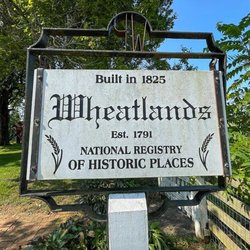
    I love historical places, and I have been drawn to this place each time I've driven by. It was…read moreempty for a long while, then purchased, restored and made into a B&B. I googled it, and saw on Zillow about a year ago it was purchased once again, maybe now a beautiful home for someone. The house bones need a family! The Wheatland Plantation grew wheat thus the name. Wheatlands, was established as a family farm by Revolutionary War veteran Timothy Chandler in 1791. Wheatlands had become one of the largest plantations in the county. Measuring 4,600 acres the farm produced oats, sweet potatoes, hogs, cattle, wool, and distilled 18,000 gallons of whiskey a year from its immense wheat crop. Wheatlands is an antebellum plantation in Sevier County, Tennessee. And is the location of the revolutionary war site "The Battle of Boyd's Creek." The present day plantation house was occupied during the Civil War as a field house and winter camp. There is a graveyard in the back yard. Still at the site are the Federal-style, three-story brick home that was built in 1825 as well as the separate kitchen and dining building to the rear, a loom building and a smokehouse. When the overgrown seven-acre property was recently cleared of years of overgrowth, they found Cedar Spring and a pond it feeds, the slave cemetery near Boyds Creek and the mound where it is believed that Cherokees were buried who were killed by John Sevier on his way back from King's Mountain. An archaeological team also found the thick stone floor of a shed that was believed to have held the distillery product. Also it is noted of many hauntings. One of the most famous ghosts of Wheatlands Plantation is Granny Jane, a former slave who allegedly practiced voodoo. Her spirit is said to protect the house from intruders, often making her presence known to those who mean harm. Another well-known ghost is Lucy, a young girl who died tragically on the plantation grounds. Lucy is often seen playing near the house, her laughter echoing in the air. Other spirits include a Civil War soldier, whose ghost roams the grounds, and several children who appear in old-fashioned clothing, playing games from a bygone era. Furthermore, each of these spirits has a story that adds depth to the haunted plantation's eerie charm.

    Photos
    Wheatland Plantation
    Wheatland Plantation - Graveyard in the back yard

    Graveyard in the back yard

    Wheatland Plantation

    See all

    Frances Goodrich - landmarks - Updated May 2026

    Loading...
    Loading...
    Loading...